
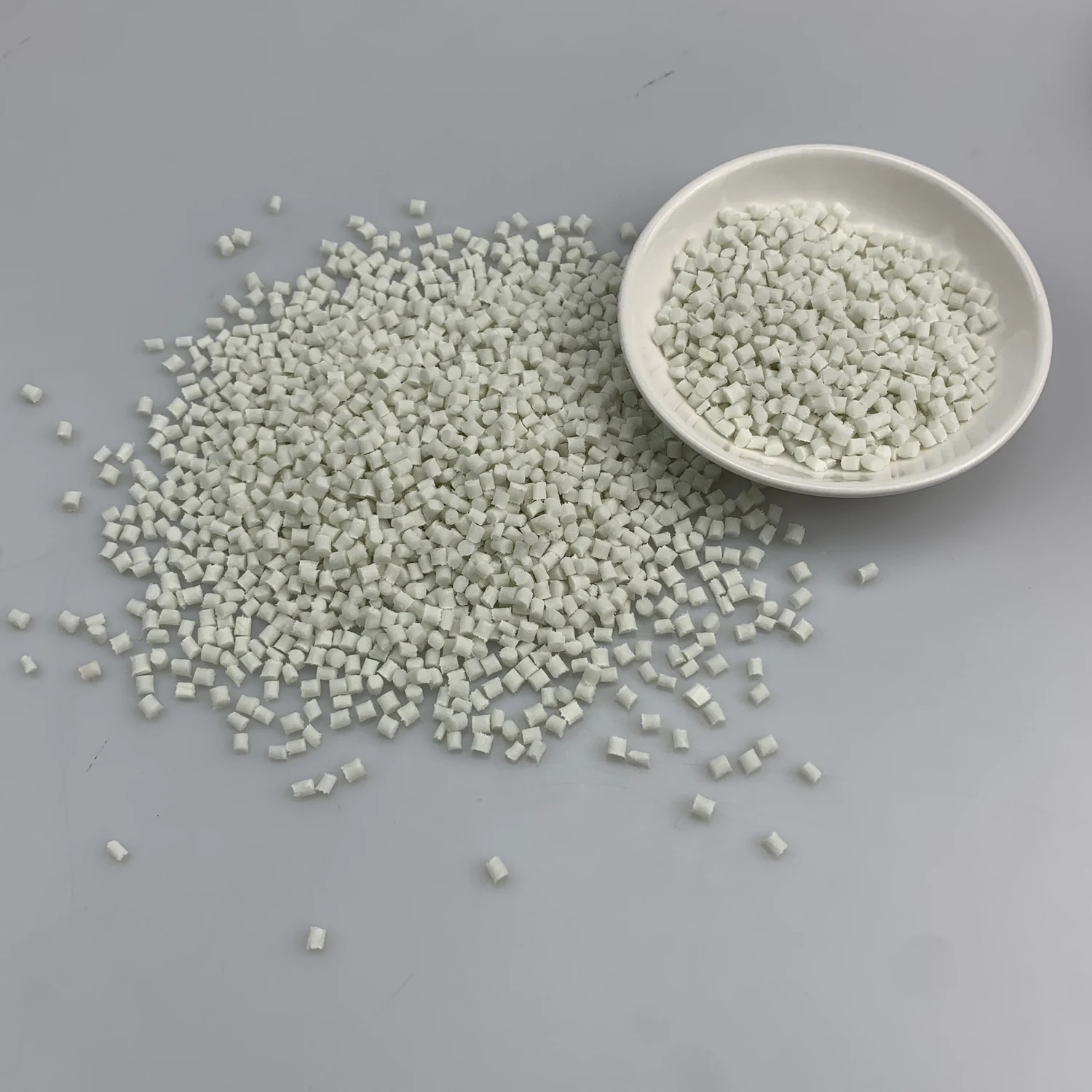
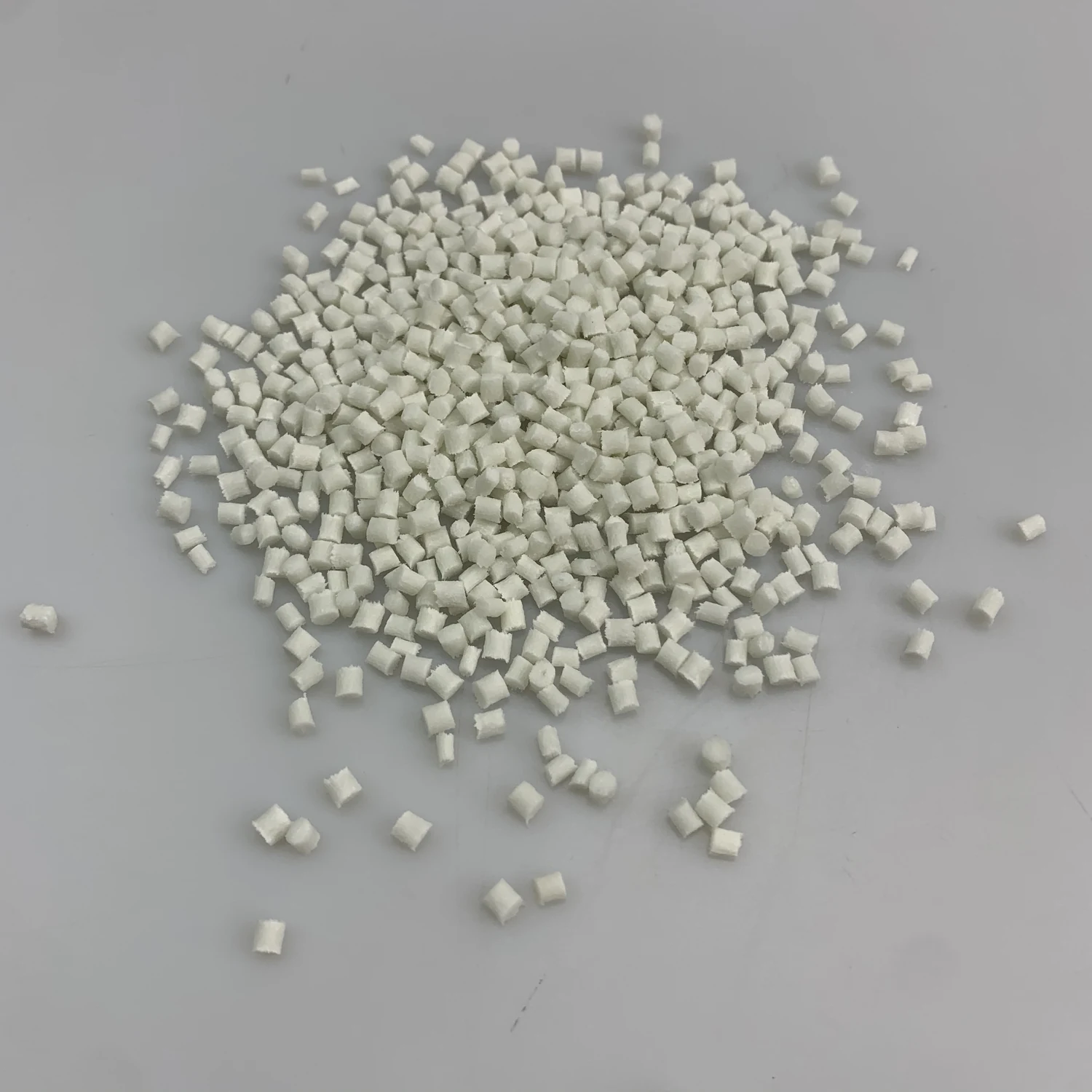
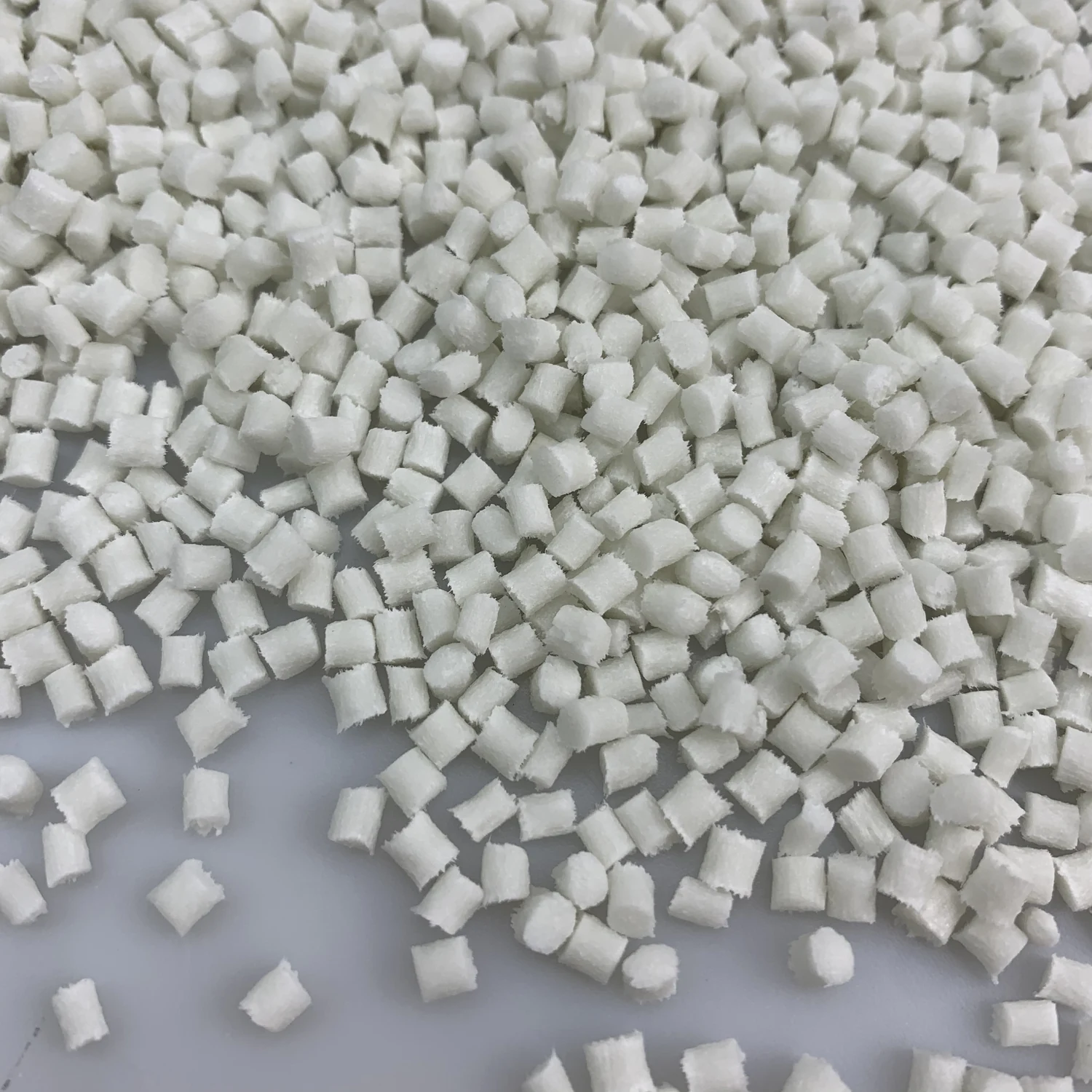
Wear-Resistant PA66/PTFE with 30% Glass Fiber DGK-PA66 GF3026TF
Glass-fiber reinforced PA66/PTFE for sliding automotive parts
DGK-PA66 GF3026TF pairs 30% glass fiber reinforcement with PTFE internal lubrication in a natural-color PA66 compound. Flexural strength of 235 MPa and flexural modulus of 11860 MPa deliver high stiffness for automotive guides and bushings, while PTFE keeps the sliding surface running with low friction.
Automotive guides, bushings and sliding parts, plus guide blocks, wear strips and sliding supports in industrial assemblies, are the typical parts. A 215 °C Vicat softening temperature (GB/T 1633-2000) and 13 kJ/m² Charpy notched impact strength cover hot engine-bay duty, and the 40 g/10 min melt flow rate fills thin-walled guides.
Important parameters
- Base resin
- PA66
- Model
- DGK-PA66 GF3026TF
- Color
- Natural
- Processing
- Injection molding
- Key performance
- 30% glass fiber reinforcement, wear resistance and a flexural strength of 235 MPa.
- Status
- Pellets
FAQ
What is this grade made of?
The compound combines a PA66 matrix with 30% glass fiber reinforcement and PTFE lubrication. That gives 235 MPa flexural strength, 11860 MPa flexural modulus and 186 MPa tensile strength, with 3% elongation at break. Surface resistance is 10¹² Ω·cm and flammability is UL 94 HB.
What parts can use this grade?
Natural-color pellets suit automotive guides, bushings and other parts in repeated sliding contact, plus guide blocks, wear strips and sliding supports. Notched impact strength is 15 kJ/m² on Izod and 13 kJ/m² on Charpy, and density is 1.43 g/cm³, so the parts stay stiff and impact-tolerant under load.
How is it processed?
It is supplied as pellets for injection molding, with 120 °C drying for 4–5 hours, 260–275 °C injection temperature and a 90 °C mold in the reference settings. Density is 1.43 g/cm³ and melt flow rate 40 g/10 min, so thin guide sections fill at moderate pressure.
How can I request a trial sample?
Share the part drawing, mating material, load and sliding speed and DEYU will match a DGK-PA66 GF3026TF sample for a molding trial. Include the continuous temperature and the wear surface area, since the 215 °C Vicat softening temperature and 11860 MPa flexural modulus set the design envelope.
Application areas
| Application area | Typical parts |
|---|---|
| Automotive components | Guides, bushings and sliding parts |
| Industrial assemblies | Guide blocks and support parts |
| Equipment parts | Wear strips and sliding supports |
Reference quote
- Minimum price
- USD 6.80/kg
- Maximum price
- USD 7.40/kg
Final pricing depends on color, order quantity and project requirements.
Data sheet
Physical Property Data Sheet
| Name | PA66/PTFE | Grade | DGK-PA66 GF3026TF |
|---|---|---|---|
| Material properties | 30% glass fiber reinforcement, wear resistance and a flexural strength of 235 MPa. | Color | Natural |
| Specimen dimensions | 80 × 10 × 4 mm | Sample form | Pellets |
| Processing method | Injection molding | — | — |
| Property | Condition | Test method | Value | Unit |
|---|---|---|---|---|
| Mechanical properties | ||||
| Flexural strength | — | GB/T 9341-2008 | 235 | MPa |
| Flexural modulus | — | GB/T 9341-2008 | 11860 | MPa |
| Tensile strength | 20 mm/min | GB/T 1040-2006 | 186 | MPa |
| Elongation at break | — | GB/T 1040-2006 | 3 | % |
| Charpy notched impact strength | — | GB/T 1043.1-2008 | 13 | kJ/m² |
| Izod notched impact strength | — | GB/T 1843-2000 | 15 | kJ/m² |
| Other properties | ||||
| Melt flow rate | — | GB/T 3682-2000 | 40 | g/10 min |
| Density | — | GB/T 1033-1986 | 1.43 | g/cm³ |
| Vicat softening temperature (see note) | A120 | GB/T 1633-2000 | 215 | °C |
| Surface resistance | — | GB/T 1401-2002 | 10¹² | Ω·cm |
| Flammability | UL 94 | GB/T 2408-1996 | HB | — |
| Injection molding conditions | ||||
| Drying temperature | 120 °C | Drying time | 4–5 h | |
| Injection temperature | 260–275 °C | Mold temperature | 90 °C | |
The 215 °C result is a Vicat softening temperature to GB/T 1633-2000; surface resistance is 10¹² Ω·cm.
Contact
Focused on modified plastic R&D and production
We provide professional customization services. If you have material questions, selection difficulties or performance requirements, contact us through any method on the right.
- Email: market@deyuplastics.com
- WeChat: mkx13905842100
- WhatsApp: +86 13905842100+86 15325909695
- Telegram: @deyuplast1