
Conductive ABS Compound for ESD Housings, Covers and Fixtures
Conductive ABS compounds make standard ABS permanently static-dissipative or conductive while preserving the impact resistance, surface quality, dimensional stability and injection molding processability that make ABS useful for ESD housings, covers and fixtures.
Buyer and engineer FAQ
Questions engineers often ask about this material route
Where can ABS with a conductive plastic requirement be used?
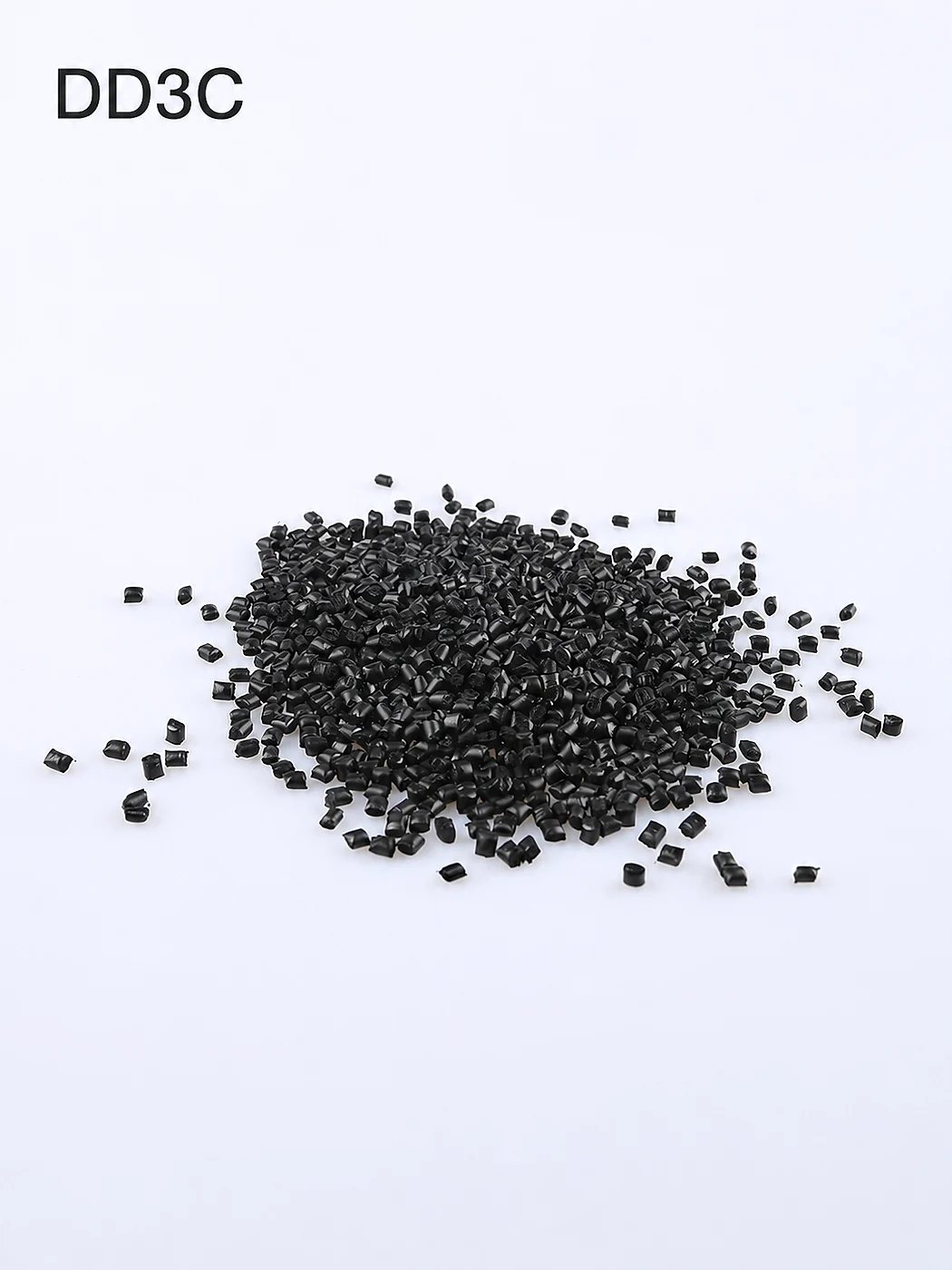
Typical fields include ESD trays, electronic housings, fixtures, EMI parts and antistatic logistics parts. For this article, DEYU would first confirm the working environment, wall thickness, expected lifetime and whether DGK-ABS KJD678R-BZ conductive ABS, DGK-ABS DD3C graphite conductive ABS, Transparent Antistatic ABS Pellets DGK-ABS KJD890TM matches the part geometry or needs formulation adjustment.
What are the main performance indicators for the "conductive plastic" target on ABS?
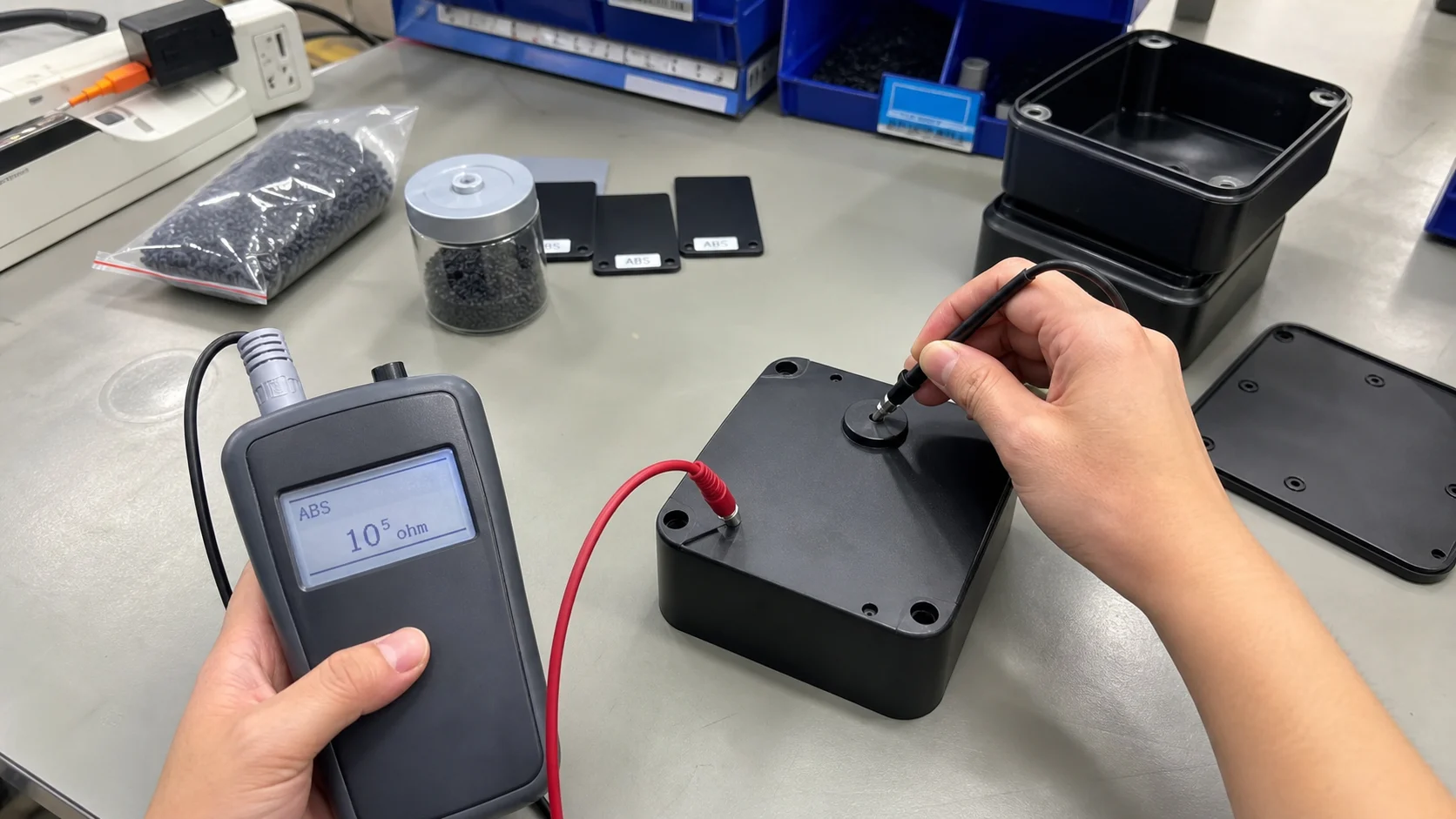
Focus on surface resistance, volume resistance, dispersion uniformity, impact strength and molding stability. Buyers should ask for data on molded parts, not only pellet data, because gate position, filler orientation and thickness can change the final value.
What should engineers watch during injection molding or processing?
For ABS, a practical starting window is 210-245°C melt / 50-80°C mold. Avoid excessive filler loading, control weld lines and verify resistance on the molded part. Final parameters should follow part thickness, gate design and the actual machine.
What details help DEYU recommend DGK-ABS KJD678R-BZ conductive ABS, DGK-ABS DD3C graphite conductive ABS, Transparent Antistatic ABS Pellets DGK-ABS KJD890TM more accurately?
Send the current resin or grade, drawing or photo, wall thickness, annual quantity, target standard, failure mode and required color. If a reference grade already passed one test but failed in production, include both data sets.
For a precise recommendation, share the part drawing, base resin, target performance, processing method and test standard with DEYU.
Background / Problem
Acrylonitrile Butadiene Styrene (ABS) is one of the most widely used engineering thermoplastics in electronics, automotive, and industrial applications. Its combination of good impact resistance, surface gloss, dimensional stability, plating capability, and moderate cost makes it a classic material choice for housings, covers, and structural components. From printer and copier covers to instrument panel bezels and business machine enclosures, ABS is everywhere in the products that surround us.
However, unmodified ABS is an excellent electrical insulator. With surface resistivity above 10¹⁴ Ω, standard ABS is a high-insulation material that cannot dissipate static charge. In electronics manufacturing environments, this creates a serious problem: static charge accumulates on ABS housings, covers, and fixtures, attracting dust, contaminating sensitive components, and risking electrostatic discharge (ESD) damage to expensive electronics.
The engineering challenge is to render ABS permanently static-dissipative or conductive—without sacrificing the mechanical properties, surface quality, and processability that make ABS the material of choice for these applications. Conductive ABS compounds address this by incorporating conductive fillers—most commonly carbon black, carbon fiber, or stainless steel fiber—into the ABS matrix.
The global anti-static ABS resin market is experiencing steady growth, driven by increasing demand from electronics and automotive industries for device housings, EV battery enclosures, dashboards, and precision packaging. Within this market, conductive ABS compounds are the preferred solution for applications requiring permanent, humidity-independent ESD protection with the familiar processing and mechanical characteristics of ABS.
Technical Difficulty / Why Conductive ABS Requires Careful Formulation
The Percolation Challenge
Achieving permanent conductivity in ABS requires creating a percolation network of conductive filler particles throughout the polymer matrix. The filler particles must be in sufficient proximity to allow electron tunneling or direct contact, creating continuous conductive pathways.
For carbon black-filled ABS, literature indicates that at least 8 wt% carbon black filler is typically needed to achieve percolation. While ABS/carbon black composites can achieve excellent electrical performance with conductivity as high as 10⁻¹ S/m, mechanical strength is often compromised. This is the fundamental trade-off in conductive ABS formulation: achieving conductivity requires sufficient filler loading, but each incremental increase in filler content affects impact resistance, elongation, and surface quality.
The Filler Type Trade-off
Different conductive fillers offer different balances of properties:
| Filler Type | Conductivity Mechanism | Typical Loading | Mechanical Impact | Cost |
|---|---|---|---|---|
| Carbon black | Percolation network | 8–20 wt% | Moderate reduction in impact and elongation | Low |
| Carbon fiber | Direct contact network | 8–20 wt% | Increased stiffness, reduced elongation | Moderate |
| Stainless steel fiber | Metal contact network | 7–15 wt% | Good toughness retention, EMI shielding | High |
Carbon black is the most common and cost-effective option. Carbon fiber-reinforced grades offer higher modulus and excellent conductivity, making them suitable for applications requiring both stiffness and ESD protection. Stainless steel fiber grades provide EMI shielding capability in addition to ESD protection.
Processing Sensitivity
Conductive ABS compounds are processing-sensitive. The same compound can produce different resistivity values depending on melt temperature, injection pressure, mold temperature, and cooling rate. Both ABS and conductive carbon black absorb moisture, which can affect the properties of the compound. Drying removes moisture and results in improvements in both conductivity and tensile strength.
Surface Quality Considerations
For housings and covers, surface quality is critical. Conductive fillers—particularly carbon black—can affect surface gloss and appearance if not properly dispersed. Well-formulated conductive ABS compounds maintain good surface finish while providing reliable ESD protection.
DEYU Material Direction
DEYU offers a range of conductive ABS compounds designed for electronics housings, covers, and fixtures across multiple performance levels.
Related DEYU conductive ABS references: DGK-ABS KJD678R-BZ conductive ABS and DGK-ABS DD3C graphite conductive ABS.
Platform 1: DGK-ABS KJD678R-BZ — Carbon Black Conductive ABS
DGK-ABS KJD678R-BZ is a carbon-black-filled conductive ABS compound that has been validated through long-term market use. It represents DEYU's optimized balance between conductivity and mechanical performance.
Key design features:
Optimized carbon black loading — achieves target conductivity while minimizing mechanical property reduction
Permanent conductivity — independent of humidity or surface condition
Good impact retention — maintains ABS toughness despite conductive filler loading
Surface quality — good gloss and appearance for visible housings and covers
Injection moldable — standard ABS processing conditions
Platform 2: DGK-ABS DD3C — Graphite Conductive ABS
DGK-ABS DD3C is a graphite-filled conductive ABS compound designed for applications requiring stable conductivity with good mechanical properties.
Key design features:
Graphite conductive network — provides stable electrostatic dissipation
Protects sensitive electronics — prevents static accumulation that could cause damage or interference
Retains ABS processability — maintains the processing advantages of ABS
Structural applications — suitable for parts that require both ESD protection and mechanical integrity
Platform 3: DGK-ABS Flame Retardant V0 — Conductive + Flame Retardant ABS
For applications requiring both ESD protection and flame retardancy, DEYU offers conductive ABS with UL94 V-0 rating.
Key design features:
UL94 V-0 flame retardant — meets stringent fire safety requirements
Stable conductivity — maintains ESD protection while providing flame retardancy
Dual protection — "anti-static + fire protection" for electrical and communications equipment
Injection moldable — suitable for standard ABS processing
Platform 4: DGK-ABS KJD890TM — Transparent Anti-Static ABS
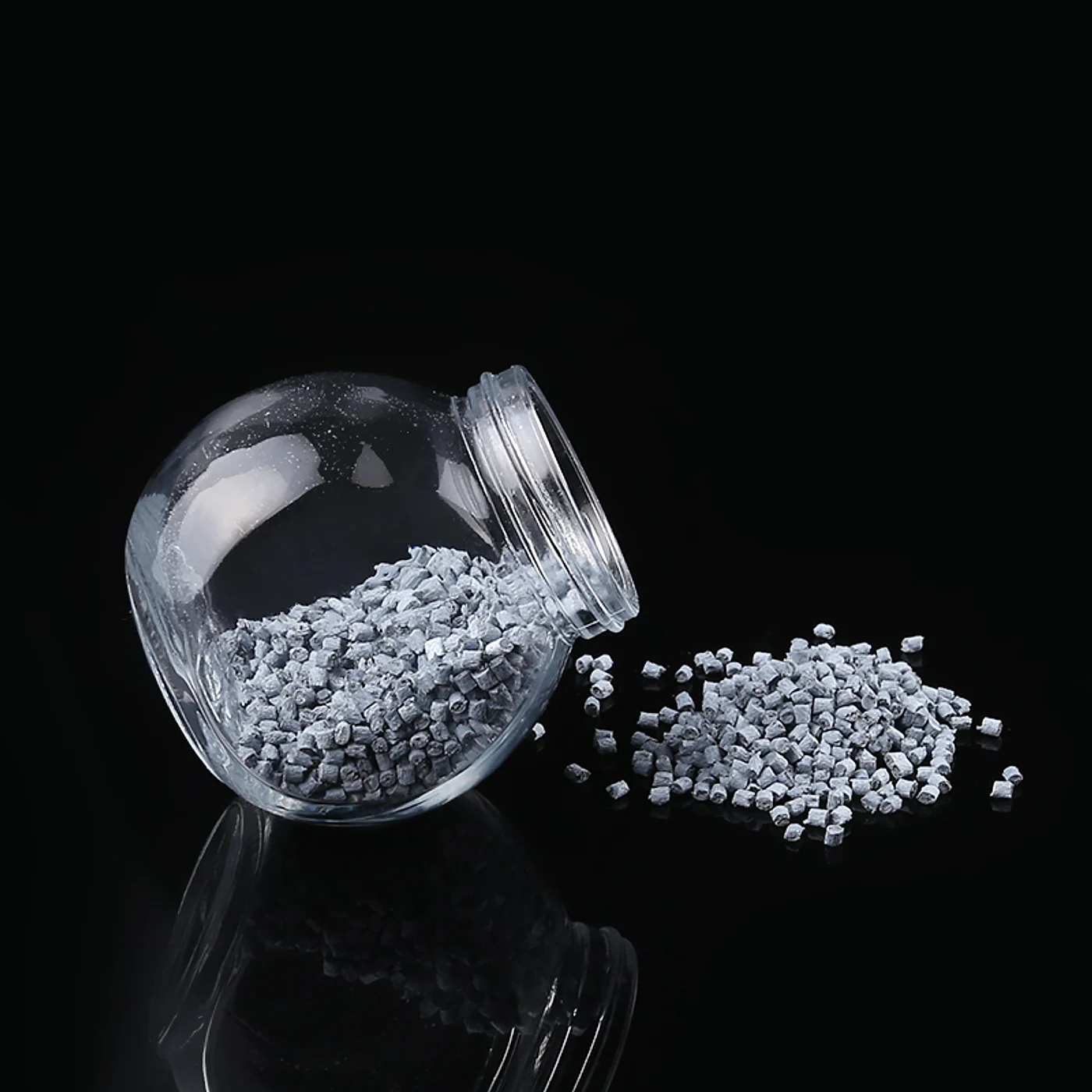
For applications requiring transparency with static control, DEYU offers DGK-ABS KJD890TM, a transparent anti-static ABS compound.
Key design features:
High-molecular-weight permanent antistatic agent — forms a submicroscopic conductive network within the base material
Low visible light scattering — maintains transparency while providing static dissipation
Permanent conductivity — unlike small-molecule antistatic agents that migrate to the surface and depend on humidity
Suitable for instrument panels, center consoles, and automotive display bezels
Reference Product Data
DGK-ABS Series — Conductive ABS Compounds
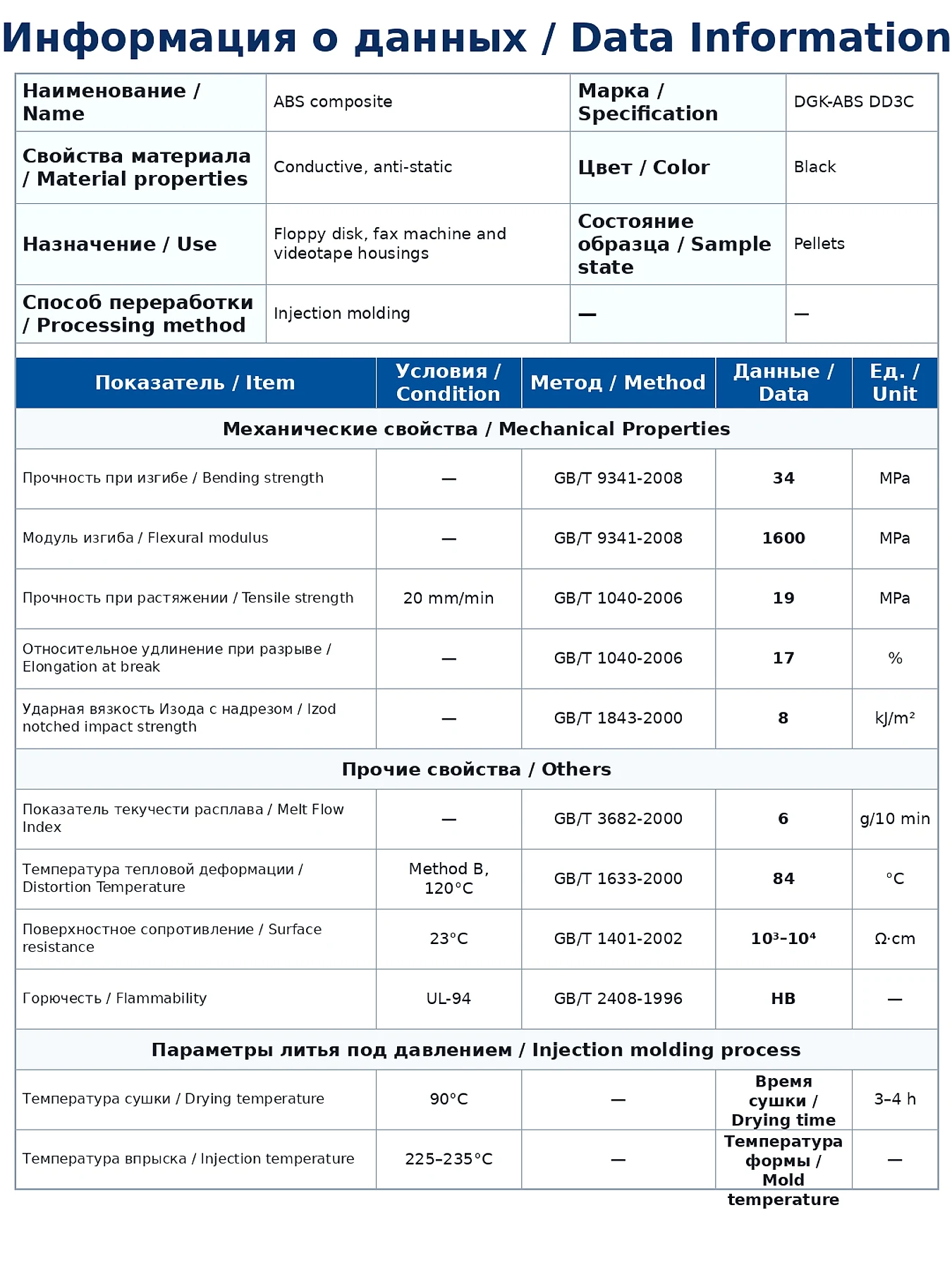
| Property | Test Method | DGK-ABS KJD678R-BZ (Carbon Black) | DGK-ABS DD3C (Graphite) | DGK-ABS FR V0 (Flame Retardant) |
|---|---|---|---|---|
| Base Resin | — | ABS | ABS | ABS |
| Modification Route | — | Carbon black filled | Graphite filled | Carbon black + FR package |
| Processing Method | — | Injection molding | Injection molding | Injection molding |
| Color | — | Black | Black | Black |
| Surface Resistivity | ASTM D257 / ANSI/ESD STM11.11 | 10⁴–10⁶ Ω/sq | 10⁴–10⁶ Ω/sq | 10⁴–10⁶ Ω/sq |
| Tensile Strength | ASTM D638 | 35–45 MPa | 35–45 MPa | 30–40 MPa |
| Flexural Modulus | ASTM D790 | 2000–2500 MPa | 2000–2500 MPa | 2200–2700 MPa |
| Notched Impact Strength (Izod) | ASTM D256 | 80–150 J/m | 80–150 J/m | 60–100 J/m |
| Heat Deflection Temperature | ASTM D648 | 85–95°C | 85–95°C | 80–90°C |
| Flammability | UL94 | HB | HB | V-0 |
| Typical Applications | — | ESD housings, covers, fixtures | ESD components, structural parts | Electrical enclosures, communications equipment |
Values are typical ranges, not guaranteed minimums or maximums.
DGK-ABS KJD890TM — Transparent Anti-Static ABS
| Property | Test Method | DGK-ABS KJD890TM |
|---|---|---|
| Base Resin | — | Transparent ABS |
| Modification Route | — | Permanent antistatic agent |
| Processing Method | — | Injection molding |
| Color | — | Transparent |
| Surface Resistivity | ASTM D257 | 10⁸–10¹⁰ Ω/sq |
| Transparency | Visual | Maintains good clarity |
| Typical Applications | — | Instrument panels, display bezels, transparent ESD covers |
Values are typical ranges, not guaranteed minimums or maximums.
Customer Debugging / Validation Scenario
Validation Scenario: Electronics Manufacturer — Fixture and Housing ESD Failure
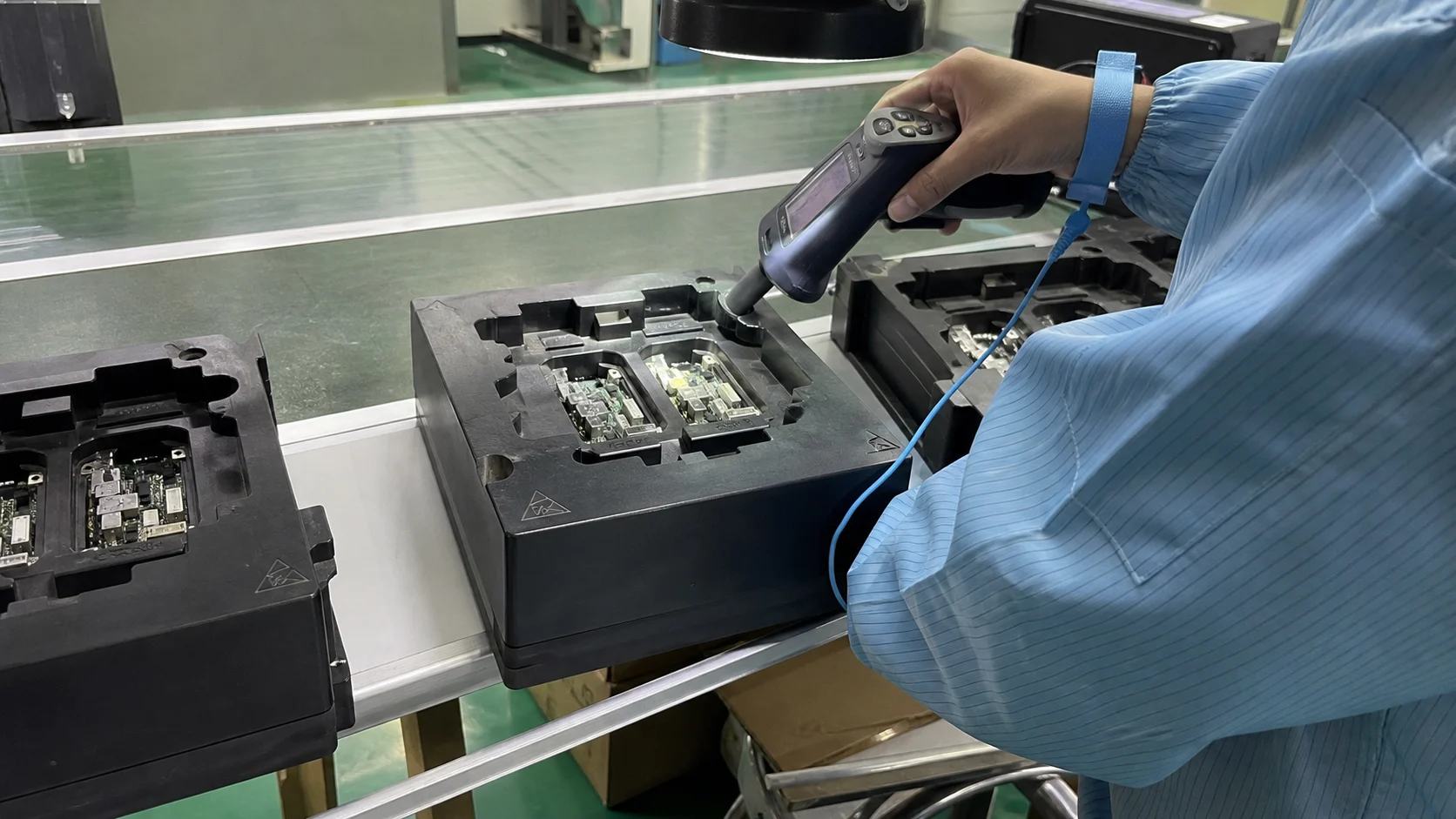
Background: An electronics manufacturer producing consumer electronics was using standard ABS for production fixtures and prototype housings. During assembly, static charge accumulation on fixtures caused dust attraction to sensitive PCB assemblies, resulting in contamination-related failures. Additionally, ESD events during handling damaged components, with a failure rate of approximately 6% in the assembly line.
The manufacturer evaluated DEYU DGK-ABS KJD678R-BZ for both production fixtures and housing applications, tracking surface resistivity, dust adhesion, and assembly yield.
Trial Protocol:
| Parameter | Detail |
|---|---|
| Trial quantity | 500 fixtures + 1,000 housing covers |
| Monthly production volume | 5,000 fixtures / 10,000 housings |
| Material | DGK-ABS KJD678R-BZ |
| Processing method | Injection molding |
| Drying | 3–4 hours at 80–90°C |
| Melt temperature | 220–240°C |
| Mold temperature | 50–70°C |
| Target surface resistivity | <10⁶ Ω/sq |
| Test method | ASTM D257 / ANSI/ESD STM11.11 |
| Measurement locations | 5 locations per part |
Validation Data:
| Metric | Standard ABS (Control) | DEYU DGK-ABS KJD678R-BZ |
|---|---|---|
| Surface resistivity | >10¹⁴ Ω/sq | 10⁴–10⁵ Ω/sq |
| Static charge (after handling) | 2,000–5,000 V | <100 V |
| Dust particles per cm² (after 100 cycles) | 25–40 | 3–6 |
| ESD-related component damage | 6% | <0.5% |
| Assembly pass rate | 91% | 98.5% |
| Molding scrap rate | 2.5% | 3.2% |
| Surface quality (gloss/appearance) | Excellent | Good |
| Field returns (ESD-related) | 3% | <0.5% |
Direction After Trial:
DGK-ABS KJD678R-BZ demonstrated rapid static dissipation—reducing surface charge from 2,000–5,000V to <100V. Dust accumulation was reduced by approximately 85%, and ESD-related component damage dropped from 6% to <0.5%. The assembly pass rate improved from 91% to 98.5%.
Areas for further refinement identified:
DGK-ABS KJD678R-BZ required drying (3–4 hours at 80–90°C) which added a process step—DEYU recommends evaluating pre-dried material supply options
Slightly higher molding scrap rate (3.2% vs. 2.5%) was observed—DEYU is optimizing the processing window to improve yield
Surface gloss was slightly lower than standard ABS—acceptable for this application where function outweighs aesthetics
Result Interpretation:
This validation scenario illustrates the direct connection between surface resistivity and manufacturing quality. Standard ABS, with resistivity >10¹⁴ Ω/sq, retained static charge that acted as a "dust magnet"—attracting airborne particles and causing ESD damage. DGK-ABS KJD678R-BZ, with resistivity 10⁴–10⁵ Ω/sq, dissipated charge rapidly, eliminating the dust attraction effect and protecting sensitive components.
The 7.5-percentage-point improvement in assembly pass rate (from 91% to 98.5%) and the reduction in field returns from 3% to <0.5% demonstrate the commercial value of converting to conductive ABS for electronics handling applications.
Suitable Applications
Housings and Enclosures
| Application | Recommended Grade | Key Requirement |
|---|---|---|
| Electronic device housings | DGK-ABS KJD678R-BZ | Surface resistivity <10⁶ + good appearance |
| Printer and copier covers | DGK-ABS KJD678R-BZ | ESD protection + surface quality |
| Business machine enclosures | DGK-ABS KJD678R-BZ | Dimensional stability + conductivity |
| Instrument panel bezels | DGK-ABS KJD890TM | Transparency + static control |
| Electrical enclosure components | DGK-ABS FR V0 | Flame retardancy + conductivity |
Fixtures and Tooling
| Application | Recommended Grade | Key Requirement |
|---|---|---|
| Production assembly fixtures | DGK-ABS KJD678R-BZ | Permanent conductivity + durability |
| Test and inspection jigs | DGK-ABS KJD678R-BZ | Dimensional stability + ESD protection |
| Hard drive and memory fixtures | DGK-ABS KJD678R-BZ | Low particle generation + conductivity |
| Work surfaces and handling tools | DGK-ABS KJD678R-BZ | Static control + mechanical strength |
Packaging and Transport
| Application | Recommended Grade | Key Requirement |
|---|---|---|
| ESD shipping trays | DGK-ABS KJD678R-BZ | Surface resistivity <10⁶ + impact resistance |
| IC packaging tubes | DGK-ABS KJD678R-BZ | Precision dimensions + conductivity |
| Component storage racks | DGK-ABS KJD678R-BZ | Structural integrity + ESD protection |
DGK-ABS compounds are particularly well-suited for applications where:
Permanent ESD protection is required (not dependent on humidity or surface coatings)
Good mechanical properties are needed (impact resistance, stiffness, dimensional stability)
Surface quality matters (visible housings and covers)
Standard ABS processing is desired (injection molding with familiar parameters)
Recommended Processing Guidelines
| Parameter | DGK-ABS KJD678R-BZ | DGK-ABS DD3C | DGK-ABS FR V0 |
|---|---|---|---|
| Drying Temperature | 80–90°C | 80–90°C | 80–90°C |
| Drying Time | 3–4 hours | 3–4 hours | 3–4 hours |
| Melt Temperature | 220–240°C | 220–240°C | 210–230°C |
| Mold Temperature | 50–70°C | 50–70°C | 50–70°C |
| Injection Pressure | Medium-High | Medium-High | Medium |
Important notes:
Drying is essential for conductive ABS compounds—moisture affects both conductivity and mechanical properties
The actual processing parameters may require adjustment based on the specific machine, mold design, and part geometry
Values above are laboratory reference values—production-scale validation is recommended
What Buyers Should Provide
To ensure proper material selection for your conductive ABS application, please provide the following information to DEYU:
| Information Needed | Why It Matters |
|---|---|
| Part drawing / 3D model | Identifies wall thickness, flow length, gate locations—affects mold design and filler orientation |
| Target surface resistivity range | Defines conductive (<10⁶) vs. dissipative (10⁶–10⁹) vs. antistatic (10⁹–10¹²) requirement |
| Application type | Housing, cover, fixture, or packaging—determines mechanical and surface requirements |
| Processing method | Injection molding (primary), extrusion, or thermoforming—determines grade selection |
| Operating temperature range | Affects HDT requirements |
| Environmental exposure | Chemicals, UV, cleaning agents—affects stabilizer requirements |
| Flame retardancy requirement | UL94 V-0, V-1, V-2, or HB—determines whether FR grade is needed |
| Transparency requirement | If transparency is required, KJD890TM or similar grade is needed |
| Surface quality / cosmetic requirements | Affects filler selection and dispersion requirements |
| Current material and failure mode | Helps diagnose whether conductive ABS addresses the specific issue |
| Monthly / annual production volume | Determines commercial viability and potential for custom formulation |
| Regulatory requirements | RoHS, REACH, UL—affects compliance verification |
Conclusion
Conductive ABS compounds bridge the gap between ABS's excellent mechanical properties, surface quality, and processability—and the need for ESD-safe materials in electronics manufacturing. The choice between carbon black, carbon fiber, graphite, and specialty filler systems depends on the specific application requirements: conductivity level, mechanical properties, surface quality, flame retardancy, and cost targets.
DEYU's recommended solutions:
DGK-ABS KJD678R-BZ — carbon black conductive ABS for general-purpose housings, covers, and fixtures
DGK-ABS DD3C — graphite conductive ABS for structural ESD components
DGK-ABS FR V0 — flame-retardant conductive ABS for electrical enclosures and communications equipment
DGK-ABS KJD890TM — transparent anti-static ABS for instrument panels and display applications
Validation data from an electronics manufacturer trial demonstrated that DGK-ABS KJD678R-BZ reduced surface charge from 2,000–5,000V to <100V, reduced dust accumulation by approximately 85%, and improved assembly pass rate from 91% to 98.5%.
For applications where ESD protection, mechanical integrity, and surface quality all matter—conductive ABS compounds offer a proven, cost-effective solution.
DEYU can provide small-batch validation quantities for process optimization and in-plant testing. Contact DEYU's technical team with your part drawings, performance requirements, and production volume for a customized material recommendation.