Conductive Elastomers: Current Challenges and Technical Solutions for TPV, TPU, and TPE Compounds
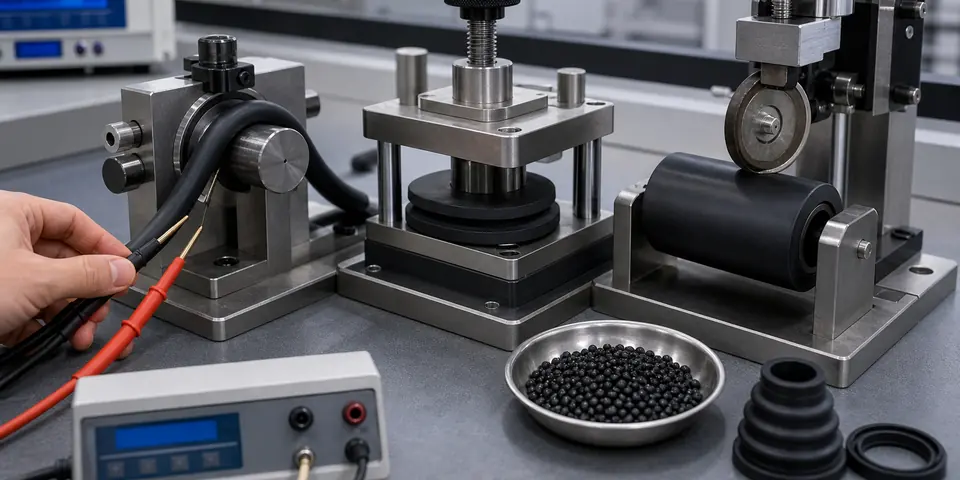
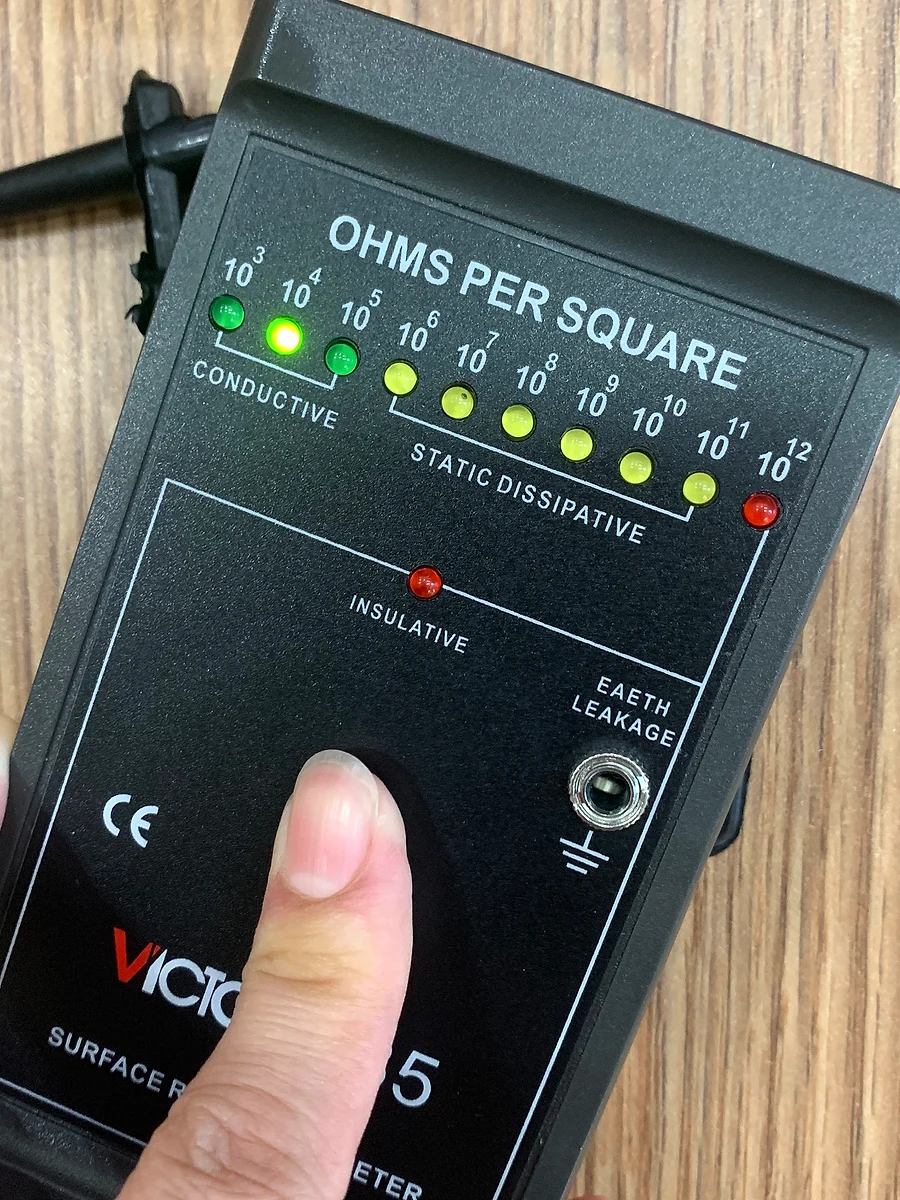
Conductive elastomers are more difficult than rigid conductive plastics because the material must keep both electrical function and elastic recovery.
Buyer and engineer FAQ
Questions engineers often ask about this material route
Where can TPE / TPU / TPV with a conductive plastic requirement be used?
Typical fields include ESD trays, electronic housings, fixtures, EMI parts and antistatic logistics parts. For this article, DEYU would first confirm the working environment, wall thickness, expected lifetime and whether DGK-TPU DD3-4ML Conductive TPU, DGK-TPR DD6-9A Conductive TPR matches the part geometry or needs formulation adjustment.
What are the main performance indicators for the "conductive plastic" target on TPE / TPU / TPV?
Focus on surface resistance, volume resistance, dispersion uniformity, impact strength and molding stability. Buyers should ask for data on molded parts, not only pellet data, because gate position, filler orientation and thickness can change the final value.
What should engineers watch during injection molding or processing?
For TPE / TPU / TPV, a practical starting window is 170-210°C melt / 20-45°C mold. Avoid excessive filler loading, control weld lines and verify resistance on the molded part. Final parameters should follow part thickness, gate design and the actual machine.
What details help DEYU recommend DGK-TPU DD3-4ML Conductive TPU, DGK-TPR DD6-9A Conductive TPR more accurately?
Send the current resin or grade, drawing or photo, wall thickness, annual quantity, target standard, failure mode and required color. If a reference grade already passed one test but failed in production, include both data sets.
For a precise recommendation, share the part drawing, base resin, target performance, processing method and test standard with DEYU.
Procurement Summary
Conductive elastomers are more difficult than rigid conductive plastics because the material must keep both electrical function and elastic recovery.
DGK-TPU DD3-4ML Conductive TPU and DGK-TPR DD6-9A Conductive TPR. Use these grades as close product references when the final flexible part needs conductivity, elasticity, wear resistance, and extrusion or injection molding stability.
For PP, ABS, PA, or POM, the main target is often resistance plus strength. For TPV, TPU, and TPE, the material also needs to survive stretching, bending, compression, friction, and repeated deformation. Conductive filler networks can easily be broken or rearranged during deformation, causing unstable resistance.
The main purchasing question should not be only whether the material can reach a target resistance value. It should be:
- What resistance is required after stretching, bending, or compression?
- Is the product a roller, cable jacket, seal, grip, sleeve, or ESD flexible part?
- What hardness is required?
- Does the part need wear resistance, oil resistance, hydrolysis resistance, UV resistance, flame retardancy, or low-temperature flexibility?
- Is the process injection molding, extrusion, overmolding, or calendering?
- Will the final part be tested after aging or repeated cycles?
1. Main Difficulty: Conductivity vs Elasticity
Conductive elastomers rely on a conductive network formed by carbon black, carbon nanotubes, graphite, carbon fiber, conductive masterbatch, or hybrid systems. But elastomers deform during use.
When the part stretches or compresses, the conductive network may separate, resistance may increase, conductive filler may migrate or orient unevenly, the surface may become rough, elongation may decrease, compression set may worsen, and cracks may appear after repeated bending.
This is why a conductive elastomer should be tested on the final part, not only on a standard test piece.
2. Technical Challenge by Material Type
2.1 Conductive TPU
TPU has good wear resistance, elasticity, and mechanical strength. It is suitable for rollers, sleeves, flexible covers, cable jackets, and abrasion-resistant parts.
Main difficulties:
- conductive fillers may reduce elongation;
- surface may become rough;
- abrasion performance may change;
- hydrolysis resistance must be checked for polyester TPU;
- resistance may shift after repeated bending.
Suitable routes include conductive carbon black for cost-effective black TPU, carbon nanotube systems for lower filler loading, wear-resistant conductive TPU for rollers and sliding parts, and antistatic TPU where low resistance is not necessary.
2.2 Conductive TPE and TPR
TPE and TPR are commonly used for soft-touch parts, grips, seals, flexible housings, cable jackets, and overmolded components.
Main difficulties:
- SEBS, SBS, POE, and TPR systems have different compatibility with conductive fillers;
- low-hardness materials can lose mechanical strength after conductive modification;
- oil-rich TPE may show migration or unstable resistance;
- surface feel and matte appearance may change;
- extrusion die buildup can become a practical production issue.
Suitable routes include a compatible conductive masterbatch, hybrid conductive network, antistatic TPE for dust reduction, and conductive TPE or TPR for black flexible industrial parts.
2.3 Conductive TPV
TPV is often used in automotive seals, gaskets, flexible industrial parts, and weather-resistant soft components.
Main difficulties:
- conductive fillers may affect elastic recovery;
- compression set can become worse;
- surface resistance may vary between rubber-rich and plastic-rich phases;
- extrusion surface must remain stable;
- oil and heat aging resistance need validation.
Suitable routes include conductive TPV with controlled filler dispersion, low-compression-set conductive TPV, conductive TPV for automotive sealing or static-control components, and UV or heat-aging stabilized conductive TPV.
3. Common Technical Routes
| Route | Suitable Use | Advantage | Main Risk |
|---|---|---|---|
| Conductive carbon black | Black conductive TPU, TPE, TPR, TPV | Mature and cost-effective | Higher loading may reduce elongation |
| Conductive masterbatch | Customized elastomer compounds | Easier dosing and dispersion | Carrier compatibility required |
| Carbon nanotubes | High-performance ESD elastomers | Lower loading, better flexibility retention | Higher cost and dispersion difficulty |
| Hybrid conductive network | Flexible parts with stable resistance | Balances conductivity and mechanics | Requires formulation tuning |
| Antistatic system | Dust reduction and light ESD control | Better softness and color possibility | Not suitable for low-resistance parts |
| Conductive plus wear-resistant route | Rollers, sleeves, moving parts | Balances resistance and abrasion | Needs surface and friction validation |
4. Key Performance Indicators
For conductive elastomers, the buyer should not only check surface resistance.
Recommended indicators include:
- surface resistance before and after stretching;
- resistance after bending cycles;
- resistance after compression set test;
- tensile strength;
- elongation at break;
- hardness;
- abrasion resistance;
- compression set;
- surface smoothness;
- extrusion or injection stability;
- aging resistance;
- final-part resistance uniformity.
For rollers, sleeves, and cable jackets, resistance after deformation is often more meaningful than initial resistance on a flat specimen.
5. Application Scenario Guide
5.1 Conductive TPU Roller or Sleeve
This route is recommended when the part needs wear resistance, elastic contact, surface conductivity, low dust adhesion, stable rotation, and repeated compression.
Key tests include surface resistance after rolling cycles, wear loss, surface roughness, hardness stability, and cracking after bending.
5.2 Conductive TPE or TPR Cable Jacket
This route is recommended when the part needs flexibility, black conductive surface, extrusion stability, repeated bending resistance, and static-control function.
Key tests include resistance after bending, elongation, surface quality, extrusion die buildup, and low-temperature flexibility.
5.3 Conductive TPV Seal or Gasket
This route is recommended when the part needs elastic recovery, weather resistance, static control, automotive or industrial sealing, and heat aging resistance.
Key tests include compression set, resistance after compression, surface cracking, UV and heat aging, and sealing performance.
6. Customer Case 1: Conductive TPU Roller With Brittleness Problem
Original Situation
A customer used a black conductive TPU roller. The initial resistance was acceptable, but after operation, the surface became rough and the roller showed small cracks near the edge.
Original Trial Data
| Item | Previous Conductive TPU |
|---|---|
| Surface resistance | 10^5 to 10^8 ohm direction |
| Elongation retention | Low |
| Abrasion loss | High |
| Surface after 100 h | Rough |
| Edge cracking | 3 / 20 rollers |
| Customer feedback | Conductive but not durable |
DEYU Material Direction
DEYU recommended a conductive TPU route with better dispersion and wear balance.
Technical focus:
- maintain 10^5 to 10^8 ohm direction;
- reduce conductive filler agglomeration;
- improve abrasion resistance;
- retain elongation;
- control roller surface smoothness.
Result After Trial
| Item | Previous Conductive TPU | DEYU Conductive TPU Route |
|---|---|---|
| Surface resistance | 10^5 to 10^8 ohm | 10^5 to 10^8 ohm direction |
| Abrasion loss | High | Reduced |
| Surface after 100 h | Rough | Smoother |
| Edge cracking | 3 / 20 | 0 to 1 / 20 |
| Rolling stability | General | Improved |
| Elastic recovery | Medium | Better balanced |
Case Conclusion
For conductive TPU rollers, resistance alone is not enough. Wear resistance, elongation, edge cracking, and surface stability must be designed together.
7. Customer Case 2: Conductive TPE Cable Jacket With Unstable Resistance
Original Situation
A customer used conductive TPE for a flexible cable jacket. The extrusion process was acceptable, but surface resistance varied after bending cycles.
Original Trial Data
| Item | Previous Conductive TPE |
|---|---|
| Initial surface resistance | 10^6 to 10^9 ohm |
| Resistance after bending | Shifted to 10^8 to 10^11 ohm |
| Surface quality | Acceptable |
| Bending crack | None |
| Extrusion stability | General |
| Customer concern | Resistance drift |
DEYU Material Direction
DEYU recommended a compatible conductive masterbatch and hybrid conductive network.
Technical focus:
- better compatibility with TPE base;
- improved filler dispersion;
- more stable conductive pathway after bending;
- maintain softness and extrusion stability.
Result After Trial
| Item | Previous Conductive TPE | DEYU Conductive TPE Route |
|---|---|---|
| Initial surface resistance | 10^6 to 10^9 ohm | 10^6 to 10^9 ohm direction |
| Resistance after bending | 10^8 to 10^11 ohm | 10^6 to 10^9 ohm direction |
| Surface quality | Acceptable | Acceptable-good |
| Bending crack | None | None |
| Extrusion stability | General | Improved after temperature tuning |
| Softness | Good | Good |
Case Conclusion
For conductive TPE cable jackets, the main risk is not initial resistance but resistance stability after bending. A compatible conductive system is more important than simply adding more filler.
8. Customer Case 3: Conductive TPV Seal With Compression Set Problem
Original Situation
A customer needed a conductive TPV seal. The first trial reached the resistance target, but compression set became too high after heat aging.
Original Trial Data
| Item | Previous Conductive TPV |
|---|---|
| Surface resistance | 10^6 to 10^9 ohm direction |
| Compression set after heat aging | High |
| Elastic recovery | Reduced |
| Surface quality | Medium |
| Resistance after compression | Unstable |
| Customer feedback | Conductive but poor sealing recovery |
DEYU Material Direction
DEYU recommended a conductive TPV route focused on elastic recovery.
Technical focus:
- controlled filler loading;
- better dispersion in TPV phase structure;
- lower compression set;
- resistance stability after compression;
- heat aging balance.
Result After Trial
| Item | Previous Conductive TPV | DEYU Conductive TPV Route |
|---|---|---|
| Surface resistance | 10^6 to 10^9 ohm | 10^6 to 10^9 ohm direction |
| Compression set | High | Reduced |
| Elastic recovery | Reduced | Improved |
| Resistance after compression | Unstable | More stable |
| Surface quality | Medium | Improved |
| Sealing reliability | General | Better |
Case Conclusion
For conductive TPV seals, elastic recovery is as important as resistance. The formulation must balance the conductive network and rubber-like phase behavior.
9. DEYU Conductive Elastomer Platform
DEYU can develop conductive elastomers according to hardness, resistance target, processing method, and application.
Possible directions:
- DGK conductive TPU compound;
- DGK antistatic TPU compound;
- DGK conductive TPE or TPR compound;
- DGK conductive TPV compound;
- conductive elastomer for rollers;
- conductive elastomer for cable jackets;
- conductive elastomer for seals and gaskets;
- conductive elastomer with wear resistance;
- conductive elastomer with low-temperature flexibility;
- conductive elastomer with UV or heat aging resistance.
Information buyers should provide:
- base material: TPU, TPE, TPR, or TPV;
- hardness;
- target resistance;
- test method;
- processing method;
- part thickness;
- elongation requirement;
- compression set requirement;
- wear requirement;
- bending cycle requirement;
- color;
- current failure mode;
- sample or drawing.
Conclusion
Conductive elastomers are difficult because conductivity must remain stable during deformation. TPV, TPU, TPE, and TPR compounds must balance resistance, elongation, hardness, elastic recovery, wear resistance, compression set, surface quality, and processability.
For rollers, the key is conductive stability plus wear resistance. For cable jackets, the key is resistance after bending. For seals and gaskets, the key is resistance after compression and elastic recovery.
DEYU's approach is to select the conductive route according to the final part, instead of simply increasing conductive filler. A well-designed conductive elastomer should not only pass the initial resistance test. It should keep its electrical and mechanical performance after stretching, bending, compression, aging, and real use.