
Flame-Retardant PP for Electrical Junction Boxes and Covers
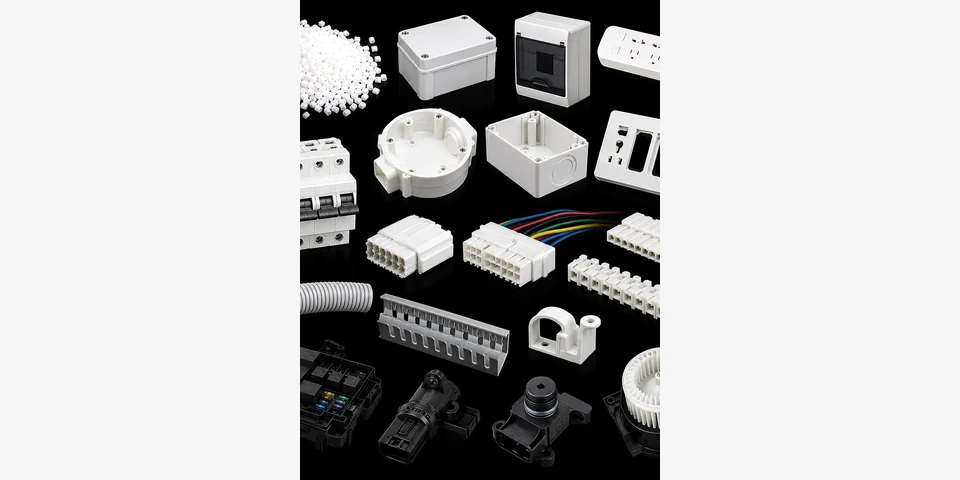
Electrical junction boxes are fundamental components in power distribution systems, serving as connection hubs that protect internal wiring and electrical terminations from environmental exposure, mechanical stress, and electrical faults. They are used across a wide range of applications: household appliances (refrigerators, air conditioners, washing machines), industrial control cabinets, automotive electrical systems, and building wiring installations.
Buyer and engineer FAQ
Questions engineers often ask about this material route
Where can PP with a flame-retardant plastic requirement be used?
Typical fields include electrical enclosures, battery parts, connectors, appliance housings and industrial covers. For this article, DEYU would first confirm the working environment, wall thickness, expected lifetime and whether DGK-PP WPP-V0 halogen-free flame-retardant PP, flame-retardant plastics product category matches the part geometry or needs formulation adjustment.
What are the main performance indicators for the "flame-retardant plastic" target on PP?
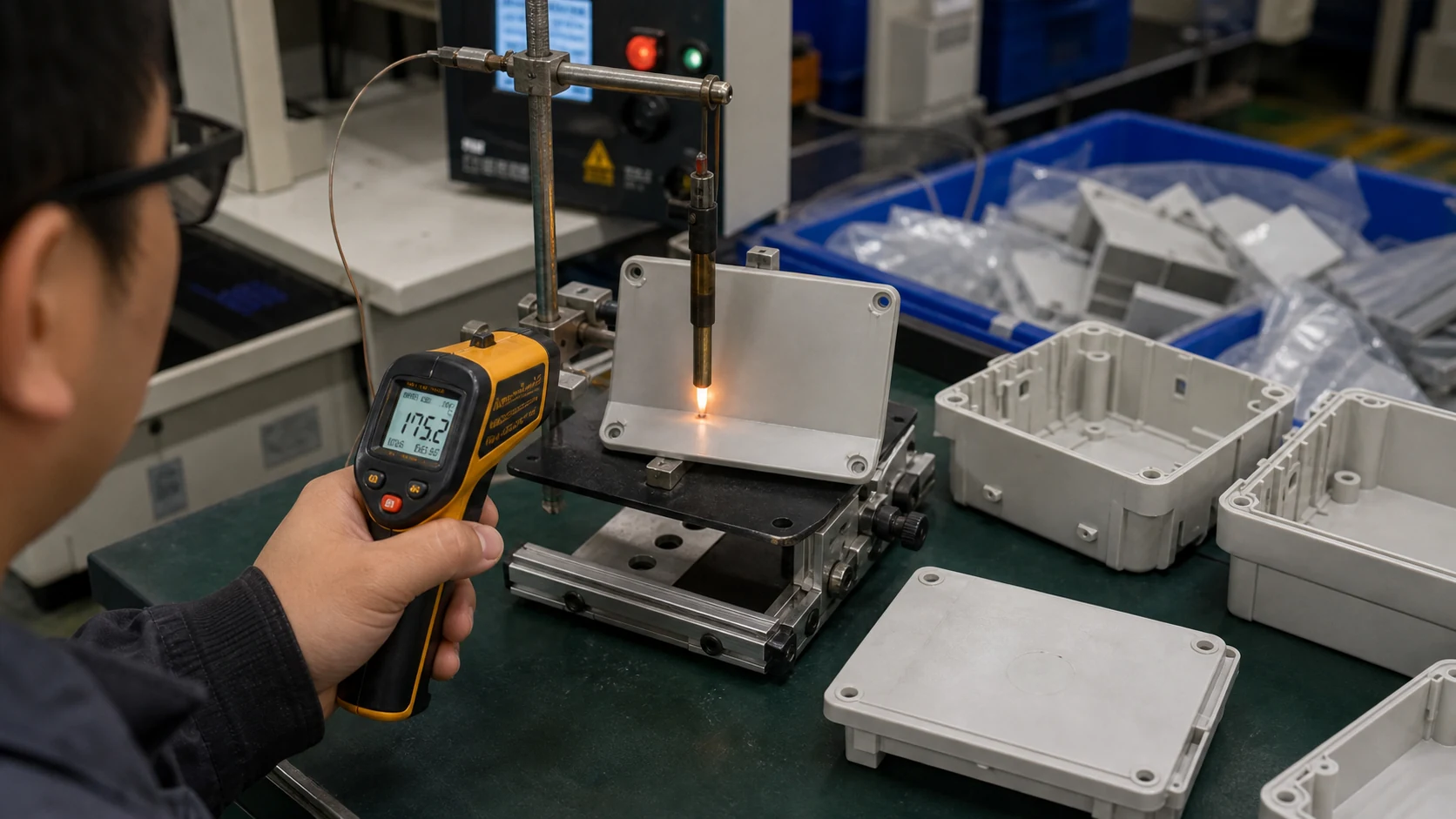
Focus on UL94 rating, GWFI/GWIT when needed, CTI, mechanical retention, color stability and flame-retardant precipitation. Buyers should ask for data on molded parts, not only pellet data, because gate position, filler orientation and thickness can change the final value.
What should engineers watch during injection molding or processing?
For PP, a practical starting window is 190-230°C melt / 30-60°C mold. Avoid excessive residence time, use moderate screw speed and confirm the rating at the actual wall thickness. Final parameters should follow part thickness, gate design and the actual machine.
What details help DEYU recommend DGK-PP WPP-V0 halogen-free flame-retardant PP, flame-retardant plastics product category more accurately?
Send the current resin or grade, drawing or photo, wall thickness, annual quantity, target standard, failure mode and required color. If a reference grade already passed one test but failed in production, include both data sets.
For a precise recommendation, share the part drawing, base resin, target performance, processing method and test standard with DEYU.
Background / Problem
Electrical junction boxes are fundamental components in power distribution systems, serving as connection hubs that protect internal wiring and electrical terminations from environmental exposure, mechanical stress, and electrical faults. They are used across a wide range of applications: household appliances (refrigerators, air conditioners, washing machines), industrial control cabinets, automotive electrical systems, and building wiring installations.
Related DEYU plastics material references for this selection topic: DGK-PP WPP-V0 halogen-free flame-retardant PP and flame-retardant plastics product category.
The material selection for junction boxes is critical because these components must meet multiple, often conflicting, requirements:
Fire safety —The box must not propagate flame in the event of an electrical short circuit or overload.
Electrical insulation —Adequate dielectric strength and tracking resistance to prevent leakage currents.
Mechanical durability —Resistance to impact during installation, vibration during operation, and thermal cycling.
Processing economics —Ability to mold complex geometries (ribs, bosses, snap-fits) with high productivity and minimal scrap.
Historically, junction boxes have been manufactured using thermosets (phenolics, BMC), flame-retardant ABS, or flame-retardant polycarbonate/ABS alloys. However, each of these materials presents limitations:
Thermosets: High density, limited design flexibility, longer cycle times.
FR ABS: Higher cost, limited heat resistance, UV degradation concerns.
FR PC/ABS: Premium cost, processing sensitivity, higher density.
Flame-retardant PP offers a compelling alternative—lower density (0.95—.15 g/cm³ versus 1.15—.25 g/cm³ for ABS and 1.20+ for PC/ABS), competitive mechanical performance, excellent flowability for complex geometries, and significant material cost savings. However, achieving reliable UL94 V-0 performance at the required thickness, maintaining dimensional stability with thin-wall designs, and passing glow-wire and CTI requirements require careful formulation engineering.
Technical Difficulty / Why Junction Boxes Are Challenging for FR PP
Junction box applications present several specific technical challenges that differentiate them from other FR PP applications:
1. Variable Wall Thickness from Ribs and Bosses
Junction boxes typically have nominal wall thicknesses of 1.5—.5mm, but incorporate ribs (for structural reinforcement) and bosses (for screw mounting) that can range from 2.5—.0mm. As discussed extensively in earlier sections, UL94 V-0 performance is thickness-dependent—a material passing at 1.5mm may fail at 3.0mm due to extended afterflame. The material must either pass across the entire thickness range or be selected specifically for the part's maximum thickness.
2. Glow-Wire and Flammability Requirements
Electrical junction boxes must typically pass glow-wire tests per IEC 60695-2: glow-wire flammability index (GWFI) at 850°C and glow-wire ignition temperature (GWIT) at 775°C or 850°C. These tests evaluate the material's resistance to ignition from a heated wire simulating an overheating electrical connection. FR PP formulations must achieve both UL94 V-0 and glow-wire pass—requirements that are not always aligned because the test mechanisms differ (flame exposure vs. hot contact).
3. Creepage and Clearance —CTI Requirements
For junction boxes used in higher-voltage applications or environments with potential contamination (dust, humidity), the comparative tracking index (CTI) is critical. CTI measures the material's resistance to tracking—the formation of conductive carbonized paths on the surface under electrical stress. Many junction box specifications require CTI ≤600V. Standard FR PP formulations often achieve CTI 300—00V; achieving 600V requires specific filler and FR chemistry selection.
4. Long-Term Thermal Aging and Dimensional Stability
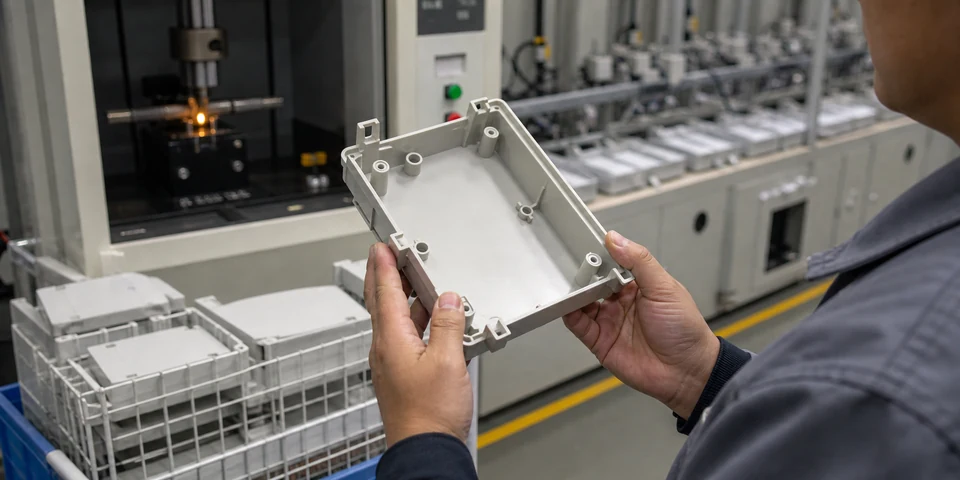
Junction boxes in appliances (refrigerators, air conditioners) may experience operating temperatures of 80—05°C. The material must maintain mechanical properties and dimensional stability over the product's service life, without excessive creep, warpage, or loss of flame retardancy.
5. Assembly Features —Screw Bosses and Snap-Fits
Junction boxes require reliable screw bosses for cover attachment and often incorporate snap-fit features for tool-free assembly. These features demand materials with:
Sufficient ductility to avoid screw boss cracking during torque application.
High melt flow to fill thin rib and boss geometries without voids or short shots.
Low warpage to maintain cover sealing and gasket compression.
DEYU Material Direction
DEYU offers a dedicated family of flame-retardant PP compounds specifically developed for electrical junction box and cover applications—the DGK-JB series (Junction Box). The series covers multiple performance tiers:
| Grade | FR System | UL94 Rating | Key Feature | Target Application |
|---|---|---|---|---|
| DGK-JB-01 | Halogen-free P-N intumescent | V-0 at 1.5mm | Low smoke, low toxicity, CTI 600V | Appliance junction boxes, indoor electrical |
| DGK-JB-02 | Halogen-free P-N intumescent | V-0 at 1.5mm, 5VA at 2.0mm | High GWFI/GWIT, enhanced thermal stability | High-temperature appliance applications |
| DGK-JB-03 | Brominated + Sb | >V-0 at 1.0mm | Thin-wall capability, high flow | Compact junction boxes, complex geometries |
| DGK-JB-04 | Halogen-free P-N + mineral | V-0 at 2.5mm | Low warpage, high stiffness | Large junction boxes, industrial enclosures |
The DGK-JB series is formulated with:
Balanced FR loading —Optimized to achieve UL94 V-0 and glow-wire pass simultaneously, with minimal impact on mechanical properties.
High-CTI filler package —Selected fillers and synergists that raise CTI to ≤00V without compromising flame retardancy.
Thermal stabilizers —Enhanced antioxidant system to maintain properties after long-term aging at 100—05°C.
Low-warpage design —Controlled crystallization and filler orientation to minimize distortion in large flat panels and ribbed structures.
Reference Product Data —DGK-JB Series
The following data are representative of DEYU plastics' internal customer validation records. Final values may vary depending on specific part geometry and processing conditions.
| Property | DGK-JB-01 (Halogen-free) | DGK-JB-02 (Halogen-free, high-temp) | DGK-JB-03 (Brominated) | DGK-JB-04 (Low-warpage) | Test Method |
|---|---|---|---|---|---|
| Base Resin | PP copolymer | PP copolymer | PP homopolymer | PP copolymer + mineral | —/td> |
| FR System | P-N intumescent | P-N intumescent (enhanced) | Brominated + Sb | >P-N + mineral filler | —/td> |
| Density (g/cm³) | 1.02—.06 | 1.04—.08 | 1.10—.15 | 1.12—.18 | ISO 1183 |
| MFR (g/10min, 230°C/2.16kg) | 8—2 | 6—0 | 12—8 | 4— | ISO 1133 |
| Tensile Strength (MPa) | 26—0 | 28—2 | 28—2 | 30—4 | ISO 527 |
| Flexural Modulus (MPa) | 1500—700 | 1600—800 | 1600—800 | 2200—600 | ISO 178 |
| Notched Impact (kJ/m²), 23°C | 5— | 5— | 4— | 4— | ISO 179 |
| UL94 V-0 (mm) | 1.5 | 1.5 | 1.0 | 2.5 | UL94 |
| UL94 5VA (mm) | —/td> | 2.0 | —/td> | —/td> | UL94 |
| GWFI (°C) | 850 | 960 | 850 | 850 | IEC 60695-2-12 |
| GWIT (°C) | 775 | 850 | 775 | 775 | IEC 60695-2-13 |
| CTI (V) | 600 | 600 | 375 | 600 | IEC 60112 |
| HDT (°C, 1.82MPa) | 105—10 | 110—15 | 100—05 | 115—20 | ISO 75 |
| Mold Shrinkage (MD/TD, %) | 0.9/1.3 | 0.8/1.2 | 0.8/1.4 | 0.6/0.9 | ISO 294-4 |
Customer Debugging / Validation Scenario
Scenario (Based on DEYU Internal Customer Validation Data): An appliance manufacturer producing refrigeration equipment was using a flame-retardant ABS compound for their junction box covers at a nominal wall thickness of 1.5mm. While the material passed UL94 V-0 and glow-wire testing, the manufacturer was facing pressure to reduce material costs and lower component weight. They sourced an alternative halogen-free FR PP from another supplier. During the first production trial, the molded covers exhibited:
UL94 failure at 1.5mm —22% of samples dripped flaming particles.
Warpage —2.8mm bow across the 150mm cover length, causing gasket sealing failures.
Screw boss cracking —8% of bosses cracked during torque application (1.2 N·m).
The manufacturer rejected the alternative PP and approached DEYU for a solution.
Trial Design: DEYU supplied 500 kg of DGK-JB-02 (halogen-free, high-thermal-stability grade) for a production trial under the customer's actual molding conditions. The trial ran for 1,500 parts across three production shifts.
Molding Conditions:
Melt temperature: 200—20°C
Mold temperature: 50—0°C
Injection pressure: 70—0 MPa
Cooling time: 20—5 seconds
Total cycle time: 32—8 seconds
Validation Data Table
The data below are based on DEYU plastics' internal customer validation records from this specific application (anonymized).
| Parameter | Original FR ABS | Alternative FR PP (failed) | DEYU DGK-JB-02 | Improvement vs. Alternative |
|---|---|---|---|---|
| Trial quantity (kg) | 500 | 500 | 500 | —/td> |
| Parts molded | 1,500 | 1,500 | 1,500 | —/td> |
| UL94 V-0 pass rate at 1.5mm (%) | 100 | 78 | 100 | +22 p.p. |
| Glow-wire test GWFI 850°C pass rate (%) | 100 | 92 | 100 | +8 p.p. |
| CTI (V) | 375 | 400 | 600 | +200V |
| Warpage (bow, mm over 150mm) | 0.8 | 2.8 | 1.1 | -?61% |
| Screw boss torque test pass rate (1.2 N·m, %) | 100 | 92 | 100 | +8 p.p. |
| Molding scrap rate (%) | 2.5 | 12.5 | 3.2 | -?74% |
| Part weight (g) | 68 | 54 | 55 | -?19% vs ABS |
| Material cost per part | Baseline | -?32% | -?28% | Comparable to PP |
Result Interpretation
The alternative halogen-free FR PP failed because its formulation was not optimized for the specific thickness (1.5mm with local boss transitions) and lacked adequate flow and anti-drip control for the part geometry. At 1.5mm, the FR system was on the borderline of effective char formation—some areas of the part had slightly thinner sections due to flow-induced thickness variation, and these sections dripped during UL94 testing.
DEYU DGK-JB-02 addressed these issues through:
Optimized FR loading —The P-N intumescent system is balanced to achieve robust V-0 performance at 1.5mm with a safety margin, passing across 1.2—.0mm based on internal validation data.
Enhanced anti-drip mechanism —A proprietary PTFE-based anti-drip agent is incorporated at a level that prevents droplet detachment even in thin sections, without compromising surface appearance or flow.
Thermal stabilizer package —The enhanced antioxidant system ensures that the material maintains its FR performance and mechanical properties even with the higher heat exposure during molding and after long-term aging.
Warpage control —The mineral filler system in DGK-JB-02 is designed to reduce anisotropic shrinkage, bringing the warpage from 2.8mm to 1.1mm—within the customer's 1.5mm sealing specification.
CTI performance —The proprietary filler package achieves CTI 600V, providing additional safety margin for applications where dust or humidity may be present.
The outcome: The customer achieved 100% UL94 pass rate on the first production trial, reduced material cost by 28% compared to FR ABS (while saving 19% part weight), and eliminated the screw boss cracking issue. The material is now in full production for three junction box cover variants across the customer's product line.
Important note: DEYU does not claim that DGK-JB-02 will pass every junction box geometry without validation. However, based on internal customer validation data across multiple part geometries, the grade demonstrates consistent V-0 performance at 1.5mm with a safety margin. Final part-level certification should always be validated on the actual production part geometry.
Suitable Applications
Refrigerator and freezer junction boxes —where low-temperature impact resistance and long-term reliability are critical
Air conditioner electrical control boxes —where high operating temperatures and glow-wire requirements demand robust performance
Industrial electrical enclosures —where larger part sizes require low-warpage grades
Automotive electrical junction boxes —where vibration resistance and thermal cycling are critical
Building wiring junction boxes —where CTI requirements and UL94 compliance are mandatory
Power distribution terminal boxes —where creepage distances and electrical insulation are paramount
What Buyers Should Provide
To enable DEYU to recommend the optimal junction box FR PP grade, please provide:
Part drawing (2D with wall thickness map, or 3D STEP file) —showing nominal wall, rib thicknesses, boss heights, and gate locations
Required UL94 rating and declared thickness —e.g., V-0 at 1.5mm, 5VA at 2.0mm
Glow-wire requirements —GWFI and GWIT targets (850°C, 960°C, etc.)
CTI requirement —e.g., ≤00V if applicable
Operating temperature range —ambient and maximum continuous temperatures
Processing method —injection molding with gate type and hot runner details
Assembly method —screw boss torque specification, snap-fit requirements, welding
Monthly production volume —shots or kg
Any existing material —current grade and performance data (if available)
Conclusion
Electrical junction boxes and covers present a demanding set of material requirements: reliable UL94 V-0 flame retardancy, glow-wire pass, high CTI for electrical safety, mechanical durability for assembly features, and dimensional stability for sealing integrity. Flame-retardant PP offers significant advantages over traditional materials—lower density, cost efficiency, and design flexibility—but requires careful formulation to meet all performance criteria simultaneously.
DEYU plastics' DGK-JB series addresses these challenges through optimized FR systems, enhanced thermal stabilization, high-CTI filler packages, and low-warpage formulations. Based on internal customer validation data across multiple appliance and industrial applications, the series demonstrates consistent UL94 V-0 pass rates, glow-wire compliance, and CTI ≤00V, with warpage and molding scrap rates comparable to—or better than—traditional FR ABS and PC/ABS materials.
DEYU can support customers through material selection, production-tool validation trials, and certification assistance—ensuring that the chosen compound meets both regulatory requirements and production economics.
Note: All performance data in this document is based on DEYU plastics' internal customer validation database and represents typical outcomes for the DGK-JB series. Final part-level certification must be validated on the actual production part geometry under the customer's specific processing conditions.