
Global Antistatic Plastic Solutions Provider: From Standard Grades to Custom-Formulated Options
In key global manufacturing sectors including semiconductor packaging and testing, electronic component handling, cleanroom equipment, new energy vehicles and industrial automation, electrostatic protection has become a mandatory technical requirement in plastic part selection. Traditional antistatic approaches often rely on conductive carbon black filling or surface coating. Carbon black can deliver low resistance, but it usually creates opaque black materials and may reduce impact toughness. Surface coating can be transparent, but it may lose effectiveness over time, after wiping or under changing ambient humidity.
Buyer and engineer FAQ
Questions engineers often ask about this material route
Where can POM / PP with a antistatic plastic requirement be used?
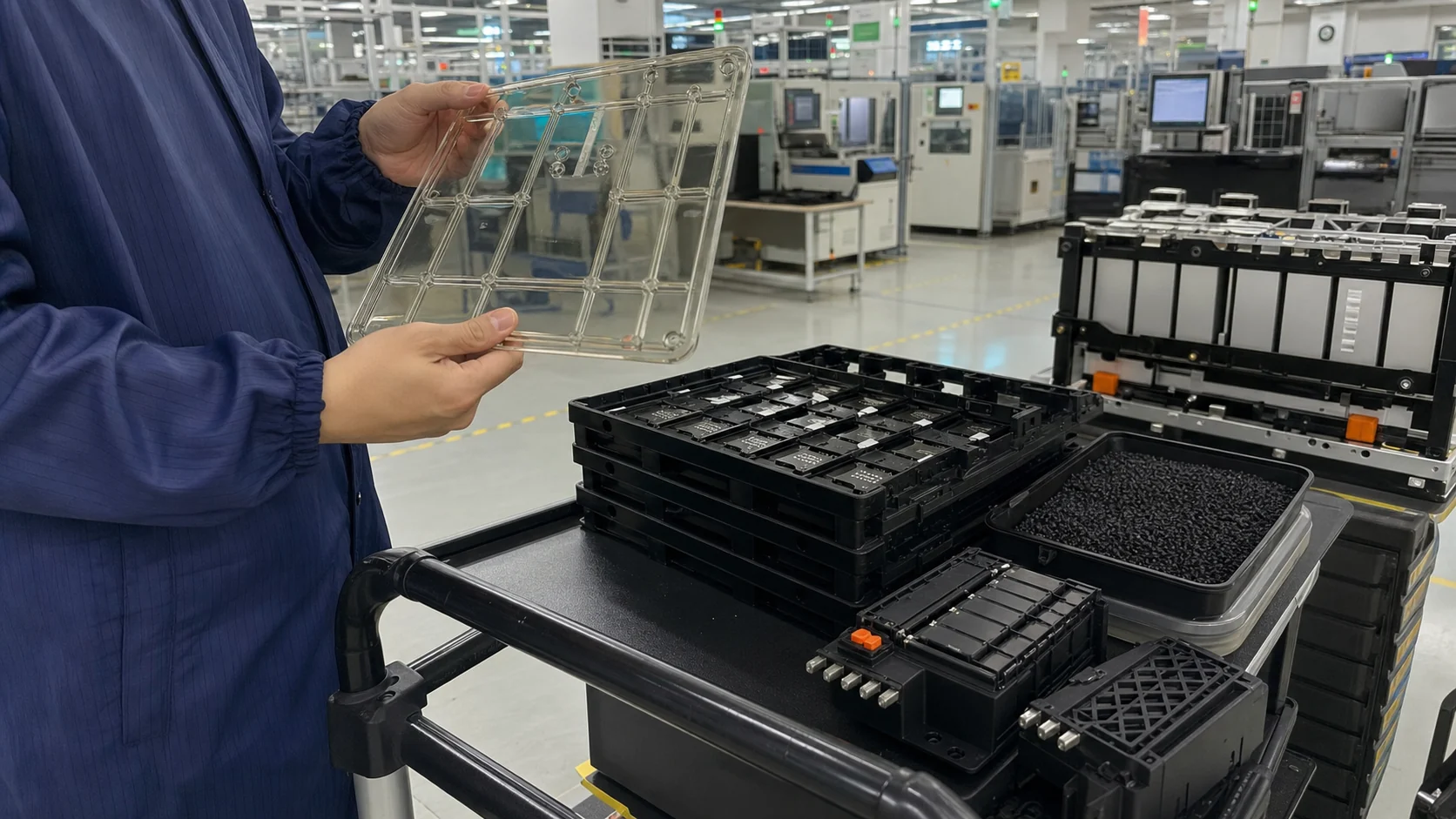
Typical fields include clear covers, electronic packaging, dust-control parts, trays and clean-area components. For this article, DEYU would first confirm the working environment, wall thickness, expected lifetime and whether DGK-ABS KJD890TM transparent antistatic ABS, DGK-PP DD2-3A conductive PP matches the part geometry or needs formulation adjustment.
What are the main performance indicators for the "antistatic plastic" target on POM / PP?
Focus on stable surface resistance, dust attraction, transparency or color, humidity sensitivity and long-term antistatic decay. Buyers should ask for data on molded parts, not only pellet data, because gate position, filler orientation and thickness can change the final value.
What should engineers watch during injection molding or processing?
For POM / PP, a practical starting window is 180-210°C melt / 70-100°C mold. Avoid over-drying antistatic systems, confirm resistance after conditioning and after part cleaning. Final parameters should follow part thickness, gate design and the actual machine.
What details help DEYU recommend DGK-ABS KJD890TM transparent antistatic ABS, DGK-PP DD2-3A conductive PP more accurately?
Send the current resin or grade, drawing or photo, wall thickness, annual quantity, target standard, failure mode and required color. If a reference grade already passed one test but failed in production, include both data sets.
For a precise recommendation, share the part drawing, base resin, target performance, processing method and test standard with DEYU.
Introduction
In key global manufacturing sectors including semiconductor packaging and testing, electronic component handling, cleanroom equipment, new energy vehicles and industrial automation, electrostatic protection has become a mandatory technical requirement in plastic part selection. Traditional antistatic approaches often rely on conductive carbon black filling or surface coating. Carbon black can deliver low resistance, but it usually creates opaque black materials and may reduce impact toughness. Surface coating can be transparent, but it may lose effectiveness over time, after wiping or under changing ambient humidity.
DGK-ABS KJD890TM transparent antistatic ABS and DGK-PP DD2-3A conductive PP. Use these pages to connect transparent permanent antistatic ABS and conductive PP application routes with actual DEYU product options.
For applications requiring visual inspection, long-term reliability, wipe resistance or specific substrate properties, conventional short-term solutions have clear limits. Yuyao Deyu Plastic Technology Co., Ltd. (DEYU) has worked in antistatic plastics for many years and has built a portfolio covering multiple base resins and technical routes, including conventional carbon-black-filled antistatic grades, transparent permanent antistatic grades and specialty modified materials such as conductive or antistatic PA, PP, PC, POM and PE.
DEYU serves high-end domestic manufacturing and international OEM or ODM customers with quality standards, flexible customization and rapid response. This document provides systematic reference information on DEYU antistatic plastics, including technical routes, product range, in-depth application cases and selection guidelines.
1. Technical Routes for Antistatic Plastics and Their Application Boundaries
The common technical routes for electrostatic dissipation in engineering plastics can be summarized into three categories. Selection should consider resistance range, transparency, permanence, cleanliness, mechanical retention and process stability.
| Technical route | Mechanism | Typical surface resistivity | Transparency | Permanence | Main limitations |
|---|---|---|---|---|---|
| Conductive filler-filled system, including carbon black, carbon fiber and carbon nanotubes | Forms conductive pathways inside the polymer matrix | 10^3-10^6 ohm, conductive range | Opaque black in most cases; color adjustment is possible only in some systems | Permanent and normally unaffected by humidity | Impact toughness can decrease; carbon black may bring particle-shedding concerns |
| Polymer-type permanent antistatic agent modification | Hydrophilic or ion-conductive polymer forms a submicroscopic conductive network | 10^7-10^10 ohm, static-dissipative range | Transparent or translucent grades are possible | Permanent, wipe-resistant and washable when the formulation is correct | Requires good compatibility, dispersion control and substrate matching |
| Surface coating | Spray or dip coating with low-molecular-weight antistatic agents | 10^9-10^11 ohm, short-term antistatic range | Transparent coating is possible | Temporary and may degrade with time | Needs periodic re-application; not suitable as a permanent material solution |
Selection logic for global applications
| Requirement scenario | Recommended route | Rationale |
|---|---|---|
| Transparency plus long-term antistatic performance | Polymer-type permanent antistatic route | High light transmittance, permanent behavior and wipe resistance |
| Conductive level below 10^6 ohm where black is acceptable | Conductive carbon black filled route | High conductivity, mature processing and cost-effective production |
| Short-term or single-use antistatic packaging | Surface coating | Low cost and simple application |
| Cleanroom use requiring antistatic behavior and no particle shedding | Polymer-type permanent antistatic route | Smooth surface, no filler shedding and better cleanliness control |
| Wear resistance plus antistatic behavior | Compound modification combining conductive and lubricating components | Multifunctional performance, but normally requires custom formulation |
2. DEYU Antistatic Plastic Product Portfolio for Global Supply
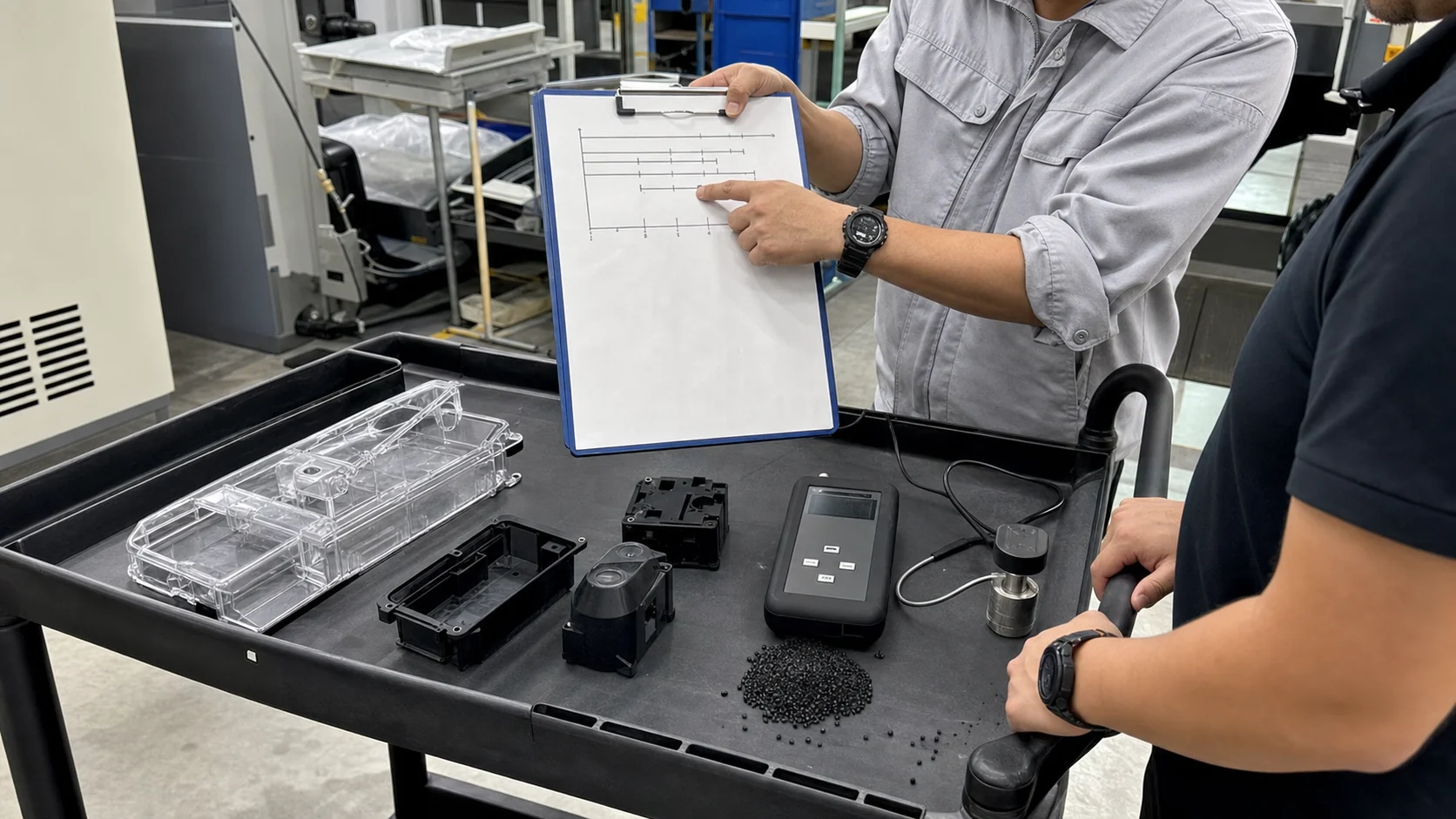
DEYU antistatic products cover a wide range from conductive to static-dissipative levels. Base resins include ABS, PP, PA, PC, POM and PE. The products are designed to comply with international environmental regulations such as RoHS and REACH.
| Product series | Typical grade | Base resin | Technical route | Surface resistivity | Transparency | Typical applications |
|---|---|---|---|---|---|---|
| Transparent permanent antistatic | DGK-ABS KJD890TM | Transparent ABS alloy | Polymer-type permanent antistatic modification | 10^8-10^10 ohm | High transparency, about 85% | IC trays, wafer carriers, cleanroom windows |
| Conductive ABS | DGK-ABS Conductive Series | ABS | Conductive carbon black | 10^3-10^6 ohm | Opaque black, color customization possible in selected cases | Antistatic tote boxes, grounded trays, structural parts |
| Antistatic PP | DGK-PP Antistatic Series | PP | Conductive carbon black | 10^3-10^6 ohm | Opaque black | Electronic component packaging and folding containers |
| Conductive or antistatic PA | DGK-PA Conductive Series | PA6 or PA66 | Conductive carbon black | 10^3-10^6 ohm | Opaque black, color customization possible in selected cases | Antistatic gears and wear-resistant conductive parts |
| Antistatic PC | DGK-PC Antistatic Series | PC | Conductive carbon black or permanent antistatic route | 10^6-10^9 ohm | Black or translucent | Cleanroom equipment housings and electronic panels |
| Antistatic POM | DGK-POM Antistatic Series | POM | Conductive carbon black | 10^3-10^6 ohm | Opaque black | Antistatic precision transmission components and gears |
| Antistatic PE | DGK-PE Antistatic Series | PE | Conductive carbon black | 10^3-10^6 ohm | Opaque black | Antistatic protective films and packaging containers |
3. In-Depth Application Case Studies Validated by Global Customers
The following cases are based on joint validation between DEYU and domestic or international customers. The test data came from customer laboratories or third-party testing institutes.
Case 1: Semiconductor packaging and testing, transparent permanent antistatic IC chip trays
A leading global semiconductor packaging and testing company used conventional ABS trays together with ionizing blowers during IC chip handling. The blowers had limited coverage, so static charge still accumulated on trays at the end of the line. Dust attraction around chip leads affected bonding yield. The customer wanted inherently antistatic trays while maintaining transparency for automated visual orientation recognition.
DEYU selected DGK-ABS KJD890TM transparent permanent antistatic ABS. The purpose was to combine stable surface resistivity, transparency and wipe resistance without depending on an external ionizing device.
| Test item | Test method | Result |
|---|---|---|
| Surface resistivity uniformity | IEC 61340-5-1, 23 C / 50% RH, 5 points per tray, 10 trays | Average 3.2 x 10^9 ohm, CV = 16% |
| Light transmittance | ASTM D1003, 2 mm thickness | Initial 85%, no visible haze |
| Wipe resistance | 75% alcohol swab, 500 wipes, followed by resistivity measurement | 4.1 x 10^9 ohm, no order-of-magnitude change |
| Particle shedding test | Simulated ultrasonic cleaning and liquid particle counting | Meets ISO Class 7 requirements |
Process adjustments included drying at 85 C for 4 h, moisture below 0.05%, melt temperature of 195-210 C, mold temperature around 70 C, SPI A-2 mold polish and a fan gate to avoid shear overheating.
Results over six months included a tray visual recognition pass rate of 99.8%, dust-related visual defects reduced from 0.3% to 0.02%, elimination of ionizing blowers and repeated washing or alcohol wiping without performance degradation.
Case 2: New energy vehicles, conductive PP battery module insulating bracket
A power battery module supplier originally used standard PP with metal grounding tabs. The tabs increased assembly complexity and occupied space. The customer wanted inherently conductive PP to dissipate static charge while also meeting flame-retardancy and long-term temperature requirements.
DEYU selected DGK-PP DD2-3A conductive PP with a target surface resistivity of 10^3-10^6 ohm, UL94 V-2 flame rating and an operating temperature range from -20 to 60 C.
| Test item | Test method | Result |
|---|---|---|
| Surface resistivity | GB/T 1401-2002, 10 parts x 5 points | Average 8.5 x 10^4 ohm, CV = 14% |
| Resistivity after thermal cycling | -40 C / +85 C, 90% RH, 200 cycles | 1.2 x 10^5 ohm, still in conductive range |
| Flame rating | UL94 | V-2 |
| Tensile strength | GB/T 1040.2 | 22 MPa |
| Mechanical retention after coolant exposure | 72 h in 50:50 ethylene glycol / water | Tensile strength retention 91% |
Process adjustments included drying at 80 C for 3 h, melt temperature of 200-230 C, mold temperature of 40-60 C, resistivity monitoring every 30 shots with back-pressure adjustment if CV exceeded 20%, and shrinkage compensation of about 1.5-1.8%.
The final results eliminated metal grounding tabs, reduced assembly steps from 5 to 3, reduced module weight by about 8%, kept resistivity CV below 15% across three consecutive batches, achieved a 100% ESD pass rate on the production line and lowered material cost by about 18% compared with the original solution.
Case 3: Electronics assembly, antistatic POM drive gear
An SMT placement machine manufacturer used standard POM gears with external grounding carbon brushes. The brushes wore quickly and had to be replaced weekly. Carbon dust also created contamination risk for PCBs. The customer wanted inherently antistatic POM gears while keeping low friction and low noise.
DEYU selected DGK-POM KJD789R, a wear-resistant and permanent antistatic compound POM.
| Test item | Test method | Result |
|---|---|---|
| Surface resistivity uniformity | IEC 61340-5-1, 10 parts x 5 points | Average 3.8 x 10^9 ohm, CV = 18% |
| Friction and wear comparison | GB/T 3960, 150 N / 0.42 m/s / 120 min, against 45# steel | Wear mass 26 mg; pure POM was 22 mg; +18% was acceptable |
| Gear rig endurance | 1.5 N.m, 20 rpm, 5000 h, resistivity and wear measured every 500 h | Resistivity 5.6 x 10^9 ohm after 5000 h, no drift; tooth wear below 0.04 mm |
| Wipe resistance | 75% alcohol, 500 wipes | Resistivity 4.2 x 10^9 ohm, no change |
Process adjustments included drying at 80 C for 3-4 h, moisture below 0.1%, melt temperature of 195-210 C, mold temperature of 90-100 C, gate location away from the gear tooth meshing area, and resistivity checks every 50 shots incorporated into the SOP.
The 5000-hour endurance test passed with acceptable gear clearance and stable resistivity. External carbon brushes were eliminated, maintenance and assembly were reduced, noise remained comparable to standard POM, placement accuracy stayed stable and no static-related placement offset failures were recorded.
4. Quick Reference for Additional Application Scenarios
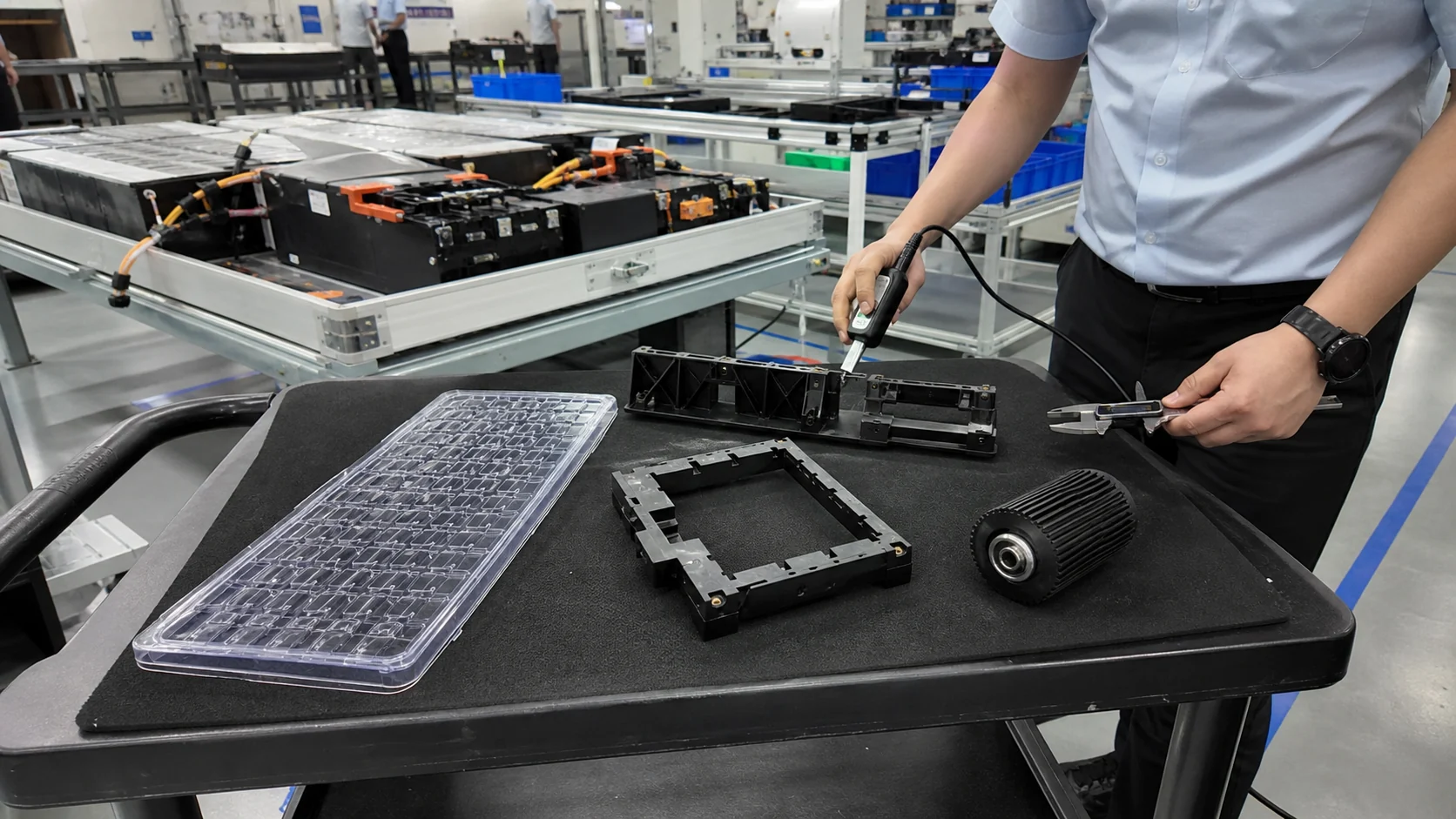
The following quick reference helps map application conditions to DEYU material directions. Final selection should still be verified by part design, molding process and actual service conditions.
4.1 Semiconductor and electronics manufacturing
| Typical component | Recommended product | Target resistivity | Key conditions | Selection points |
|---|---|---|---|---|
| Wafer carriers, reticle pods | DGK-ABS KJD890TM | 10^8-10^10 ohm | Cleanroom Class 7 or above | Transparent, permanent antistatic, no particle shedding |
| Chip test fixture guide blocks | DGK-POM Antistatic Series | 10^3-10^6 ohm | Frequent sliding and wear-prone operation | Conductive plus self-lubricating, dimensionally stable POM |
| PCB oven carriers | DGK-PC Antistatic Series | 10^6-10^9 ohm | Reflow soldering heat | PC has better heat resistance than ABS; translucent option available |
| Folding electronic component containers | DGK-PP Antistatic Series | 10^3-10^6 ohm | Frequent folding | Flexible PP and cost-sensitive selection |
| SMT reels, feeder trays | DGK-ABS Conductive Series | 10^3-10^6 ohm | Automated handling and precise dimensions | Fast static dissipation where black is acceptable |
4.2 New energy vehicles
| Typical component | Recommended product | Target resistivity | Key conditions | Selection points |
|---|---|---|---|---|
| Battery module busbar insulating bracket | DGK-PP Antistatic Series | 10^3-10^6 ohm | -20 to 60 C, coolant contact | Conductive PP plus flame-retardant option; can eliminate grounding tabs |
| High-voltage cable fixing clips | DGK-PA Conductive Series | 10^3-10^6 ohm | Vibration and oil resistance | PA66 provides heat resistance, strength and conductivity |
| Battery pack internal inspection window | DGK-ABS KJD890TM | 10^8-10^10 ohm | Light transmission and dust prevention | Transparent permanent antistatic |
| Cell transport rail sliders | DGK-POM Antistatic Series | 10^3-10^6 ohm | Dry friction and self-lubrication required | Conductive, wear-resistant and low-friction POM |
| Charging gun housing | DGK-PC Antistatic Series | 10^6-10^9 ohm | Outdoor and weatherable use | Impact-resistant PC plus antistatic, flame-retardant option available |
4.3 Cleanroom and medical devices
| Typical component | Recommended product | Target resistivity | Key conditions | Selection points |
|---|---|---|---|---|
| Cleanroom equipment housing windows | DGK-ABS KJD890TM | 10^8-10^10 ohm | Frequent alcohol wiping and visibility | Transparent, permanent antistatic and wipe-resistant |
| Surgical instrument transport trays | DGK-ABS Conductive Series | 10^3-10^6 ohm | Disinfectant contact and dust prevention | Black acceptable, fast static dissipation |
| IVD reagent kit trays | DGK-ABS KJD890TM | 10^8-10^10 ohm | Vision inspection and disinfectant contact | Transparent, chemically resistant and permanent |
| Cleanroom pipette tip racks | DGK-PP Antistatic Series | 10^3-10^6 ohm | Lightweight reusable or disposable racks | Low-cost PP with fast static dissipation |
4.4 Industrial automation and consumer electronics
| Typical component | Recommended product | Target resistivity | Key conditions | Selection points |
|---|---|---|---|---|
| Antistatic conveyor rollers for automation | DGK-POM Antistatic Series | 10^3-10^6 ohm | Continuous rolling friction | Conductive, wear-resistant and self-lubricating POM |
| Industrial equipment antistatic panels | DGK-PC Antistatic Series | 10^6-10^9 ohm | Light transmission for indicators | Translucent PC plus antistatic modification |
| Consumer electronics internal light-blocking antistatic parts | DGK-PC Antistatic Series | 10^6-10^9 ohm | Light blocking plus antistatic behavior | PC with light-blocking modification and antistatic function |
| Antistatic packaging liners or blister trays | DGK-PE Antistatic Series | 10^3-10^6 ohm | Single-use or reusable, cost-sensitive | Flexible and foldable conductive PE |
| Telecom equipment antistatic housings | DGK-ABS Conductive Series | 10^3-10^6 ohm | EMI shielding assistance | Conductive ABS, flame-retardant option available |
5. DEYU Customization Services for Global Partners
In the antistatic plastics field, DEYU offers broad base resin coverage across ABS, PP, PA, PC, POM and PE. This allows antistatic modification to be matched with the actual performance requirements of the part instead of forcing every project into a single resin system.
DEYU can supply a wide resistivity range from conductive grades around 10^3 ohm to antistatic grades around 10^10 ohm. Color-customizable conductive or antistatic options are available in selected systems. Multifunctional compounding can combine flame retardancy, wear resistance, light blocking, UV resistance, hydrolysis resistance and other properties to reduce secondary processing.
Formula fine-tuning can be made according to customer targets for light transmittance, surface resistivity, impact strength, flame rating and other indicators. Low minimum order quantities support R&D and pilot stages. DEYU can also provide mold design advice, gate location optimization, injection molding parameter debugging and one-stop technical assistance. For global projects, lead time from requirement definition to sample delivery can be as short as 3-5 working days, with remote technical support and international logistics service available. Products are designed to meet RoHS, REACH and other international regulations for global export.
6. Selection Checklist for Global Customers
Before selection, clarify the following questions to make communication with the technical team efficient.
| No. | Question | Description |
|---|---|---|
| 1 | Target surface resistivity? | Conductive 10^3-10^6 ohm, static dissipative 10^6-10^9 ohm, or antistatic 10^9-10^11 ohm? |
| 2 | Transparency required? Minimum transmittance? | Is black acceptable, or must the part be transparent? If transparent, is about 85% transmittance enough? |
| 3 | Operating temperature range? | Ambient, high temperature above 80 C, or low temperature below 0 C? |
| 4 | Chemical exposure? | Alcohol, disinfectants, coolants or electrolyte vapors? |
| 5 | Flame retardancy required? Rating? | HB, V-2, V-1 or V-0? |
| 6 | Mechanical property requirements? | Tensile strength, impact toughness and flexural modulus targets? |
| 7 | Wear resistance or self-lubrication needed? | For gears, bearings and sliders, specify friction conditions. |
| 8 | Cleanroom class? | ISO Class 7 or Class 5? Is particle-free performance required? |
| 9 | Batch size? | R&D trial, small batch or mass production? |
| 10 | Multifunctional compounding needed? | Conductive plus flame retardant, antistatic plus wear resistance, transparent plus light blocking plus antistatic, and similar combinations? |
7. Conclusion
Selecting antistatic plastics is not a one-size-fits-all process. It requires balancing conductivity efficiency, transparency, permanence, mechanical properties, cleanliness and cost to find the best match for the final application. DEYU offers a product range covering multiple resistivity levels and base resins, giving global users a one-stop selection path for diverse scenarios.
For end users worldwide, the practical route is to define requirements according to specific operating conditions, discuss them with the DEYU technical team and conduct trial validation under actual production and service conditions. DEYU supplies high-performance materials and also supports customers with flexible customization, fast delivery and comprehensive technical assistance to reduce cost, improve efficiency and strengthen product competitiveness. For detailed parameters, sample arrangements and customization plans, contact DEYU for the latest technical literature.