UV-Stabilized PE Compound for Outdoor Liners, Sheets and Containers
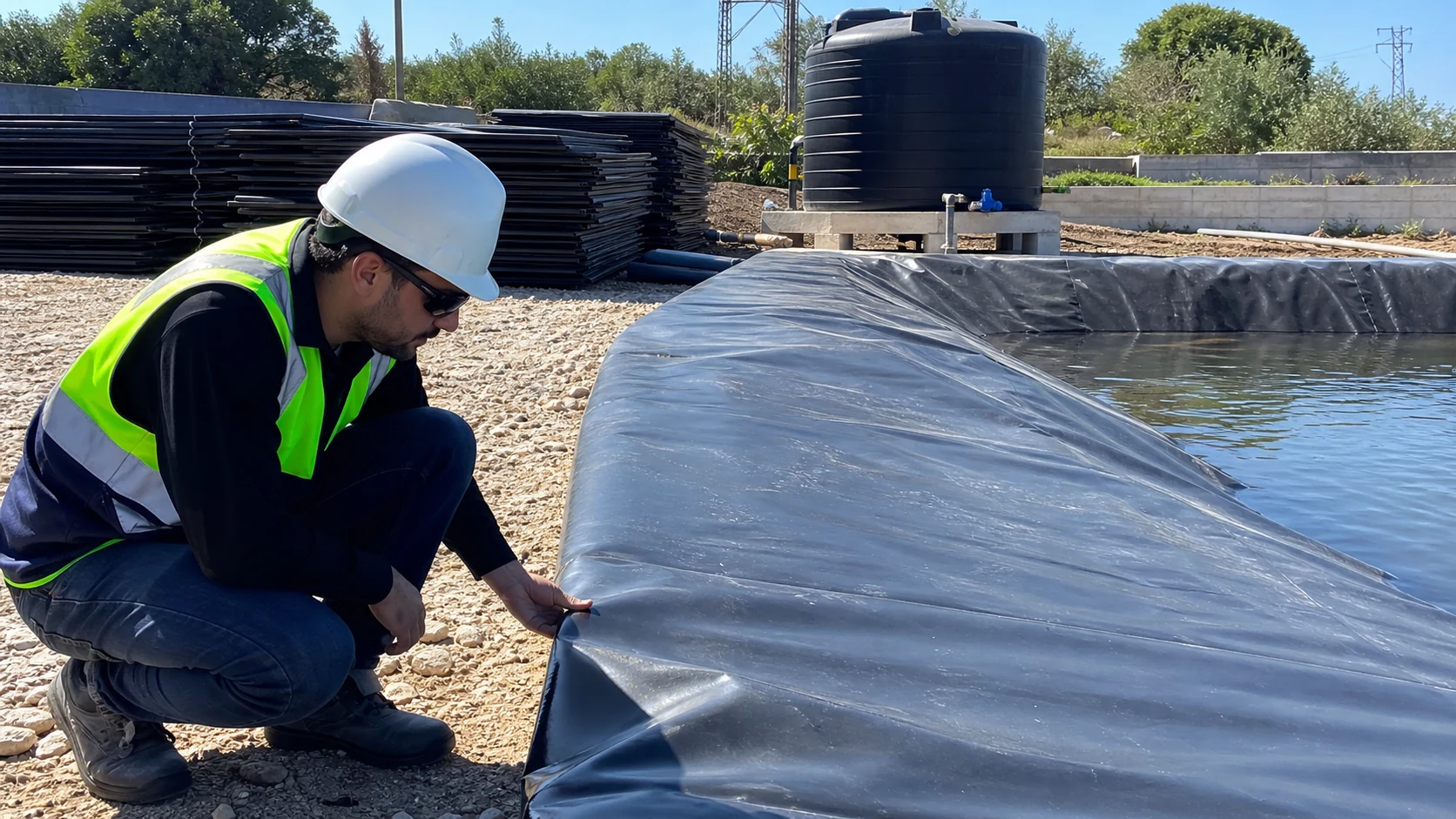
Polyethylene (PE) is the most widely used thermoplastic for outdoor liners, sheets, and containers. Its chemical resistance, low density (0.91–0.96 g/cm³), flexibility, and low cost make it the material of choice for applications ranging from geomembrane liners and construction sheets to water storage tanks and shipping containers.
Buyer and engineer FAQ
Questions engineers often ask about this material route
Where can PE with a UV-resistant plastic requirement be used?
Typical fields include outdoor clips, covers, housings, liners, sheets, equipment shells and exposed appearance parts. For this article, DEYU would first confirm the working environment, wall thickness, expected lifetime and whether UV-resistant plastics matches the part geometry or needs formulation adjustment.
What are the main performance indicators for the "UV-resistant plastic" target on PE?
Focus on color change, gloss retention, tensile retention, impact retention and weathering hours. Buyers should ask for data on molded parts, not only pellet data, because gate position, filler orientation and thickness can change the final value.
What should engineers watch during injection molding or processing?
For PE, a practical starting window is 170-220°C melt / 20-50°C mold. Avoid overheating pigments or HALS systems, use stable black or color packages and validate outdoor aging. Final parameters should follow part thickness, gate design and the actual machine.
What details help DEYU recommend UV-resistant plastics more accurately?
Send the current resin or grade, drawing or photo, wall thickness, annual quantity, target standard, failure mode and required color. If a reference grade already passed one test but failed in production, include both data sets.
For a precise recommendation, share the part drawing, base resin, target performance, processing method and test standard with DEYU.
Background / Problem
Polyethylene (PE) is the most widely used thermoplastic for outdoor liners, sheets, and containers. Its chemical resistance, low density (0.91–0.96 g/cm³), flexibility, and low cost make it the material of choice for applications ranging from geomembrane liners and construction sheets to water storage tanks and shipping containers.
Related DEYU plastics material references for this selection topic: UV-resistant plastics and polyethylene material selection guide.
However, PE has a critical weakness: poor inherent UV resistance. Unstabilized polyethylene exposed to direct sunlight can lose 50% of its mechanical properties in as little as 6–12 months. Degradation manifests as yellowing, surface cracking, embrittlement, and ultimately structural failure. For a geomembrane liner expected to last 20+ years or a water tank that must maintain integrity for decades, this is unacceptable.
The challenge is compounded by the fact that different PE types degrade at different rates. High-density polyethylene (HDPE) is generally more resistant to UV than linear low-density polyethylene (LLDPE), which in turn is more resistant than low-density polyethylene (LDPE). However, proper stabilization—through carbon black, HALS, UV absorbers, and antioxidants—can enable any PE type to achieve excellent outdoor durability.
This article covers UV-stabilized PE compounds for outdoor liners, sheets, and containers—covering material options, formulation approaches, performance data, and selection criteria.
Technical Difficulty / Why It Happens
The UV Degradation Mechanism in Polyethylene
Polyethylene degrades under UV exposure through photo-oxidation—a free-radical chain reaction initiated by UV photons. Unlike thermal oxidation, which is initiated by hydroperoxide decomposition, photo-oxidation in PE is primarily initiated by the photolysis of ketones and hydroperoxides.
The degradation cascade:
| Stage | Process | Effect |
|---|---|---|
| Initiation | UV photons break weak bonds in the PE chain | Free radicals (R·) are generated |
| Propagation | R· + O₂ → ROO· (peroxy radical) | Chain reaction begins |
| Propagation | ROO· + RH → ROOH + R· | Chain scission; molecular weight drops |
| Branching | ROOH → RO· + ·OH | Hydroperoxide decomposition accelerates degradation |
| Termination | Radicals combine → stable products | Chain reaction ends |
The consequences:
Chain scission reduces molecular weight, leading to embrittlement and loss of mechanical properties
Crosslinking can also occur, further altering mechanical behavior
Carbonyl groups form, creating the chemical signature of degradation
Surface cracking appears, propagating inward under stress
How Carbon Black Protects PE
Carbon black has been found to be the most effective stabilizer for polyethylene with respect to degradation due to light and weathering.
The mechanism:
Carbon black particles absorb UV radiation and convert it to harmless heat
The heat is dissipated throughout the plastic mass
This physical screening prevents high-energy photons from penetrating the polymer
Quantified protection: In a study of HDPE floats exposed to 1152 hours of accelerated UV exposure:
Virgin HDPE: tensile strength reduced by 42.1% ; elongation at break reduced by 52.9%
HDPE with 2% carbon black: tensile strength reduced by only 4.2% ; elongation at break reduced by only 10.4%
The uniform dispersion of carbon black and good interfacial adhesion with the HDPE matrix were confirmed as the reasons for this remarkable retention of properties.
The HALS + Carbon Black Synergy
Hindered amine light stabilizers (HALS) function through a regenerative mechanism, continuously scavenging free radicals formed during photo-oxidation. The combination of carbon black with HALS and UV absorbers creates a robust stabilization package that maximizes protection.
High molecular weight HALS is found to be the most effective in controlling long-term fading and yellowing. UV masterbatches combining HALS and UV absorbers provide comprehensive protection: absorption of UV radiation and conversion into harmless energy, avoiding discoloration, crazing, chalking, and UV-degradation.
PE Type Comparison for Outdoor Applications
| Property | LDPE | LLDPE | HDPE |
|---|---|---|---|
| Density (g/cm³) | 0.91–0.93 | 0.91–0.94 | 0.94–0.96 |
| Crystallinity | Low (branched) | Moderate (short branches) | High (linear) |
| Inherent UV Resistance | Lowest | Moderate | Highest |
| Key Strength | Flexibility, clarity | Tear strength, ESCR | Stiffness, strength |
| Typical Outdoor Use | Agricultural films | Geomembranes, liners | Containers, pipes, sheets |
Stabilization Hierarchy for PE
| Degradation Stage | Addressed By | Mechanism |
|---|---|---|
| UV photon absorption | Carbon black or UV absorber | Intercepts UV before it reaches polymer |
| Radical generation | HALS | Scavenges radicals generated by UV |
| Hydroperoxide accumulation | Secondary antioxidant (phosphite) | Decomposes hydroperoxides |
| Peroxy radical propagation | Primary antioxidant (hindered phenol) | Scavenges peroxy radicals |
DEYU Material Direction
DEYU typically recommends PE stabilization systems based on the application type, required service life, and color requirements.
DEYU plastics' PE Compound Portfolio for Outdoor Applications
UV-Stabilized Black HDPE for Liners and Geomembranes
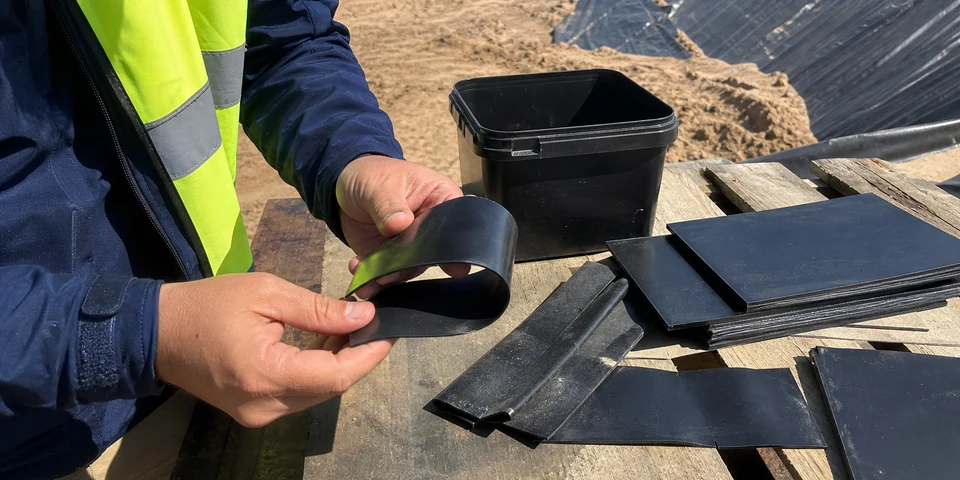
Black HDPE geomembrane grades are compounded with carbon black (2.0–2.5%) and UV stabilizers for long outdoor service, handling daily thermal expansion and contraction cycles. Geomembranes can achieve UV resistance in excess of 45 years with proper stabilization.
| Property | Typical Value | Test Method |
|---|---|---|
| Density | 0.94–0.96 g/cm³ | ISO 1183 |
| Tensile Strength | 25–35 MPa | ASTM D638 |
| Elongation at Break | 500–800% | ASTM D638 |
| Carbon Black Loading | 2.0–2.5% | ASTM D1603 |
| UV Resistance | 20+ years | Florida exposure |
Applications: Geomembrane liners, landfill covers, pond liners, secondary containment.
UV-Stabilized LLDPE for Flexible Liners
LLDPE geomembranes offer strong weather resistance, strong anti-aging properties, and maintain original performance even after prolonged outdoor exposure.
| Property | Typical Value | Test Method |
|---|---|---|
| Density | 0.91–0.94 g/cm³ | ISO 1183 |
| Tensile Strength | 18–25 MPa | ASTM D638 |
| Elongation at Break | 600–900% | ASTM D638 |
| Tear Strength | High | ASTM D1004 |
| UV Resistance | 10–20 years | Florida exposure |
Applications: Flexible pond liners, agricultural films, reservoir covers.
UV-Stabilized HDPE for Outdoor Containers and Tanks
HDPE grades for rotomolded tanks and containers are fully heat and UV stabilized, resulting in a wide processing latitude, good color retention, and long life expectancy. UV-stabilized HDPE can extend lifespan by 30% in harsh sunlight compared to traditional models.
| Property | Typical Value | Test Method |
|---|---|---|
| Density | 0.94–0.96 g/cm³ | ISO 1183 |
| Melt Flow Rate (190°C/2.16kg) | 3–8 g/10min | ISO 1133 |
| Tensile Strength | 22–30 MPa | ASTM D638 |
| Notched Impact | 4–8 kJ/m² | ISO 180 |
| HDT (0.45MPa) | 70–85°C | ISO 75 |
Applications: Water storage tanks, chemical containers, industrial bins, agricultural tanks.
Formulation Architecture for UV-Stabilized PE
| Component | Function | Typical Loading |
|---|---|---|
| PE Base | Matrix polymer | 85–95% |
| Carbon Black | UV shielding + pigment | 2.0–2.5% |
| HALS | Radical scavenging | 0.3–0.6% |
| UV Absorber | Photon interception | 0.15–0.25% |
| Primary Antioxidant | Thermal protection | 0.15–0.25% |
| Secondary Antioxidant | Hydroperoxide decomposition | 0.05–0.15% |
Key formulation principles:
Carbon black loading: 2.0–2.5% provides optimal UV protection with minimal mechanical property impact
HALS selection: High molecular weight HALS for low volatility and long-term protection
Antioxidant package: Essential for processing stability and long-term thermal protection
For natural/clear PE: HALS + UV absorber + antioxidants (no carbon black)
Reference Product Data
UV-Stabilized PE Grade Comparison
| Property | Black HDPE (Geomembrane) | Black HDPE (Container) | UV-Stabilized LLDPE (Liner) | Natural UV PE (Film) |
|---|---|---|---|---|
| Base Resin | HDPE | HDPE | LLDPE | LLDPE/LDPE |
| Carbon Black Loading | 2.0–2.5% | 2.0–2.5% | 2.0–2.5% | None |
| Density (g/cm³) | 0.94–0.96 | 0.94–0.96 | 0.91–0.94 | 0.91–0.93 |
| Tensile Strength (MPa) | 25–35 | 22–30 | 18–25 | 15–22 |
| Elongation at Break (%) | 500–800 | 300–600 | 600–900 | 400–700 |
| Notched Impact (kJ/m²) | — | 4–8 | — | — |
| HDT (°C, 0.45MPa) | 70–80 | 70–85 | 60–75 | 50–65 |
| UV Resistance | 20+ years | 10–20 years | 10–20 years | 3–5 years |
| Typical Applications | Geomembranes, landfill covers | Water tanks, storage containers | Pond liners, agricultural films | Greenhouse films, packaging |
| Processing | Extrusion | Rotomolding/injection | Extrusion | Film extrusion |
Weathering Performance: Carbon Black Effect
| Property | Virgin HDPE | HDPE + 2% Carbon Black |
|---|---|---|
| Tensile Strength Reduction (1152h UV) | 42.1% | 4.2% |
| Elongation at Break Reduction (1152h UV) | 52.9% | 10.4% |
| Hardness Change | Increased 8.2% (brittle) | Maintained |
| Surface Degradation | Significant photo-oxidation | Minimal |
| UV Protection Mechanism | None | Physical screening + radical scavenging |
Data source: Published study on HDPE/carbon black composites; values are representative and may vary by specific grade and application.
Service Life Expectations
| Application | Stabilization | Expected Service Life |
|---|---|---|
| Geomembrane liner | Carbon black 2.5% + HALS | 20–45+ years |
| Outdoor water tank | Carbon black + HALS + AO | 10–20 years |
| Construction sheet | Carbon black 2.0–2.5% | 10–20 years |
| Agricultural film | HALS + UVA + AO | 3–5 years |
| Outdoor container | Carbon black + HALS + AO | 10–20 years |
Customer Debugging / Validation Scenario
Scenario: Outdoor Water Storage Tank — UV Failure and Reformulation
Customer Profile: A manufacturer of rotationally molded HDPE water storage tanks (5,000–50,000 liters) for agricultural and domestic use in subtropical climates.
Initial Problem: After 18–24 months of field exposure, the customer observed:
Surface cracking: Micro-cracks on south-facing tank walls
Brittleness: Impact strength dropped 55%
Color fading: Dark blue tanks faded unevenly
Leakage: 3–5% of tanks developed leaks at stress points
The material was a natural HDPE with a single UV absorber (no HALS, no carbon black, no antioxidants).
Root Cause Analysis:
| Observation | Root Cause |
|---|---|
| Surface cracking | No carbon black or HALS; UV penetrated the surface and initiated chain scission |
| Brittleness | Molecular weight reduction from chain scission; no antioxidant protection |
| Color fading | UV absorber was insufficient for the pigment system |
| Stress cracking | UV degradation at stress concentration points (fittings, corners) |
Corrective Actions:
| Issue | Corrective Action |
|---|---|
| No carbon black | Add 2.5% carbon black for UV shielding |
| No HALS | Add HALS (0.4–0.5%) for radical scavenging |
| Insufficient antioxidant | Add primary antioxidant (0.15–0.2%) + secondary antioxidant (0.08–0.12%) |
| Color requirement | Accept black color or develop a carbon black + pigment blend |
Trial Results:
| Metric | Original Formulation | Corrected Formulation | Acceptance |
|---|---|---|---|
| Tensile Retention (2000h QUV) | 42% | 94% | >85% |
| Impact Retention (field, 24 months) | 45% | 91% | >80% |
| Surface Cracking | Present | None | None |
| Field Pass Rate (24 months) | 82% | 99.5% | >97% |
| Service Life | 2–3 years | 15+ years | As required |
Direction After Trial:
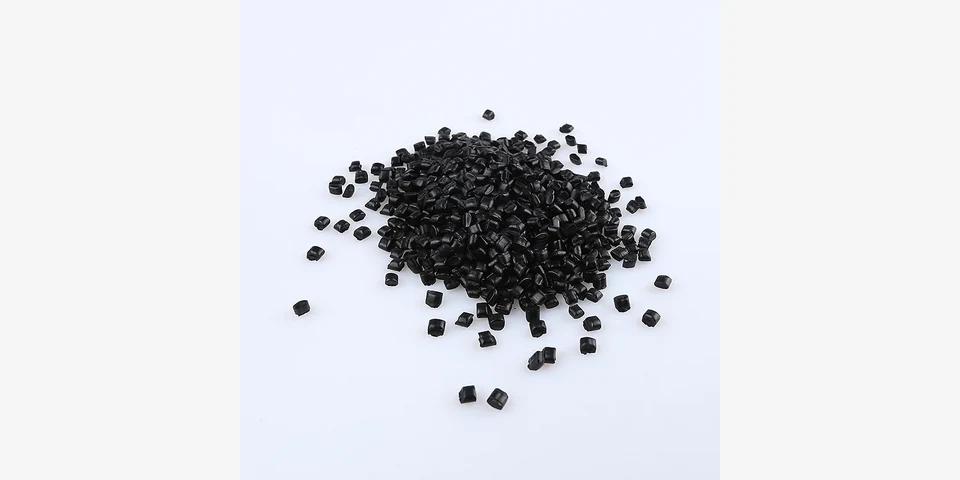
The customer transitioned to black HDPE with 2.5% carbon black, HALS, and a full antioxidant package. DEYU supported the transition by providing the complete formulation specification, recommending processing parameters for rotomolding, and supplying small-batch validation material.
Note: This is a composite validation scenario based on common industry experiences. Specific results may vary by application, geographic location, and processing conditions.
Validation Data Table
| Component Type | Critical Test | Typical Acceptance | Test Method |
|---|---|---|---|
| Geomembrane Liners | Tensile retention after UV | >85% | ASTM D638 |
| Geomembrane Liners | Elongation retention after UV | >80% | ASTM D638 |
| Water Tanks/Containers | Impact retention after UV | >80% | ASTM D256 / ISO 180 |
| Sheets | Dimensional stability | <1.0% change | Dimensional measurement |
| All Components | Surface cracking | None | Visual (10x) |
| All Components | Color change (ΔE) | <3.0 | ASTM D2244 |
| All Components | Carbon black content | 2.0–2.5% | ASTM D1603 |
| All Components | Field pass rate (24 months) | >97% | Field inspection |
Result Interpretation
Interpreting PE Weathering Data
Carbonyl Index (CI) — a measure of oxidation:
CI < 0.05: Excellent—minimal oxidation
CI 0.05–0.15: Acceptable—some oxidation occurred
CI > 0.15: Significant degradation—stabilizer package inadequate
Tensile Retention:
90%: Excellent protection
80–90%: Good—acceptable for most applications
<80%: Inadequate—significant chain scission
Elongation Retention:
80%: Good flexibility maintained
60–80%: Some embrittlement
<60%: Significant embrittlement—failure risk
Selecting the Right PE Type
| Application | Recommended PE Type | Rationale |
|---|---|---|
| Geomembranes, flexible liners | LLDPE | High tear strength, flexibility |
| Rigid sheets, structural | HDPE | Highest stiffness and strength |
| Containers, tanks | HDPE | Strength, chemical resistance, impact resistance |
| Agricultural films | LLDPE or LDPE | Flexibility, clarity, cost |
The Carbon Black Decision
| If Your Application... | Carbon Black Recommendation |
|---|---|
| Requires maximum outdoor durability | Use 2.0–2.5% carbon black |
| Must be a specific color | Use HALS + UVA + antioxidants; validate thoroughly |
| Is cost-sensitive | Carbon black is the lowest-cost UV stabilization option |
| Is a clear or translucent film | Cannot use carbon black; use HALS + UVA package |
Suitable Applications
| Application | PE Type | Stabilization | Key Requirements |
|---|---|---|---|
| Geomembrane liners | LLDPE or HDPE | Carbon black 2.5% + HALS | UV resistance, puncture resistance, flexibility |
| Outdoor storage tanks | HDPE | Carbon black 2.5% + HALS + AO | Strength, chemical resistance, long-term UV |
| Agricultural films | LLDPE | HALS + UVA + AO | Clarity, flexibility, UV resistance |
| Construction sheets | HDPE | Carbon black 2.5% | Weatherability, durability |
| Reinforced liners | LLDPE + scrim | Carbon black + antioxidants | High strength, puncture resistance |
| Outdoor containers | HDPE | Carbon black 2.0–2.5% | Impact resistance, UV stability |
| Pond liners | LLDPE or HDPE | Carbon black + UV stabilizers | UV resistance, impermeability |
Stabilization by Service Life
| Required Service Life | Recommended Stabilization |
|---|---|
| <3 years | HALS + UVA only |
| 3–7 years | HALS + UVA + antioxidants |
| 7–15 years | Carbon black 2.5% + HALS + antioxidants |
| >15 years | Carbon black 2.5% + HALS + full antioxidant package |
What Buyers Should Provide
To enable accurate PE formulation, buyers should provide the following information:
Application Information
Part type (liner, sheet, container, film)
Part function and geometry
Required service life (years)
Geographic location(s) and climate zone
Color Requirements
Is black acceptable? (Carbon black is the most effective UV stabilizer)
If color required: specify color, pigment type, and ΔE tolerance
Environmental Conditions
UV exposure (direct sunlight hours per day, orientation)
Temperature range (ambient and surface)
Chemical exposure (acids, bases, solvents, agrochemicals)
Mechanical loads (pressure, stress concentration points)
Performance Requirements
Target mechanical properties (tensile, impact, tear strength, puncture resistance)
Minimum retention after aging
Regulatory requirements (ASTM, NSF, FDA)
Processing Information
Processing method (extrusion, rotomolding, injection molding, blow molding)
Annual production volume
Existing tooling constraints
DEYU can support PE formulation by providing technical datasheets, small-batch validation quantities, processing guidance, and formulation recommendations based on specific application requirements and environmental conditions.
Conclusion
UV-stabilized PE compounds are the workhorse materials for outdoor liners, sheets, and containers—but their poor inherent UV resistance requires careful stabilization. The most effective approach combines multiple stabilizer types that address different stages of the photo-oxidation cascade.
Key takeaways:
| Factor | Impact |
|---|---|
| PE Type Selection | HDPE > LLDPE > LDPE for inherent UV resistance |
| Carbon Black | Most effective UV stabilizer; 2.0–2.5% loading provides decades of protection |
| HALS | Essential for natural/clear PE; synergistic with carbon black |
| Antioxidants | Critical for processing stability and long-term thermal protection |
| HALS + UVA Synergy | Provides comprehensive protection against UV degradation |
| HALS + CB Synergy | Preserves mechanical properties better than either alone |
The practical formulation path:
Select the PE type based on application requirements (HDPE for stiffness and strength; LLDPE for flexibility and tear strength)
Choose the stabilization route — carbon black for black parts; HALS + UVA + antioxidants for natural/colored parts
For carbon black systems: 2.0–2.5% carbon black + 0.3–0.5% HALS + primary/secondary antioxidants
For natural/clear systems: 0.4–0.7% HALS + 0.2–0.3% UVA + primary/secondary antioxidants
Validate with comprehensive testing — UV, thermal aging, and mechanical property retention
The most important rule for outdoor PE:
Black PE with 2.5% carbon black survives decades outdoors. Natural PE without stabilization fails in months. The choice of stabilization route determines whether the product lasts 1 year or 20+ years.
DEYU can support PE formulation and validation—from resin selection to small-batch validation to production-scale supply—ensuring that outdoor PE liners, sheets, and containers deliver the durability, mechanical integrity, and service life that applications demand.