How to Validate Wear-Resistant Plastic Compounds: Wear Depth, Defect Rate, Noise, and Final-Part Testing
Wear-resistant plastics are often used in moving parts. The final performance is affected by material, mold, friction pair, load, speed, temperature, and assembly.
Buyer and engineer FAQ
Questions engineers often ask about this material route
Where can PA66 / POM with a wear-resistant plastic requirement be used?
Typical fields include gears, rollers, bushings, sliding blocks, guide rails and low-noise moving parts. For this article, DEYU would first confirm the working environment, wall thickness, expected lifetime and whether wear-resistant plastics, Aramid Reinforced PA66 Pellets DGK-PA66 FL20L matches the part geometry or needs formulation adjustment.
What are the main performance indicators for the "wear-resistant plastic" target on PA66 / POM?
Focus on friction coefficient, wear depth, PV value, noise, dimensional stability and mating material compatibility. Buyers should ask for data on molded parts, not only pellet data, because gate position, filler orientation and thickness can change the final value.
What should engineers watch during injection molding or processing?
For PA66 / POM, a practical starting window is 260-295°C melt / 75-100°C mold, dry before molding. Dry PA grades correctly, control glass or aramid fiber orientation and validate wear on the real mating surface. Final parameters should follow part thickness, gate design and the actual machine.
What details help DEYU recommend wear-resistant plastics, Aramid Reinforced PA66 Pellets DGK-PA66 FL20L more accurately?
Send the current resin or grade, drawing or photo, wall thickness, annual quantity, target standard, failure mode and required color. If a reference grade already passed one test but failed in production, include both data sets.
For a precise recommendation, share the part drawing, base resin, target performance, processing method and test standard with DEYU.
1. Why Final-Part Testing Matters
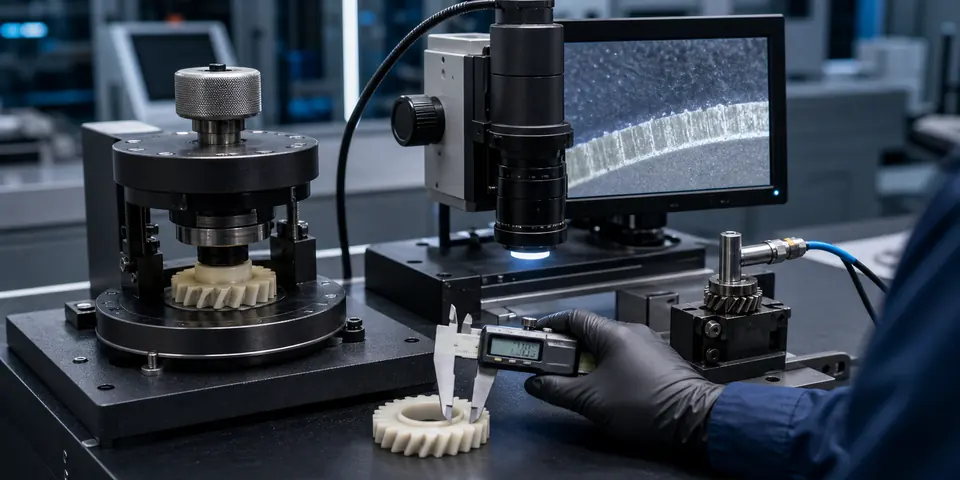
Wear-resistant plastics are often used in moving parts. The final performance is affected by material, mold, friction pair, load, speed, temperature, and assembly.
wear-resistant plastics. is the category page for selecting validation routes before final-part testing.
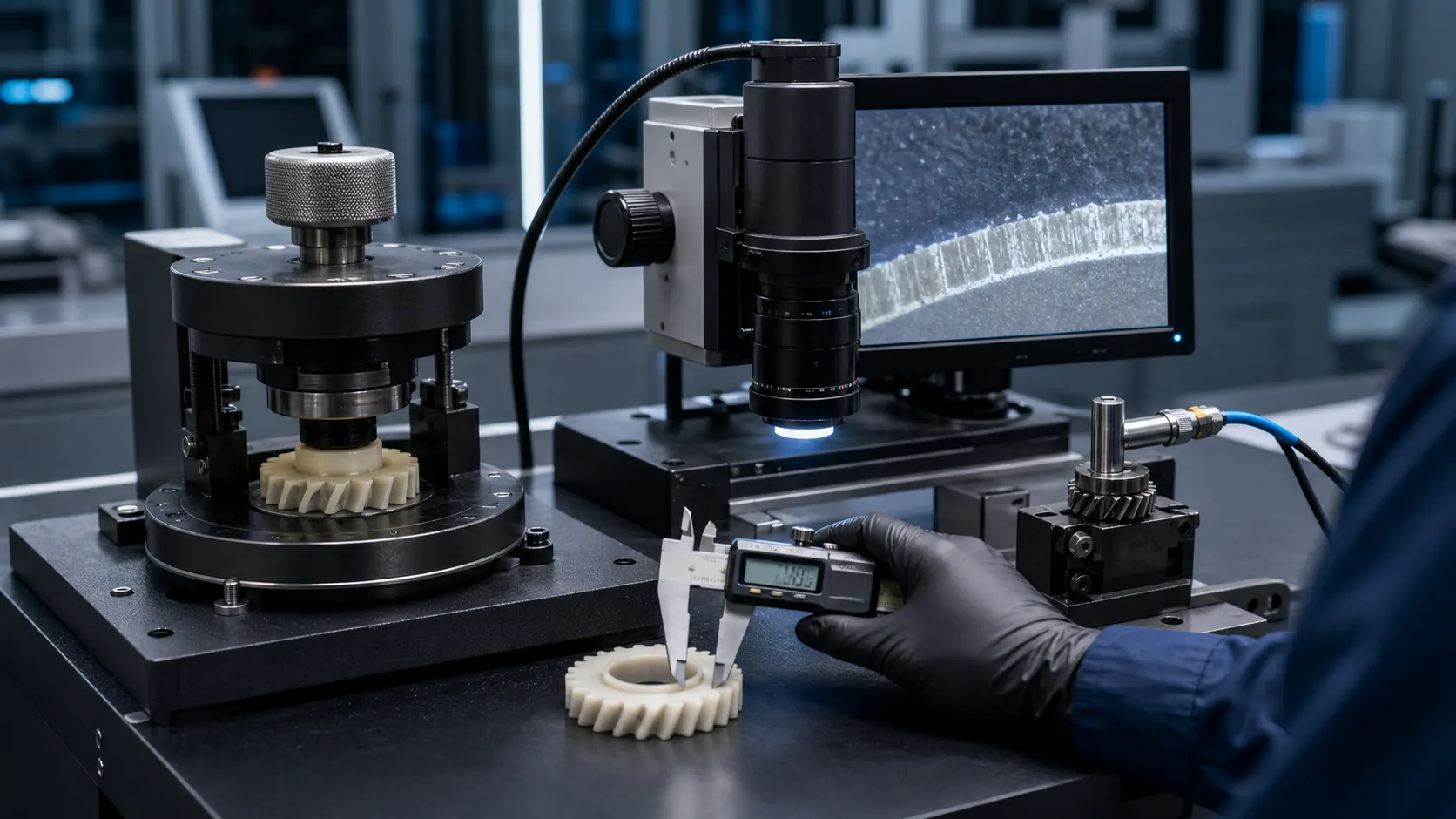
A material datasheet can show useful properties, but it cannot fully predict whether the customer’s gear, bushing, slider, or guide rail will pass the running test.
For DEYU, final-part validation is usually more meaningful than only comparing standard test bars.
2. Core Testing Indicators
| Indicator | Meaning |
|---|---|
| Wear depth | Direct material loss on the contact area |
| Mass loss | Weight change after wear test |
| Friction coefficient | Sliding resistance between two surfaces |
| Noise | Important for gears, rollers, mechanisms |
| Surface roughness | Shows surface damage after running |
| Clearance change | Important for bushings and guide parts |
| Defect rate | Shows production and assembly stability |
| Replacement cycle | Shows practical service direction |
| Mating surface damage | Shows whether the material hurts the counterpart |
3. Customer Debugging Data Structure
For a practical validation, DEYU recommends recording:
trial quantity; molding defect rate; assembly scrap rate; wear-depth failure rate; average wear depth; noise after running; clearance out-of-limit rate; number of pieces passing the life-cycle test; replacement interval direction.
Example structure:
| Item | Current Material | DEYU selected DGK trial |
|---|---|---|
| Trial quantity | 3,000 pcs | 5,000 pcs |
| Molding defect rate | 4.8% | 1.9% |
| Assembly scrap rate | 3.6% | 1.2% |
| Wear-depth failure rate | 6.0% | 1.7% |
| Average wear depth | 0.095 mm | 0.039 mm |
| Noise after 100 h | 59 dB | 54 dB |
| Clearance out-of-limit | 5.4% | 1.5% |
| Replacement cycle direction | 3 months | 6–8 months |
4. Product Data Still Matters
Customer debugging data is important, but product data should still be included.
For each DEYU product page, DEYU can prepare:
base resin; modification route; density; melt flow rate; tensile strength; flexural modulus; notched impact strength; heat distortion temperature; processing method; color direction; typical application.
The key is to connect product data with application validation. A high tensile strength does not automatically mean low wear. A low friction material may still need impact and molding adjustment.
5. Testing by Application
| Application | Main Testing Focus |
|---|---|
| Gear | Noise, tooth wear, powder, meshing stability |
| Bushing | Clearance change, wear depth, vibration |
| Slider | Friction coefficient, surface damage |
| Roller | Noise, surface wear, roundness stability |
| Guide rail | Wear depth, dimensional stability |
| Automotive part | Heat aging, vibration, wear, assembly |
| Electrical mechanism | Wear, dust, dimensional accuracy |
6. DEYU Validation Workflow
DEYU usually follows this workflow:
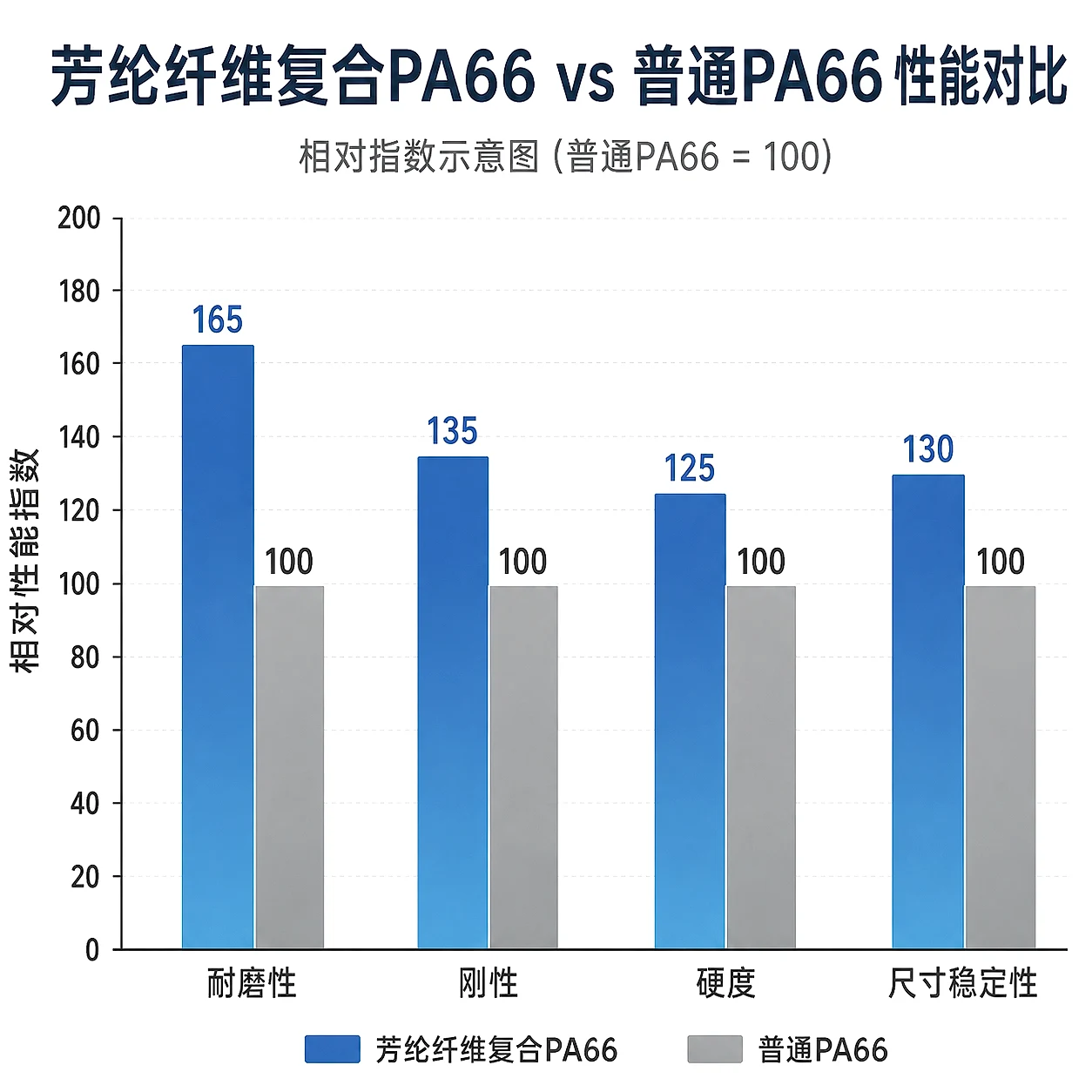
understand the current failure; collect customer defect data; select possible routes: POM + PTFE, aramid PA66, glass fiber, or hybrid; produce small-batch DGK-POM TF90M or DGK-PA66 FL20L trial; test final parts; compare wear depth, noise, scrap rate, and life cycle; adjust formulation or process; confirm production-ready direction.
Conclusion
Wear-resistant plastic validation should combine product data and customer debugging data. Tensile strength, modulus, and melt flow are useful, but wear depth, defect rate, noise, clearance, and replacement cycle often matter more for final success.
DEYU can support small-batch DGK-POM TF90M and DGK-PA66 FL20L validation, product data replacement, route comparison, and final-part testing for wear-resistant POM, PA66, POM + PTFE, aramid reinforced nylon, glass-fiber reinforced compounds, and hybrid modified plastics.