
How Anti-Static Polypropylene Helps Daily-Use Products: DEYU PP Application Cases for Cotton Swab Sticks, Combs and Consumer Goods
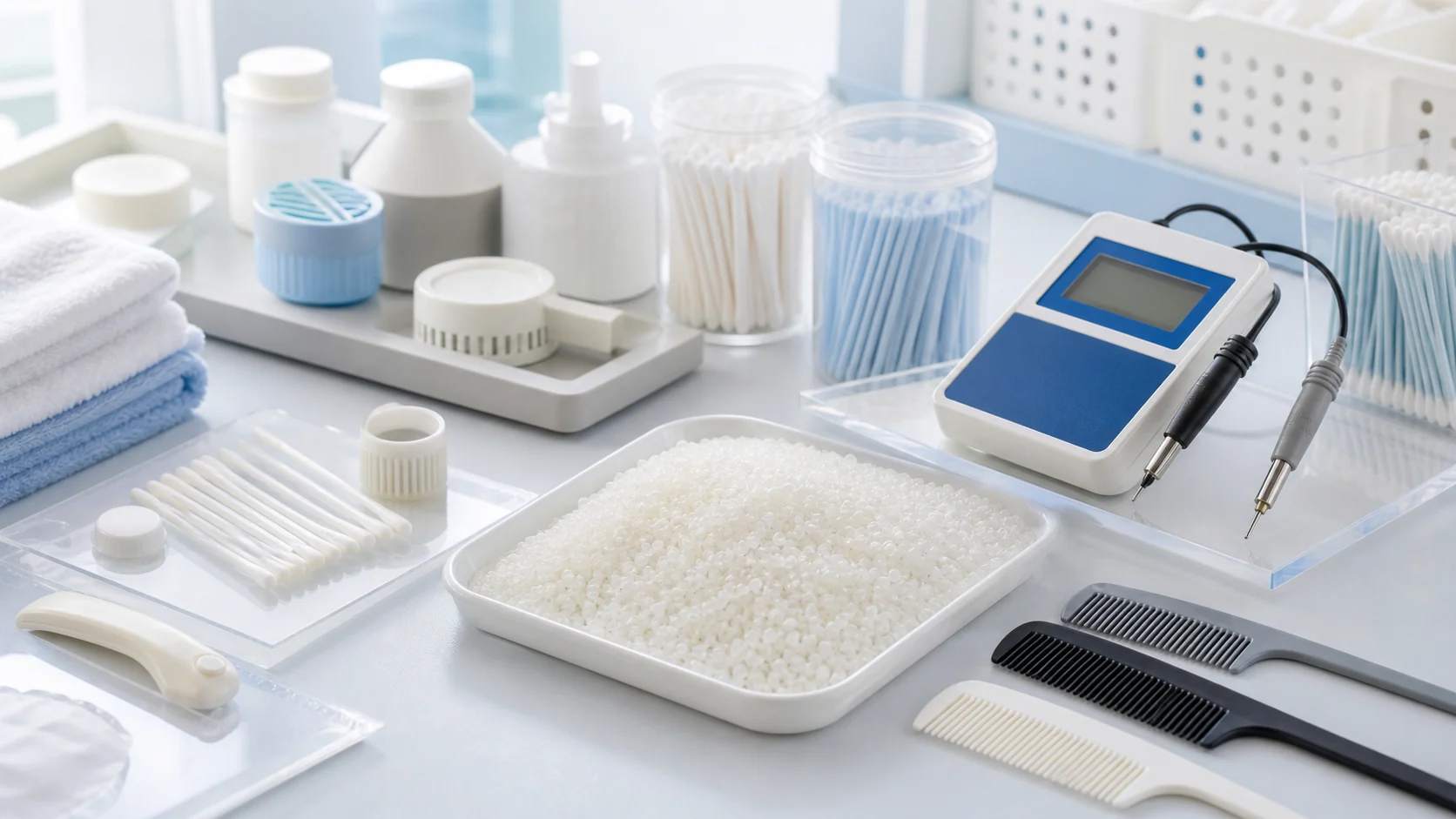
Polypropylene, or PP, is widely used in daily-use products because it is lightweight, cost-effective, easy to mold and chemically resistant. It can be used for cotton swab sticks, combs, brush handles, storage boxes, cosmetic accessories, cleaning tools, packaging trays and disposable consumer products.
Buyer and engineer FAQ
Questions engineers often ask about this material route
Where can PP with a antistatic plastic requirement be used?
Typical fields include clear covers, electronic packaging, dust-control parts, trays and clean-area components. For this article, DEYU would first confirm the working environment, wall thickness, expected lifetime and whether DGK-PP KJD789R-A1 Permanent Antistatic PP, Antistatic Plastics matches the part geometry or needs formulation adjustment.
What are the main performance indicators for the "antistatic plastic" target on PP?
Focus on stable surface resistance, dust attraction, transparency or color, humidity sensitivity and long-term antistatic decay. Buyers should ask for data on molded parts, not only pellet data, because gate position, filler orientation and thickness can change the final value.
What should engineers watch during injection molding or processing?
For PP, a practical starting window is 190-230°C melt / 30-60°C mold. Avoid over-drying antistatic systems, confirm resistance after conditioning and after part cleaning. Final parameters should follow part thickness, gate design and the actual machine.
What details help DEYU recommend DGK-PP KJD789R-A1 Permanent Antistatic PP, Antistatic Plastics more accurately?
Send the current resin or grade, drawing or photo, wall thickness, annual quantity, target standard, failure mode and required color. If a reference grade already passed one test but failed in production, include both data sets.
For a precise recommendation, share the part drawing, base resin, target performance, processing method and test standard with DEYU.
1. Background / Problem
Polypropylene, or PP, is widely used in daily-use products because it is lightweight, cost-effective, easy to mold and chemically resistant. It can be used for cotton swab sticks, combs, brush handles, storage boxes, cosmetic accessories, cleaning tools, packaging trays and disposable consumer products.
DGK-PP KJD789R-A1 Permanent Antistatic PP and Antistatic Plastics. Use DGK-PP KJD789R-A1 as the closest permanent anti-static PP reference, and use the antistatic plastics category when comparing broader PP, PE, ABS and PC static-control material options.
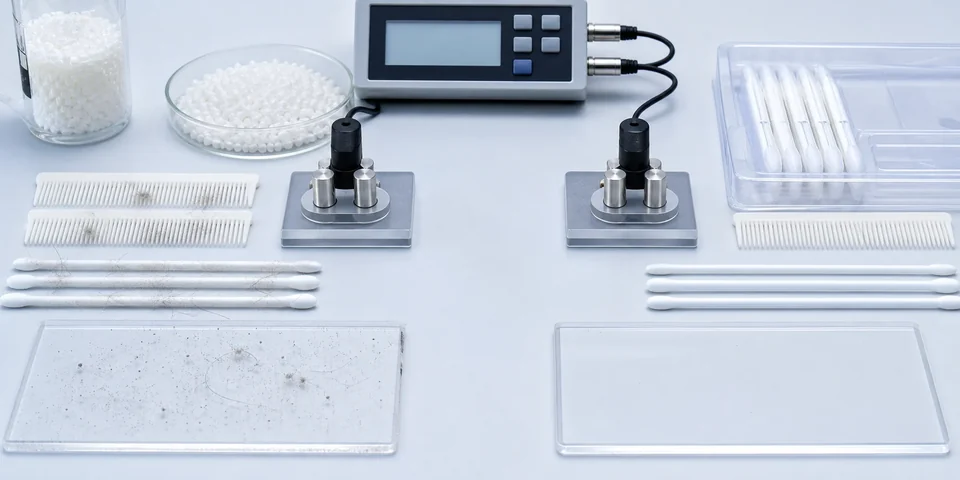
Ordinary PP is an insulating material. During friction, packaging, transport and daily use, the surface can accumulate static charge. In consumer goods this is usually not a high-voltage safety problem, but it can affect cleanliness, appearance and handling efficiency.
Common symptoms include dust attraction on product surfaces, cotton lint or hair sticking to parts, hair flyaway during combing, particles trapped inside packaging bags, extra air-blowing before packing and complaints that dark products look dusty soon after opening.
For these applications, the buyer usually does not need highly conductive PP. The more practical target is anti-static polypropylene that reduces static-related adhesion while keeping color, hand feel, odor, molding stability and packaging cleanliness suitable for consumer products.
2. How Anti-Static PP Helps Daily-Use Products
The purpose of anti-static PP is not to make every daily-use product conductive. Its value is to reduce charge accumulation and lower the tendency of fine particles to stick to the molded part during production, packaging and use.
| Daily-Use Product Issue | Ordinary PP Behavior | How Anti-Static PP Can Help |
|---|---|---|
| Dust attraction | Surface easily attracts fine dust, especially on dark parts | Reduces static-related dust adhesion and improves surface cleanliness |
| Cotton lint adhesion | Swab sticks and packaging parts attract fine fibers | Reduces lint and fiber adhesion during packing |
| Hair flyaway | Hair may lift or stick to comb teeth during grooming | Reduces charge build-up during use |
| Packaging contamination | Repeated wiping or air-blowing may be needed | Reduces cleaning frequency before final packaging |
| Appearance complaint | Product can look dusty after opening | Improves consumer-facing appearance |
| Production efficiency | Static adhesion increases inspection and cleaning time | Improves handling stability on the production line |
For cotton swab sticks, combs, brush handles and cosmetic accessories, the key target is usually cleaner handling and lower static adhesion, not extremely low resistance.
3. What Resistance Range Is Suitable?
Daily-use products are different from electronic ESD packaging. Many consumer parts are better served by a mild anti-static or static-control range rather than a strongly conductive material route.
| Functional Direction | Typical Surface Resistance Direction | Application Note |
|---|---|---|
| Ordinary PP | Usually above 10^13 ohm | Easy to accumulate charge and attract dust or fibers |
| Anti-static PP | Often validated around 10^7-10^11 ohm | Suitable for most daily-use dust-control and static-reduction needs |
| Permanent anti-static PP | DGK-PP KJD789R-A1 reference: 10^7-10^8 ohm | Useful where long-term static-control stability is important |
| Static dissipative PP | Commonly around 10^6-10^9 ohm | Suitable for packaging or industrial consumer parts with stricter static-control needs |
| Conductive PP | Often around 10^2-10^5 ohm by formulation | More common in functional conductive parts, not the first choice for most daily-use products |
For consumer products, material selection should also check dust attraction tendency, color, surface blooming, hand feel, odor, injection molding or extrusion stability, packaging behavior and storage conditions.
4. Common Technical Routes for Anti-Static PP
4.1 Migratory Anti-Static PP
Migratory systems work by allowing anti-static additives to move gradually toward the material surface and form a surface layer that reduces charge build-up.
The advantages are practical cost, easier initial development and possible use in natural or light-colored PP directions. The points to validate are humidity dependence, long-term stability, surface blooming, oily feel and packaging contamination risk, especially for cosmetic or personal-care products.
4.2 Permanent Anti-Static PP
Permanent anti-static PP usually uses polymeric anti-static components or hybrid systems to support more stable static-control behavior.
The advantages are better long-term stability, lower dependence on short-term surface migration and better suitability for higher-requirement packaging or daily-use parts. The points to validate are cost, color, transparency, surface condition and compatibility with the selected PP resin.
4.3 Carbon-Based Static-Control PP
Carbon-based systems can be used for black or dark consumer products, industrial consumer goods, conductive trays and special functional parts. They provide a wide resistance adjustment range but usually make the material black or dark. Surface smoothness, black specks and color difference must be checked for appearance-sensitive products.
5. DEYU Anti-Static PP Material Direction
DEYU evaluates anti-static PP for daily-use products from both electrical and consumer-product angles. The target is not only one resistance number. The finished product also needs acceptable appearance, touch feel, odor, surface cleanliness, processing stability and packaging behavior.
| Evaluation Point | DEYU PP Direction |
|---|---|
| Base resin | PP homopolymer, PP copolymer or customized polypropylene resin |
| Static-control target | Anti-static or static dissipative direction according to the part requirement |
| Reference grade | DGK-PP KJD789R-A1 permanent anti-static PP, 10^7-10^8 ohm surface resistance |
| Processing | Injection molding, extrusion or small-section profile molding |
| Product requirements | Whiteness, color stability, odor, blooming, hand feel and packaging cleanliness |
| Part validation | Standard specimen data plus molded part and packaging-line observation |
| Typical applications | Cotton swab sticks, combs, brush handles, storage parts, cleaning tools and cosmetic accessories |
DEYU can support small-batch validation when the customer provides drawings, color target, static-control requirement, processing method and actual defect data.
6. Reference Product Data Table
| Item | Anti-Static PP for Swab Sticks | Anti-Static PP for Combs | General Daily-Use Anti-Static PP |
|---|---|---|---|
| Base resin | PP homopolymer or PP copolymer | PP copolymer or toughened PP | PP homopolymer or PP copolymer |
| Modification route | Anti-static modification | Anti-static plus toughness balance | Daily-use anti-static PP compound |
| Processing method | Injection molding or extrusion | Injection molding | Injection molding or extrusion |
| Color direction | Natural, white or customized color | Black, natural or customized color | Natural, white or customized color |
| Surface resistance direction | 10^7-10^11 ohm by project target | 10^7-10^11 ohm by project target | 10^7-10^11 ohm by project target |
| Reference DEYU grade | DGK-PP KJD789R-A1 where 10^7-10^8 ohm is needed | DGK-PP KJD789R-A1 where permanent anti-static PP is suitable | DGK-PP KJD789R-A1 as a permanent anti-static PP reference |
| Odor and blooming | Must be validated by application | Must be validated by application | Must be validated by application |
| Typical applications | Cotton swab sticks, hygiene sticks, cosmetic accessories | Combs, hair brushes, grooming tools | Storage boxes, cleaning tools, packaging parts |
7. Case 1: Anti-Static PP for Cotton Swab Sticks
The following is an anonymized DEYU internal validation scenario. Customer name, product model and unpublished report details are not disclosed.
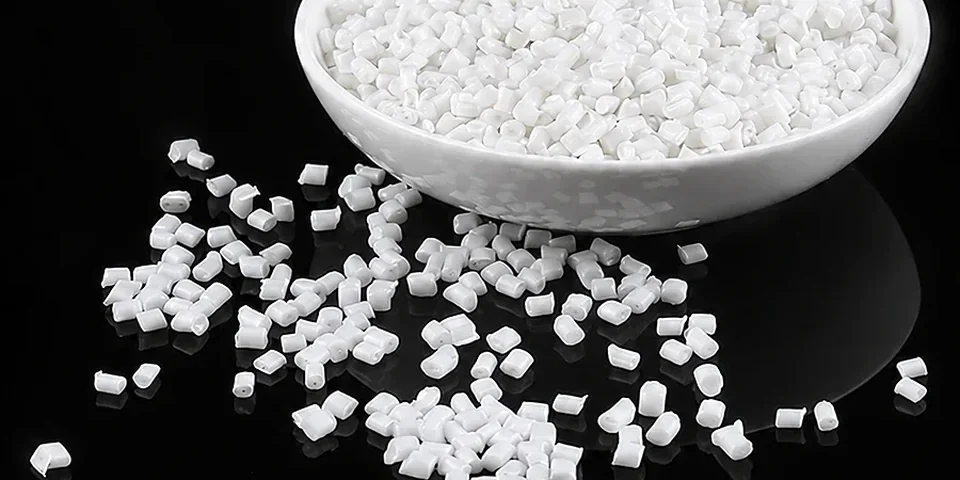
A personal-care product customer used ordinary PP for plastic rods in cotton swab sticks. The material processed well, but cotton lint, fine fibers and packaging dust easily adhered to the rod surface during assembly and packing, especially in dry seasons.
| Original Item | Ordinary PP Situation |
|---|---|
| Application | Cotton swab stick or small hygiene stick |
| Original material | Ordinary PP |
| Surface resistance | Above 10^13 ohm direction |
| Fiber or cotton lint adhesion | 18-30% observed range in internal validation |
| Packaging dust feedback | 6-10% observed range in internal validation |
| Cleaning or air-blowing | 2-3 times per shift |
| Molding scrap rate | 2-4% observed range |
| Customer target | Reduce lint and dust adhesion while maintaining whiteness, odor control and processing efficiency |
DEYU adjusted the material route toward anti-static PP for small personal-care plastic rods. The route did not pursue a very low resistance value. It focused on static reduction, cleaner packaging behavior and consumer-product suitability.
| Validation Item | Original Direction | DEYU Trial Direction | Engineering Interpretation |
|---|---|---|---|
| Surface resistance | Above 10^13 ohm | 10^7-10^10 ohm target direction | Lower charge accumulation helped reduce adhesion tendency |
| Fiber or cotton lint adhesion | 18-30% | 6-12% | Cotton lint and fine fiber adhesion decreased |
| Packaging dust feedback | 6-10% | 2-4% | Packaging-stage dust feedback was reduced |
| Cleaning or air-blowing | 2-3 times per shift | 0-1 time per shift | Cleaning frequency before packaging decreased |
| Molding scrap rate | 2-4% | 2-3% | Material adjustment kept processing stability within the existing production direction |
8. Case 2: Anti-Static PP for Combs
For combs and grooming tools, static problems are visible to end users. Hair flyaway, dust adhesion on black combs and unstable hand feel can become product complaints even when the molded part dimensions are acceptable.
| Original Item | Ordinary PP Situation |
|---|---|
| Application | Injection-molded comb |
| Original material | Ordinary PP |
| Surface resistance | Above 10^13 ohm direction |
| Hair flyaway feedback | 15-25% observed range |
| Dust adhesion area after 24 hours | 20-35% observed range |
| Tooth breakage or brittleness | 2-4% observed range |
| Molding scrap rate | 3-5% observed range |
| Monthly usage | 50,000-120,000 pieces in customer planning direction |
DEYU evaluated an anti-static PP route with toughness balance. For comb products, the material cannot only reduce static. It must also maintain tooth flexibility, avoid excessive brittleness and keep the surface acceptable for visible consumer goods.
| Validation Item | Original Direction | DEYU Trial Direction | Engineering Interpretation |
|---|---|---|---|
| Surface resistance | Above 10^13 ohm | 10^7-10^9 ohm target direction | Anti-static PP reduced charge build-up during grooming |
| Hair flyaway feedback | 15-25% | 5-10% | User-visible static effect decreased |
| Dust adhesion area after 24 hours | 20-35% | 8-18% | Surface cleanliness improved |
| Tooth breakage or brittleness | 2-4% | 1-2% | Toughness balance remained important during formulation |
| Molding scrap rate | 3-5% | 2-4% | Processing window remained suitable for injection molding |
9. Storage Parts, Cleaning Tools and Packaging Accessories
Anti-static PP can also be considered for storage boxes, cosmetic packaging inserts, brush handles, cleaning tools and small household components. These products may not need strict ESD performance, but they often need a cleaner surface and more stable handling during packaging.
The common validation items are dust adhesion after storage, particle adhesion after molding, surface appearance, color stability, odor, blooming, dimensional stability and packaging-line cleaning frequency. For dark products, visual cleanliness should be checked under the customer's real packaging and display conditions.
10. Selection Advice
Buyers should avoid selecting anti-static PP only by one resistance value. For daily-use products, the final choice should match the actual consumer scenario.
| Buyer Input | Why It Matters |
|---|---|
| Product type | Cotton swab sticks, combs, storage boxes and packaging parts have different surface and toughness requirements |
| Color target | White, natural, black and custom colors need different additive and pigment balance |
| Static-control target | Mild anti-static, permanent anti-static and static dissipative directions have different cost and stability |
| Contact requirement | Personal-care products may need more careful odor, blooming and surface evaluation |
| Processing method | Injection molding, extrusion and small-section molding need different melt-flow design |
| Current defect data | Dust, lint, hair flyaway, cleaning frequency and packaging complaints help define the route |
| Monthly usage | Supports cost, stability and supply planning |
11. Conclusion
Anti-static polypropylene can help daily-use products reduce dust attraction, fiber adhesion, hair flyaway and packaging contamination. For cotton swab sticks, combs and household plastic parts, the goal is usually stable static reduction and better cleanliness, not a highly conductive material.
DEYU can support anti-static PP material development and validation for consumer goods using practical part-level data: resistance, lint adhesion, dust feedback, cleaning frequency, appearance, odor, blooming and molding stability. For projects needing a permanent anti-static PP reference, DGK-PP KJD789R-A1 provides a product direction with 10^7-10^8 ohm surface resistance.