
Aramid Fiber Reinforced POM: Domestic Opportunities and Technical Route for Wear-Resistant Engineering Plastics
Polyoxymethylene, commonly known as POM or acetal, has been used for decades in electronics, automotive parts, industrial machinery and consumer products because it combines high stiffness, low friction and dimensional stability.
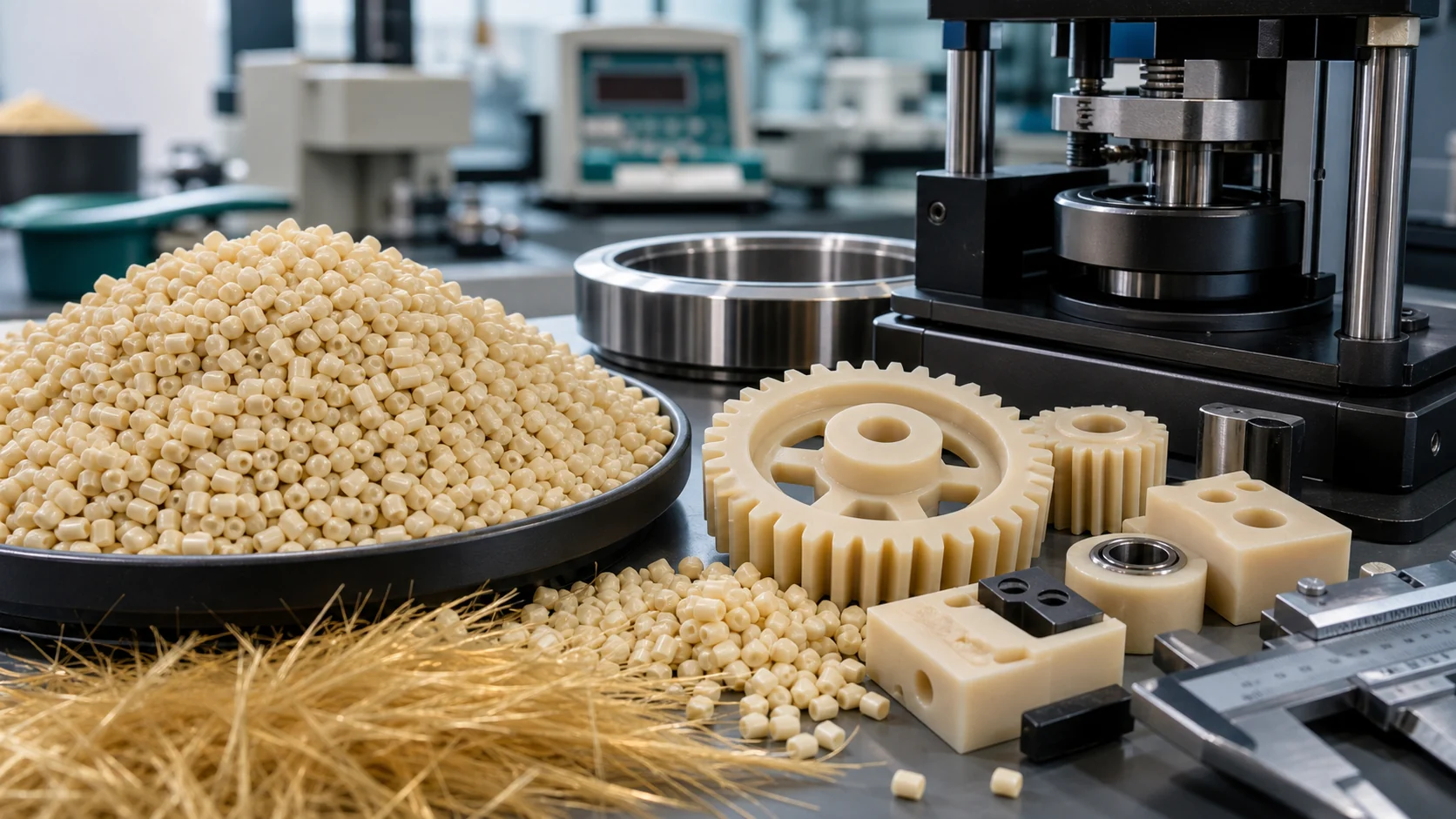
Buyer and engineer FAQ
Questions engineers often ask about this material route
Where can POM with a wear-resistant plastic requirement be used?
Typical fields include gears, rollers, bushings, sliding blocks, guide rails and low-noise moving parts. For this article, DEYU would first confirm the working environment, wall thickness, expected lifetime and whether DGK-POM FL100T Aramid Reinforced POM, Wear-Resistant Plastics matches the part geometry or needs formulation adjustment.
What are the main performance indicators for the "wear-resistant plastic" target on POM?
Focus on friction coefficient, wear depth, PV value, noise, dimensional stability and mating material compatibility. Buyers should ask for data on molded parts, not only pellet data, because gate position, filler orientation and thickness can change the final value.
What should engineers watch during injection molding or processing?
For POM, a practical starting window is 180-210°C melt / 70-100°C mold. Dry PA grades correctly, control glass or aramid fiber orientation and validate wear on the real mating surface. Final parameters should follow part thickness, gate design and the actual machine.
What details help DEYU recommend DGK-POM FL100T Aramid Reinforced POM, Wear-Resistant Plastics more accurately?
Send the current resin or grade, drawing or photo, wall thickness, annual quantity, target standard, failure mode and required color. If a reference grade already passed one test but failed in production, include both data sets.
For a precise recommendation, share the part drawing, base resin, target performance, processing method and test standard with DEYU.
1. Market Background: The Structural Gap in the POM Industry
Polyoxymethylene, commonly known as POM or acetal, has been used for decades in electronics, automotive parts, industrial machinery and consumer products because it combines high stiffness, low friction and dimensional stability.
DGK-POM FL100T Aramid Reinforced POM and Wear-Resistant Plastics. Use the DGK-POM FL100T page as the specific aramid POM reference, and compare the broader wear-resistant plastics category when the project needs a different base resin or friction route.
In China, the POM industry faces a structural mismatch. General-purpose POM capacity continues to grow, while high-performance modified grades, especially wear-resistant, high-strength and long-life materials, still rely heavily on imported solutions.
This creates a clear opportunity for differentiated modified POM compounds. Instead of competing only in standard glass fiber reinforced or mineral-filled grades, domestic compounders can move toward higher-value routes such as aramid fiber reinforced POM, conductive POM, flame-retardant POM and lubricated wear-resistant POM.
Among these routes, aramid fiber reinforced POM is especially relevant for precision gears, bushings, bearings, sliding parts, automotive adjustment mechanisms and long-life transmission systems.
2. Why Aramid Fiber Works in POM
Aramid fiber, also known as aromatic polyamide fiber, is widely recognized through commercial names such as Kevlar. It has high tensile strength, good heat resistance, chemical stability and low density.
When aramid fiber is compounded into a POM matrix through melt compounding, it forms a load-bearing and wear-reducing microstructure.
2.1 Load Sharing Under Friction
Inside the POM matrix, aramid fibers form an interlaced support network. During sliding contact, this network carries part of the friction load and reduces direct wear on the polymer surface.
This is similar to the way reinforcement supports a composite structure: the matrix carries distributed load, while the fibers help resist concentrated stress.
2.2 Slower Wear Debris Development
Aramid fiber has high toughness and high modulus. In a friction system, it can help control the detachment and spreading of wear debris. Instead of sudden surface peeling or adhesive wear, the wear process becomes more gradual and more controllable.
2.3 Lower Aggressiveness Against Metal Mating Surfaces
This is one of the key differences between aramid fiber and harder fibers such as glass fiber or carbon fiber.
Glass fiber and carbon fiber may improve stiffness and strength, but their higher hardness can increase abrasion against mating metal parts. Aramid fiber is softer and more elastic, which makes it less aggressive toward metal counterparts.
This feature is valuable in sliding applications such as precision gears, bearings, automotive seat adjustment gears, metal-plastic sliding components, low-noise transmission parts and long-life wear-resistant mechanisms.
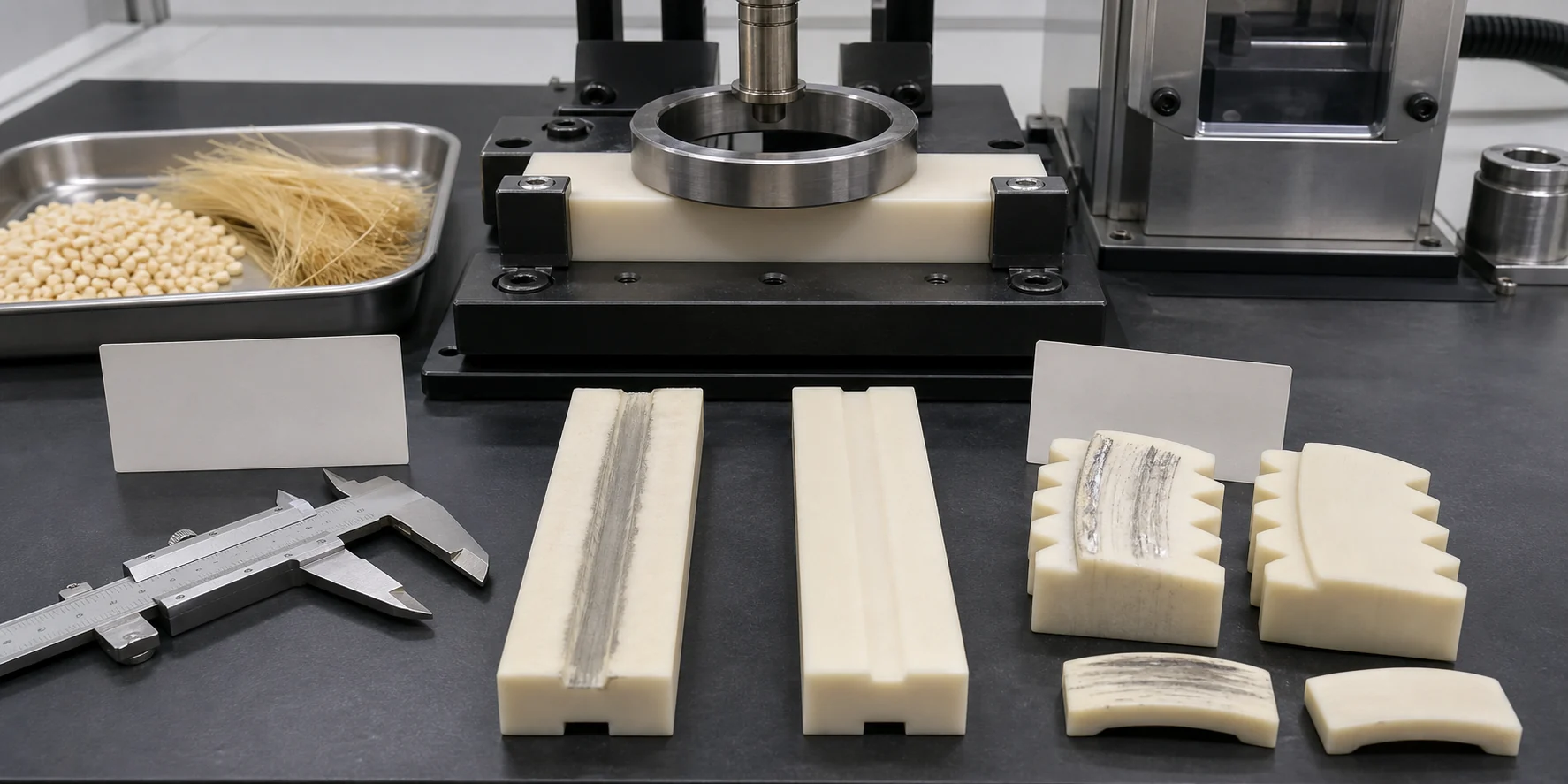
3. Comparison with Other Reinforcement Routes
| Reinforcement Route | Main Function | Advantages | Selection Boundary |
|---|---|---|---|
| Glass fiber reinforced POM | Stiffness improvement | Higher rigidity and dimensional stability | May be more aggressive to metal mating parts; often needs lubrication support for wear applications |
| Carbon fiber reinforced POM | Strength, stiffness and wear reduction | High specific strength, stress distribution and possible conductivity | Higher cost; conductivity may be unsuitable for insulating applications |
| Aramid fiber reinforced POM | Wear resistance and low mating-surface attack | Good wear resistance, lower friction tendency and gentler behavior against metal counterparts | Requires strong compounding and dispersion control |
| Aramid + lubricant POM | Wear and friction control | Combines a load-bearing skeleton with surface lubrication | Formulation and processing become more complex |
The development trend is clear: standard POM can move toward aramid reinforced POM, then toward aramid plus PTFE or another lubricant composite route.
As formulation becomes more sophisticated, wear resistance and applicable PV range can improve, but compounding difficulty and processing control also increase.
4. Global Product Landscape
International material companies have developed aramid reinforced POM grades for many years. These grades are useful industry references, but the final selection still depends on local supply, test standards, molding conditions and part-level validation.
4.1 DuPont Delrin 100KM
DuPont is often referenced as one of the earlier companies to introduce aramid fiber into POM systems. Delrin 100KM is positioned as a low-wear aramid modified POM grade for precision transmission and moving-part applications.
4.2 SABIC LNP LUBRICOMP (third-party market reference)
SABIC's LNP LUBRICOMP portfolio includes wear-resistant engineering plastic compounds. Some aramid reinforced POM directions combine aramid fiber with internal lubrication systems, reflecting the industry move from single reinforcement toward hybrid wear packages.
4.3 RTP Company 800AR 5
RTP 800AR 5 (third-party market reference) is commonly discussed as a 5% aramid fiber reinforced POM grade for general wear-resistant molded parts. It represents a practical entry-level aramid POM route.
These international examples show that aramid reinforced POM is not a laboratory-only concept. It is a mature direction for wear-resistant engineering plastics, while still leaving room for localized formulation and validation support.
5. Domestic Opportunity: From Homogeneous Competition to Differentiated Modified POM
In China, the POM modification industry has long faced intense competition in conventional glass fiber reinforced and mineral-filled grades. These products have relatively low technical barriers and are often exposed to price competition.
Special modified POM grades such as aramid reinforced POM, conductive POM, flame-retardant POM and lubricated wear-resistant POM require stronger formulation know-how, dispersion control and application validation.
This creates an opportunity for domestic compounders to compete through functionality rather than price alone.
Aramid reinforced POM is different from a conventional stiffness-driven route. It creates value through lower wear, lower friction coefficient, reduced stick-slip tendency, lower aggressiveness to metal mating parts, longer service life in precision mechanisms and formulation flexibility for customized wear conditions.
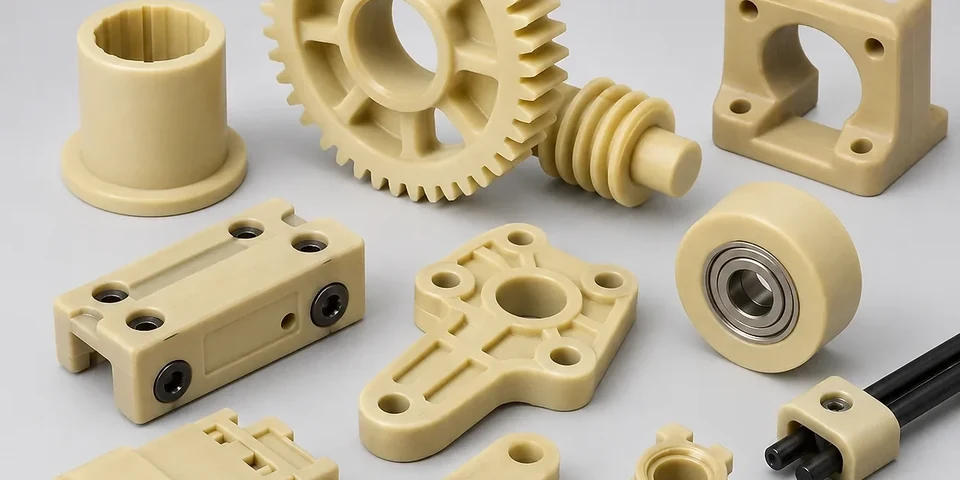
6. DEYU DGK-POM FL100T: Technical Positioning
DEYU DGK-POM FL100T is positioned as an aramid fiber reinforced POM compound for wear-resistant applications. The existing product direction identifies a POM aramid fiber composite with wear-resistant, self-lubricating and dimensionally stable behavior for gears, bushings, sliders, guide blocks and precision wear parts.
6.1 Wear Resistance
In GB/T 3960-2016 friction and wear testing, using a 45# steel ring as the mating part, 200 N load, 0.42 m/s speed and 120 minutes dry friction, DGK-POM FL100T recorded a wear loss of 13 mg, compared with 32 mg for standard POM under the same condition.
This represents an approximate 59% reduction in wear loss.
In an automotive seat adjustment gear bench durability test, after 100,000 cycles, tooth thickness wear was below 0.03 mm, and service life improved compared with the original standard POM route.
6.2 Friction Coefficient Control
Under dry friction, the friction coefficient of DGK-POM FL100T remained in the 0.15-0.20 range. Compared with standard POM at around 0.28-0.35, this provides a lower and more stable friction direction.
The reduced gap between dynamic and static friction also helps suppress stick-slip behavior in precision transmission applications.
6.3 Customization Capability
Based on copolymer POM and its compounding lines, DEYU can adjust the formulation according to the customer's wear condition. Possible adjustment directions include aramid fiber content from 5% to 20%, PTFE, silicone oil or another internal lubrication route, flowability, wear-impact balance and gear or bearing application requirements.
DEYU can support small-batch sampling and mold trial validation, which is valuable for R&D-stage projects, medium-volume applications and customers requiring fast formulation iteration.
7. Positioning Difference Between International Brands and DEYU
International brands such as DuPont, SABIC and RTP have advantages in brand history, global application databases and standardized material platforms.
Their aramid POM products are often suitable for global platform projects, high-volume standard applications, strict specification systems and projects requiring long-term international material history.
DEYU DGK-POM FL100T is positioned differently. It offers flexibility in localized technical support, faster sample response, formulation fine-tuning, copolymer POM-based processing windows, cost-structure flexibility and medium-volume or customized wear applications.
Therefore, DEYU's route should not be seen only as a direct replacement for imported grades. It can also serve as a flexible domestic option for applications requiring rapid validation and localized formulation support.
8. Engineering Selection Advice
When selecting aramid fiber reinforced POM, engineers should evaluate the application through several layers.
8.1 Define the Wear Level
For light-load and intermittent friction, standard POM or PTFE-filled POM may be enough. For medium to high load, continuous sliding and long-life requirements, aramid reinforced POM should be considered. For higher PV conditions without external lubrication, an aramid plus lubricant composite route may be more suitable.
8.2 Match Fiber Content with Processing Capability
Higher aramid fiber content may improve wear resistance, but it also places higher requirements on compounding, injection molding and mold design.
Buyers should ask suppliers for fiber dispersion direction, molded part wear data, processing window suggestions, gate and flow-length recommendations and part-level validation data.
8.3 Check the Mating Material
If the mating part is aluminum alloy, copper alloy or another relatively soft metal, aramid reinforced POM may show a clearer advantage because of its lower aggressiveness toward metal surfaces.
If the mating part is hardened steel, carbon fiber reinforced POM or other routes may also be compared depending on the load and friction system.
8.4 Evaluate Supplier Support
International brands may be suitable for standardized global projects. Domestic compounders such as DEYU can provide more flexible support for local projects, fast sampling, formulation adjustment and process debugging.
9. What Buyers Should Provide
| Buyer Input | Why It Matters |
|---|---|
| Part drawing and movement mode | Gear, slider, bushing and guide structures create different wear patterns |
| Mating material | Steel, aluminum, copper alloy and plastic counterparts influence wear and surface attack |
| Load, speed and PV condition | Wear-resistant POM must be selected around real friction conditions |
| Target life or cycle count | Long-life gears and short-stroke sliders need different validation plans |
| Current failure mode | Wear debris, noise, tooth wear, sticking or dimensional drift point to different adjustments |
| Processing method | Injection molding flow length, gate location and wall thickness affect fiber orientation |
| Required mechanical balance | Wear resistance must be balanced with impact strength and toughness |
| Lubrication condition | Dry friction, grease lubrication and intermittent lubrication require different routes |
| Monthly usage | Helps evaluate sample plan, cost target and supply stability |
10. Conclusion
Aramid fiber reinforced POM is a high-value branch of POM modification technology. It is moving from an imported-brand-dominated field toward a stage where domestic compounders can participate through differentiated formulation and localized application support.
From a technical perspective, aramid fiber provides a load-bearing skeleton, lower aggressiveness to metal mating surfaces and strong synergy with internal lubrication systems. These features make it suitable for precision gears, bushings, bearings, automotive adjustment mechanisms and long-life sliding parts.
For engineers, the key is not only to compare a few data points on a material datasheet. A better approach is to understand the friction system, mating material, load condition, PV value, processing method and supplier validation capability.
DEYU DGK-POM FL100T provides one domestic aramid reinforced POM route for wear-resistant applications. Final material selection should be confirmed through standard tests, molded part validation and customer-side durability testing.