
How to Choose the Base Resin for Conductive Plastics: PP, ABS, PA and PE
When making conductive plastic parts, the first question is often not how low the resistance should be, but which base resin should carry that conductive system.
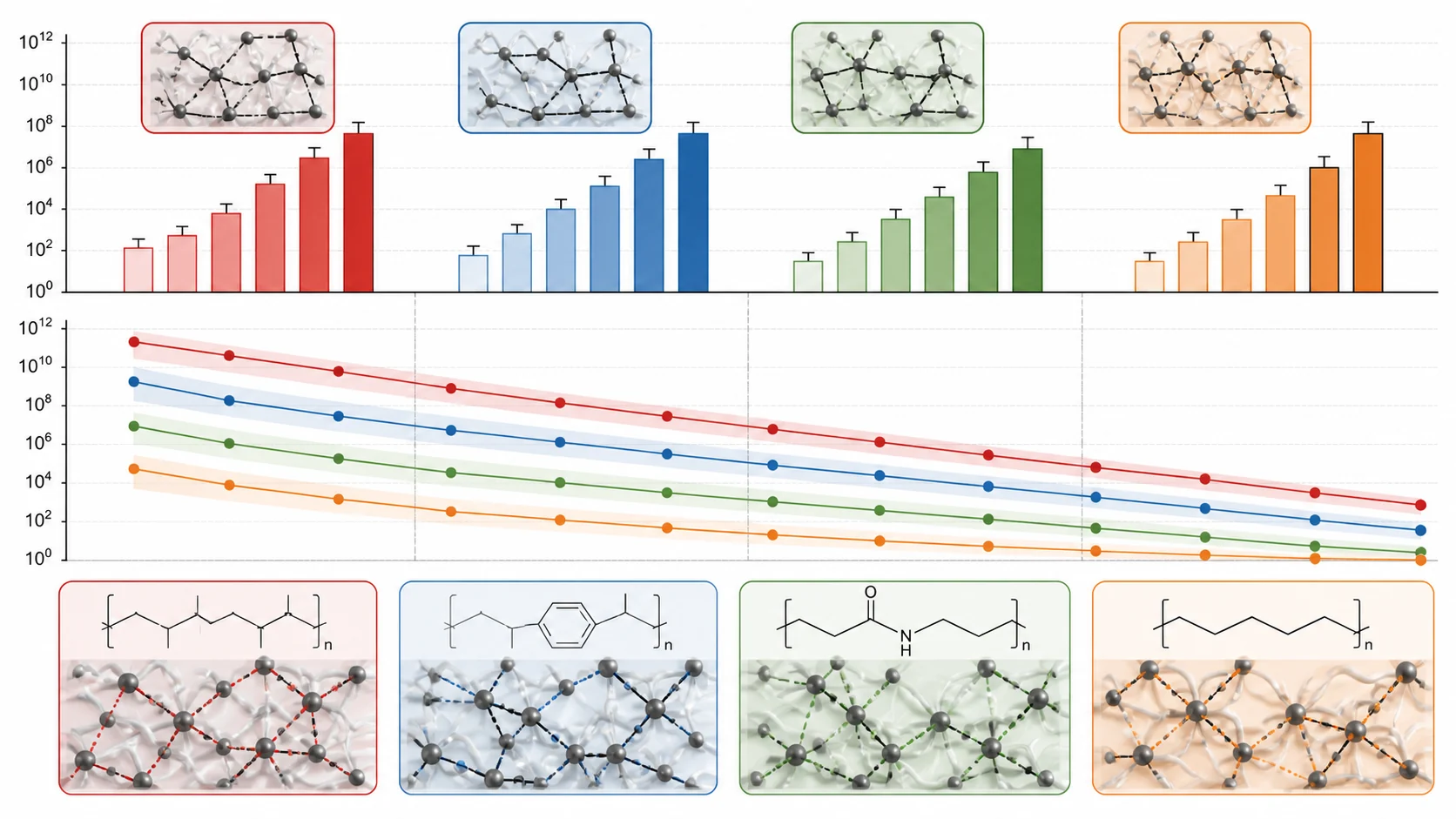
Conductive plastic base-resin FAQ
Conductive Plastic Base Resin Selection Guide: PP, ABS, PA and PE
What is the main difference between conductive PP and conductive ABS?
PP is lower cost, lighter and more chemically resistant, but its surface quality and impact strength are generally weaker than ABS. Choose ABS for appearance-sensitive parts and PP for cost-sensitive high-volume parts.
Why is conductive PA much more expensive than conductive PP?
PA resin costs about two to three times as much as PP and requires stricter drying and higher-temperature molding. Its strength, heat resistance and wear resistance are also far beyond PP, so it is used when the part carries load or runs hot.
Is PE suitable for conductive plastics?
Yes. PE has excellent chemical resistance and is suitable for conductive films, sheets, liners, pipes and packaging that contact corrosive media. Its rigidity and heat resistance are limited, so it is not preferred for load-bearing or high-temperature parts.
Does a CNT route or carbon black route affect base-resin choice?
Yes. CNT usually reaches similar conductivity at 5-10% loading, compared with 15-25% for carbon black, so it damages flow and mechanical properties less. The same resin can keep better overall performance with a CNT route.
Which base resins does DEYU cover for conductive plastics?
DEYU covers ABS, PP, PE, PC, PA, POM, PBT, PPS, PEI, PEEK and other resins, with resistance ranges customizable from about 10^0 to 10^9 ohm-cm.
When making conductive plastic parts, the first question is often not "how low should the resistance be," but "which base resin should be used."
PP is inexpensive and easy to mold but has limited heat resistance. ABS offers balanced properties and attractive surfaces but only moderate chemical resistance. PA is strong and wear-resistant but costly, and moisture affects its dimensions. PE has excellent chemical resistance but weak rigidity. At the same conductive level, choosing the wrong base resin can mean anything from unnecessary cost to product failure.
This article explains the differences among these mainstream conductive-plastic base resins from an engineering perspective.
1. First clarify what you need
Before choosing the resin, answer four questions:
1. What is the service temperature: room temperature, 80 C, 120 C or higher?
2. What is the load condition: static load, dynamic impact, or almost no mechanical load?
3. What media will the part contact: water, oil, solvents, acids or alkalis?
4. How high are the appearance requirements: surface gloss, color or transparency?
Different answers to these four questions lead to completely different base-resin choices. The sections below analyze them one by one.
2. PP (polypropylene): the cost-performance king and first choice for high-volume room-temperature parts
One-sentence positioning: for cost-sensitive conductive plastic parts used at room temperature and produced in high volume, PP is usually the first choice.
PP is the lightest of the five general-purpose plastics, with density only 0.90-0.92 g/cm3. Pure PP has surface resistivity as high as 10^15-10^16 ohm-cm and is an excellent insulator. After modification with carbon black or carbon nanotubes, conductive PP can cover roughly 10^3-10^9 ohm-cm surface-resistance ranges.
Core advantages: lowest cost. PP resin is inexpensive, has a broad processing window and short injection cycle, making it the preferred option for mass production.
Core advantages: good chemical resistance. PP tolerates most organic solvents, acids and alkalis well.
Core advantages: lightweight. Its density below 1 makes it the lightest among these conductive plastics.
Core advantages: good processability. Injection temperature is usually 190-230 C; flow is good, and it suits large thin-wall parts.
Main limitation: average heat resistance. Long-term service temperature is about -30 C to +100 C; above 100 C, mechanical properties drop significantly.
Main limitation: insufficient rigidity. Neat PP has low modulus and needs glass fiber or carbon fiber reinforcement for load-bearing structural parts.
Main limitation: weaker decorative surface. Compared with ABS, PP has lower gloss and weaker coating adhesion.
Typical applications: electrical and electronic housings, automotive interior parts, conductive trays, turnover boxes, antistatic packaging and EMI shielding components. DEYU representative directions include DGK-PP-DD36 as a conductive-grade reference and DGK-PP DD2-3A as a super-conductive grade with surface resistance around 10^2-10^4 ohm.
3. ABS: balanced overall performance and the safer choice when appearance matters
One-sentence positioning: when a conductive part needs attractive appearance, medium strength and room-temperature use, ABS is usually the most stable choice.
ABS is one of the most versatile engineering plastics. It combines acrylonitrile for chemical resistance and rigidity, butadiene for toughness and impact strength, and styrene for processing and surface gloss.
Pure ABS also has surface resistivity above 10^15 ohm. After modification, conductive ABS can be controlled around 10^3-10^9 ohm-cm.
Core advantages: good surface quality. ABS has high gloss and can be painted or electroplated, so it is often preferred for visible parts.
Core advantages: strong impact resistance. Impact strength can be above 15 kJ/m2, generally better than PP.
Core advantages: dimensional stability. Water absorption is low, about 0.2-0.45%, so dimensional change after injection molding is small.
Core advantages: good processability. Injection temperature is usually 200-240 C, flow is moderate, and complex structures can be molded.
Main limitation: limited heat resistance. Long-term service temperature is about -40 C to +70 C, slightly lower than PP.
Main limitation: poor weatherability. ABS can age and yellow under UV exposure; outdoor use requires UV stabilization.
Main limitation: moderate chemical resistance. It is sensitive to some solvents such as ketones and esters.
Typical applications: appliance housings, consumer-electronics housings, automotive interior parts, medical-device housings such as MRI shielding covers, defense radar components, antistatic packaging and EMI shielding housings. DEYU representative directions include DGK-ABS-DD46 as a conductive-grade reference and existing DGK-ABS DD3C as a related conductive ABS product page.
4. PA (polyamide / nylon): high strength, heat resistance and wear resistance for loaded parts
One-sentence positioning: when conductive parts must bear load, resist wear and tolerate heat, PA is hard to avoid.
PA, or nylon, is one of the strongest engineering plastics. Pure PA6 tensile strength can exceed 60 MPa, and modified conductive PA still keeps high strength. Its outstanding feature is wear resistance and self-lubrication, which PP and ABS do not offer at the same level.
Pure PA surface resistivity is around 10^14-10^15 ohm. Modified conductive PA can cover roughly 10^1-10^8 ohm-cm.
Core advantages: high strength. Tensile strength can be at least 60 MPa, far above PP and ABS.
Core advantages: good heat resistance. Long-term service temperature is about -40 C to +140 C, and PA66 heat-deflection temperature can exceed 240 C after suitable modification.
Core advantages: wear resistance and self-lubrication. PA is suitable for gears, bearings, rollers and other moving parts.
Core advantages: fuel and oil resistance. It is commonly used for automotive fuel-system and engine-peripheral parts.
Main limitation: high moisture absorption. PA6 saturated water absorption is about 2-3%; moisture causes visible dimensional change, so strict drying is required before injection molding.
Main limitation: higher cost than PP and ABS. Raw material price can be two to three times PP.
Main limitation: higher processing requirements. Injection temperature is usually 240-280 C and mold temperature should be controlled around 60-80 C.
Typical applications: automotive engine-peripheral parts such as sensor housings and fuel-system components, power-tool housings, conductive rollers, textile components and electrical structural parts. DEYU representative directions include DGK-PA6-DD18, PA6 DD3-5A and DGK-PA66 CF15L-CF40L as an existing carbon-fiber reinforced PA66 related product page.
5. PE (polyethylene): excellent chemical resistance, but rigidity is the short board
One-sentence positioning: when the part contacts corrosive media and must be conductive, PE is a professional option.
PE is the simplest polymer structure among these plastics and includes LDPE, HDPE, UHMWPE and other grades. Pure PE is an excellent insulator; after modification with conductive fillers, it can also gain conductivity.
Core advantages: excellent chemical resistance. PE resists acids, alkalis, salt solutions and most solvents very well, so it is commonly used for chemical tanks and pipes.
Core advantages: low cost. PE is close to PP and belongs to the least expensive plastics.
Core advantages: good toughness. HDPE and UHMWPE in particular have excellent impact and crack resistance.
Core advantages: low density. At 0.94-0.96 g/cm3, PE also has strong lightweight value.
Main limitation: weak rigidity. PE flexural modulus is far below PP and ABS, so it is not suitable for load-bearing structural parts.
Main limitation: low heat resistance. Long-term service temperature is usually below 80 C.
Main limitation: weak surface decoration. Painting and bonding are difficult.
Main limitation: high molding shrinkage. Injection dimensional stability is weaker than ABS and PA.
Typical applications: chemical tanks, pipes, conductive films and sheets, antistatic packaging and conductive pipes for underground coal-mine use. Modified UHMWPE can be made into high-strength, high-wear-resistance conductive parts. For an existing PE-related conductive product page, see DGK-LDPE DD4-5.
6. One table to understand how to choose
The comparison below summarizes the selection logic across PP, ABS, PA and PE.
| Comparison dimension | PP | ABS | PA (nylon) | PE |
|---|---|---|---|---|
| Density (g/cm3) | 0.90-0.92 | 1.04-1.06 | 1.13-1.15 | 0.94-0.96 |
| Long-term heat resistance (C) | -30~+100 | -40~+70 | -40~+140 | -40~+80 |
| Tensile strength (MPa) | 25-40 | 35-50 | >=60 | 20-35 |
| Impact resistance | ★★☆ | ★★★ | ★★★ | ★★★ |
| Chemical resistance | ★★★ | ★★☆ | ★★☆ | ★★★★ |
| Wear resistance | ★★☆ | ★★☆ | ★★★★ | ★★★ |
| Surface quality | ★★☆ | ★★★★ | ★★☆ | ★★☆ |
| Cost | ★★★★★ (lowest) | ★★★★ | ★★★ | ★★★★★ |
| Processing difficulty | ★ (easiest) | ★★ | ★★★★ | ★★ |
| Conductive range (ohm-cm) | 10^3-10^9 | 10^3-10^9 | 10^1-10^8 | customizable |
Data source: DEYU plastics conductive plastic selection guide.
7. Selection decision process
Step one: check temperature. If service temperature exceeds 100 C, PP and ABS should be removed from the shortlist and PA should be considered; above 140 C, consider PPS or PEEK.
Step two: check load. If the part must withstand higher load or impact, PA comes first. If it is basically unloaded, PP or ABS is usually enough.
Step three: check media. For strong acids, strong alkalis or organic solvents, PE or PP comes first. For fuel contact, PA comes first.
Step four: check appearance. If high gloss, painting or electroplating is required, ABS is the only practical choice among these four.
Step five: check cost. When budget is tight and volume is high, PP should be evaluated first. When the budget allows and the performance target is high, PA should be evaluated first.
8. An easily ignored issue: the base-resin cost of conductive fillers
No matter which base resin is selected, one fact cannot be avoided: adding conductive fillers has a cost in material performance.
In traditional carbon-black routes, 15-25% conductive filler is usually required to reach stable conductivity. This loading visibly damages the mechanical performance of the base resin. A 40-60% drop in impact toughness is common.
Carbon nanotube routes can often reach the same conductive level at 5-10% loading, causing much less damage to the base resin. DEYU has mature CNT composite routes in PP, PA, ABS and other base resins. Therefore, selection should consider not only the original base-resin properties, but also how much performance remains after conductive modification. Some resins look strong as neat materials but lose too much after conductive filling; this is one of the easiest traps in material selection.
9. DEYU plastics conductive-plastic base-resin coverage
DEYU plastics has achieved multi-resin and full-resistance-range coverage in conductive plastics. Resin systems include ABS, PP, PE, PC, PA, POM, PBT and high-performance engineering plastics such as PPS, PEI and PEEK. Resistivity can be customized from about 10^0 ohm-cm in super-conductive grades to 10^9 ohm-cm in antistatic grades.
For regular grades, samples can be shipped as fast as 3-5 working days after requirement communication, and engineers can assist on site with process tuning and material selection validation.