Why Do POM Gears Produce Wear Powder and Noise After Long-Term Running?
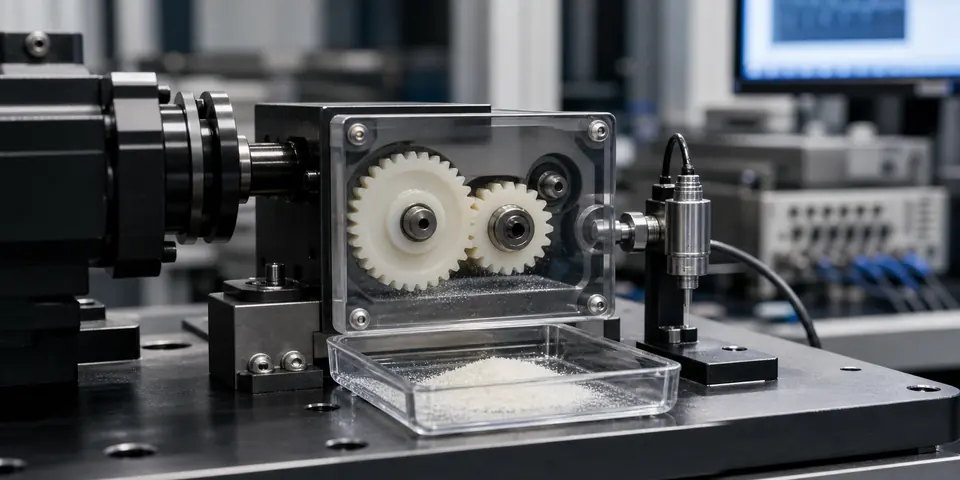
POM, also called acetal or polyoxymethylene, is commonly used for plastic gears because it has good dimensional stability, moldability, and sliding behavior. However, in long-term running, some POM gears still show:
Buyer and engineer FAQ
Questions engineers often ask about this material route
Where can POM with a wear-resistant plastic requirement be used?
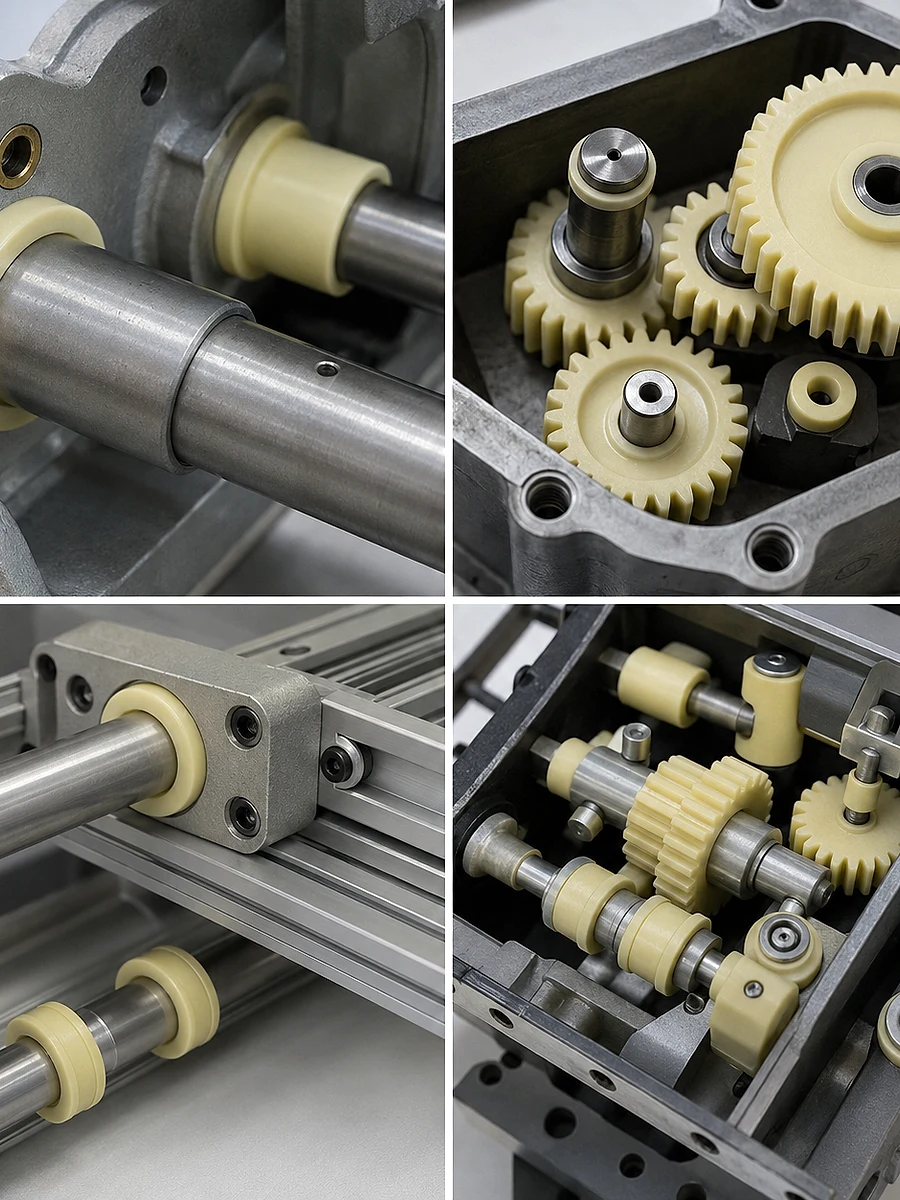
Typical fields include gears, rollers, bushings, sliding blocks, guide rails and low-noise moving parts. For this article, DEYU would first confirm the working environment, wall thickness, expected lifetime and whether DGK-POM TF90M matches the part geometry or needs formulation adjustment.
What are the main performance indicators for the "wear-resistant plastic" target on POM?
Focus on friction coefficient, wear depth, PV value, noise, dimensional stability and mating material compatibility. Buyers should ask for data on molded parts, not only pellet data, because gate position, filler orientation and thickness can change the final value.
What should engineers watch during injection molding or processing?
For POM, a practical starting window is 180-210°C melt / 70-100°C mold. Dry PA grades correctly, control glass or aramid fiber orientation and validate wear on the real mating surface. Final parameters should follow part thickness, gate design and the actual machine.
What details help DEYU recommend DGK-POM TF90M more accurately?
Send the current resin or grade, drawing or photo, wall thickness, annual quantity, target standard, failure mode and required color. If a reference grade already passed one test but failed in production, include both data sets.
For a precise recommendation, share the part drawing, base resin, target performance, processing method and test standard with DEYU.
1. The Problem
POM, also called acetal or polyoxymethylene, is commonly used for plastic gears because it has good dimensional stability, moldability, and sliding behavior. However, in long-term running, some POM gears still show:
DGK-POM TF90M. is the closest DEYU product page for a POM + PTFE low-friction gear route.
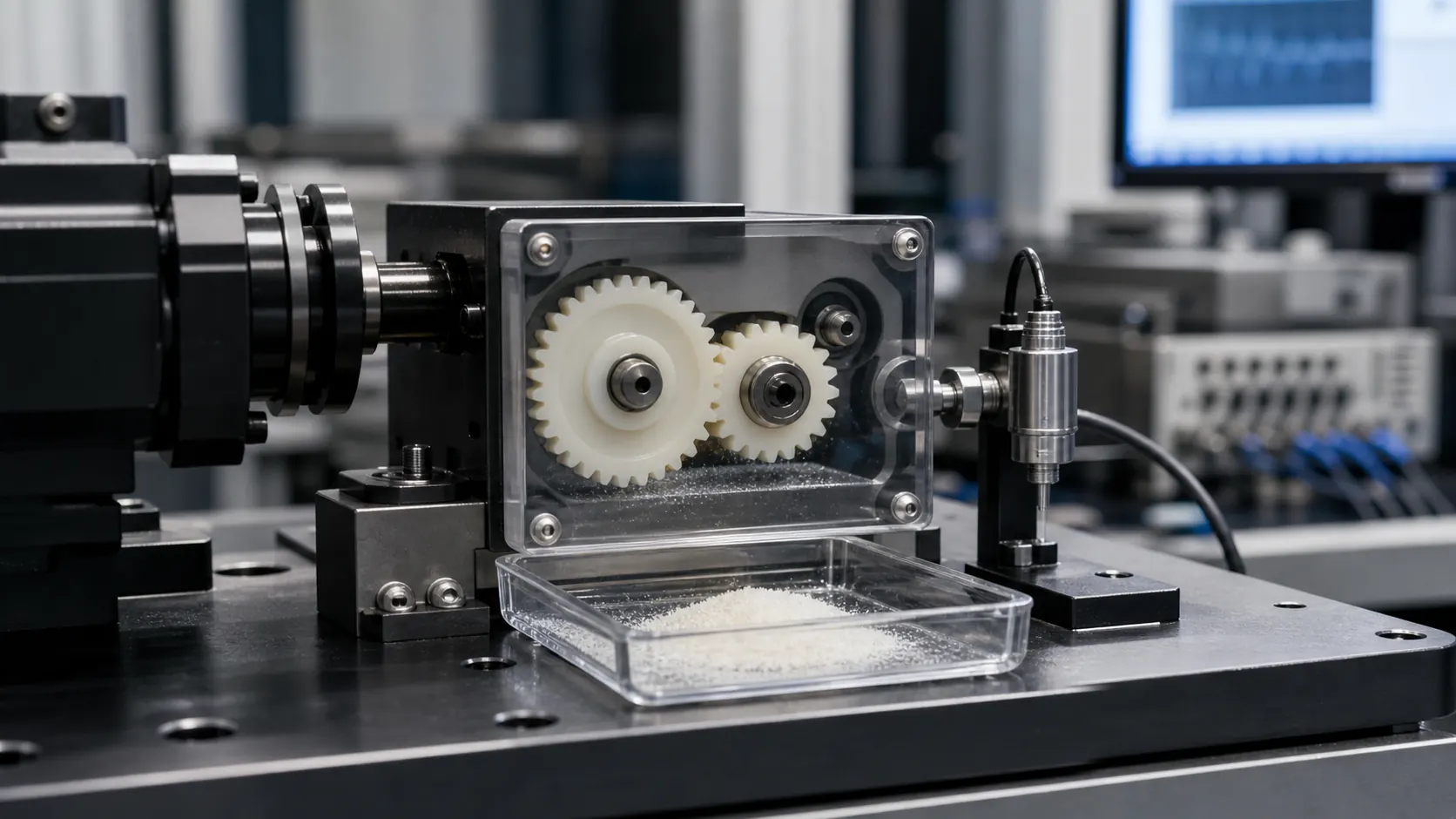
white wear powder; noise increase; tooth surface polishing; unstable gear meshing; tooth chipping during assembly; shorter replacement cycle.
This does not always mean that POM is the wrong resin. In many cases, the issue comes from friction pair, gear design, molding stress, tooth accuracy, or insufficient low-friction modification.
2. Why It Happens
Common causes include:
ordinary POM has insufficient lubrication for dry meshing; gear teeth have high local contact stress; molding shrinkage affects tooth accuracy; internal stress increases chipping risk; surface roughness of the mating gear is too high; running temperature increases friction and wear; the selected material focuses on stiffness but not sliding stability.
For POM gears, tensile strength and flexural modulus alone cannot explain the real problem. The more important customer data is usually wear depth, noise, tooth surface condition, and defect rate after the running test.
3. DEYU Material Direction
DEYU may recommend a DGK-POM TF90M POM + PTFE wear-resistant compound when the main issue is friction noise and wear powder.
Development direction:
reduce friction between gear teeth; reduce visible wear powder; maintain gear dimensional stability; control molding shrinkage; avoid excessive tooth brittleness; validate final gear noise and wear depth.
4. Product Detail Fields Used for This Route
The article uses the current DEYU product-detail fields instead of estimated mechanical ranges.
| Product field | DGK-POM TF90M |
|---|---|
| Base Resin | POM |
| Model | TF90M |
| Key Performance | Contains 20% PTFE wear additive; low friction coefficient. |
| Application Cases | Gears, sliders, bearings and low-friction parts. |
| Processing | Injection molding |
| Color Service | Supported |
5. Customer Debugging Data
| Item | Ordinary POM Gear | DEYU DGK-POM TF90M POM + PTFE Trial |
|---|---|---|
| Trial quantity | 5,000 pcs | 6,000 pcs |
| Wear powder rate after running test | 8.1% | 2.2% |
| Average wear depth | 0.084 mm | 0.036 mm |
| Gear noise after 100 h | 60 dB | 54 dB |
| Tooth chipping during assembly | 2.5% | 0.9% |
| Molding defect rate | 3.4% | 1.6% |
| Replacement cycle direction | 3–4 months | 7 months direction |
6. Result Interpretation
In this internal customer case, the DGK-POM TF90M POM + PTFE direction reduced average wear depth by about 57% compared with ordinary POM. The reduction was not only caused by PTFE addition. Molding stress control, tooth accuracy, and material flow adjustment also contributed to the final result.
Conclusion
When POM gears generate wear powder and noise, the solution is not always changing to a harder plastic. A lower-friction POM + PTFE route may be more suitable when the main failure is dry sliding wear, noise, or unstable meshing.