
20 Typical Application Areas for DGK-ABS KJD890TM Transparent Antistatic ABS
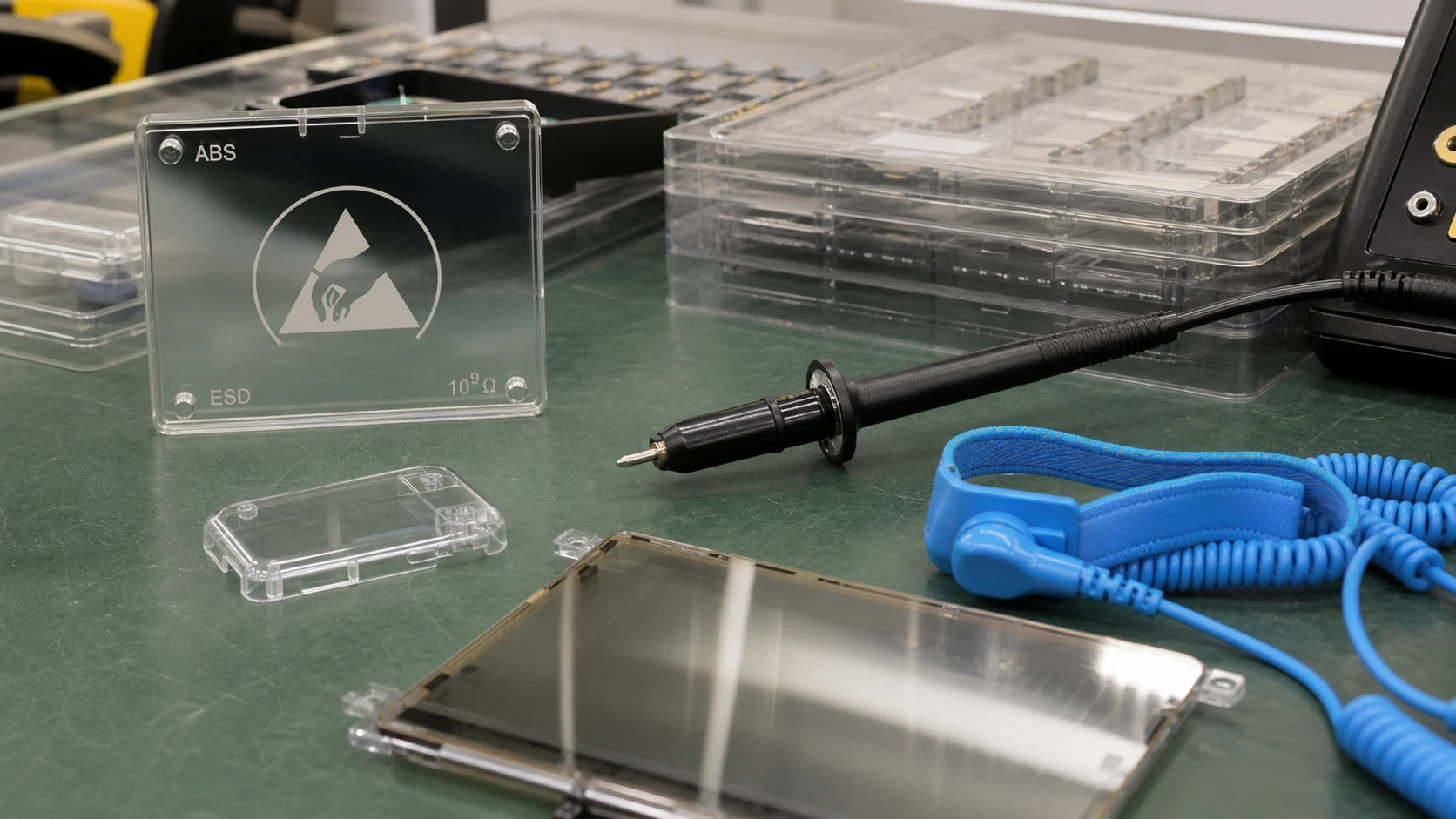
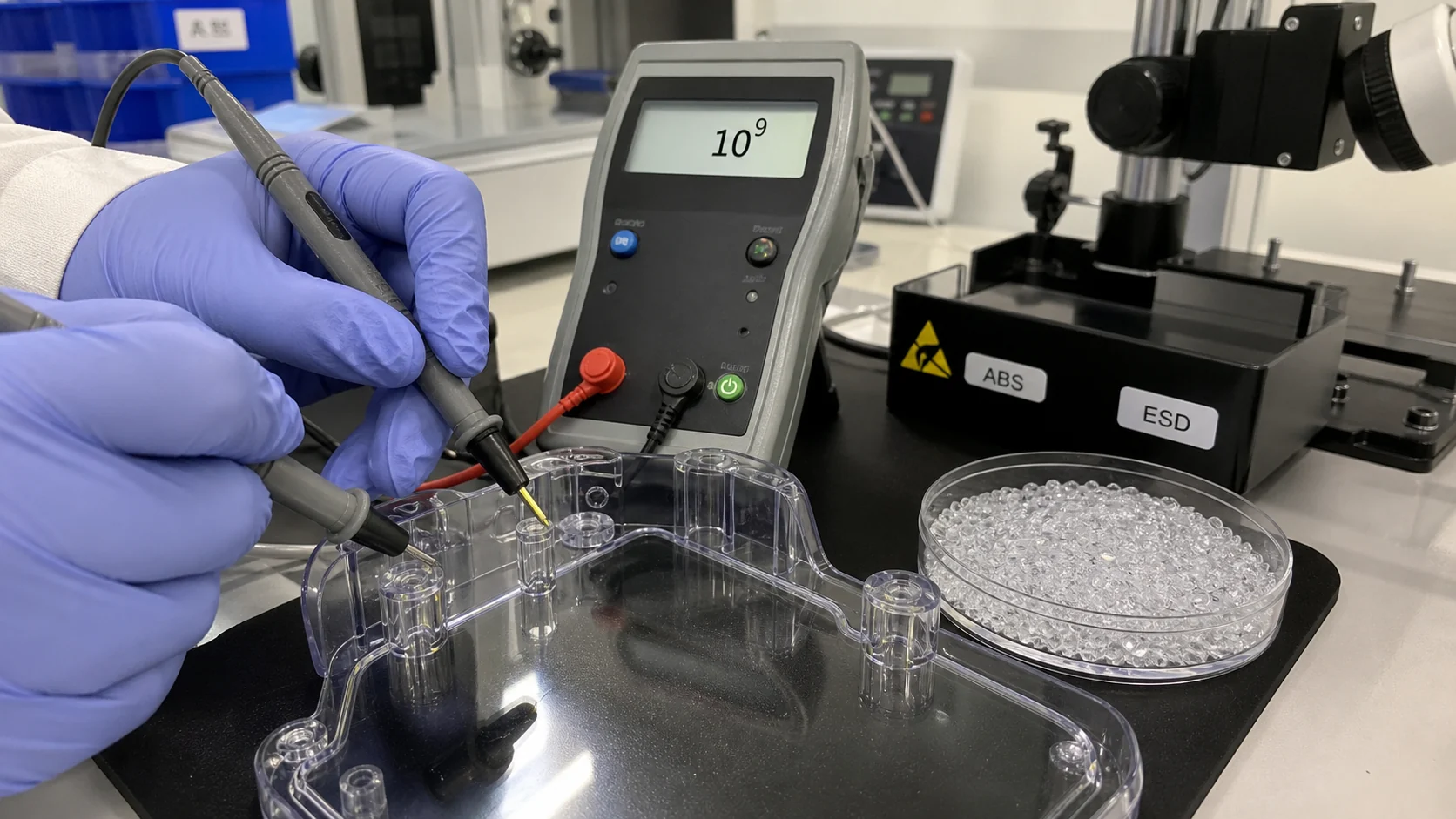
DGK-ABS KJD890TM transparent antistatic ABS helps molded parts keep a clear or translucent appearance while controlling static charge in the 10^9-10^11 Ω·sq surface-resistance range. This guide summarizes 20 practical application fields where visibility, dust control and ESD protection must work together.
Buyer and engineer FAQ
Questions about transparent antistatic ABS applications
Is DGK-ABS KJD890TM conductive or antistatic?
It is positioned as transparent antistatic ABS with a 10^9-10^11 Ω·sq surface-resistance range, suitable for static dissipation without turning the part black.
Why not use carbon black conductive ABS for these applications?
Carbon black can reduce resistance but makes the material opaque black. KJD890TM is used when transparency or translucency is required together with static control.
Which validation data should buyers request?
Request molded-part surface resistance, 2 mm transparency or haze, alcohol-wipe stability, impact data, dimensional stability and the actual application test method.
Can it be used for medical equipment housings?
It can be considered for transparent medical windows and housings after application-specific biocompatibility, cleaning and regulatory validation by the customer.
For a precise recommendation, send the part drawing, thickness, target resistance, transparency requirement, cleaning method and sample quantity.
In high-end manufacturing such as electronics, medical devices, optical instruments and smart appliances, visible and functional plastic parts often face two requirements at the same time. They need transparent or translucent material for visual inspection and product design, while also preventing static accumulation that can attract dust, damage components or disturb signals.
Conventional transparent plastics such as PMMA, ordinary PC and ordinary ABS can have high light transmission, but their surface resistivity often reaches 10^14-10^16 Ω·sq. After frictional charging, static electricity cannot dissipate quickly. Carbon-black conductive systems can provide conductivity, but they turn the material opaque black.
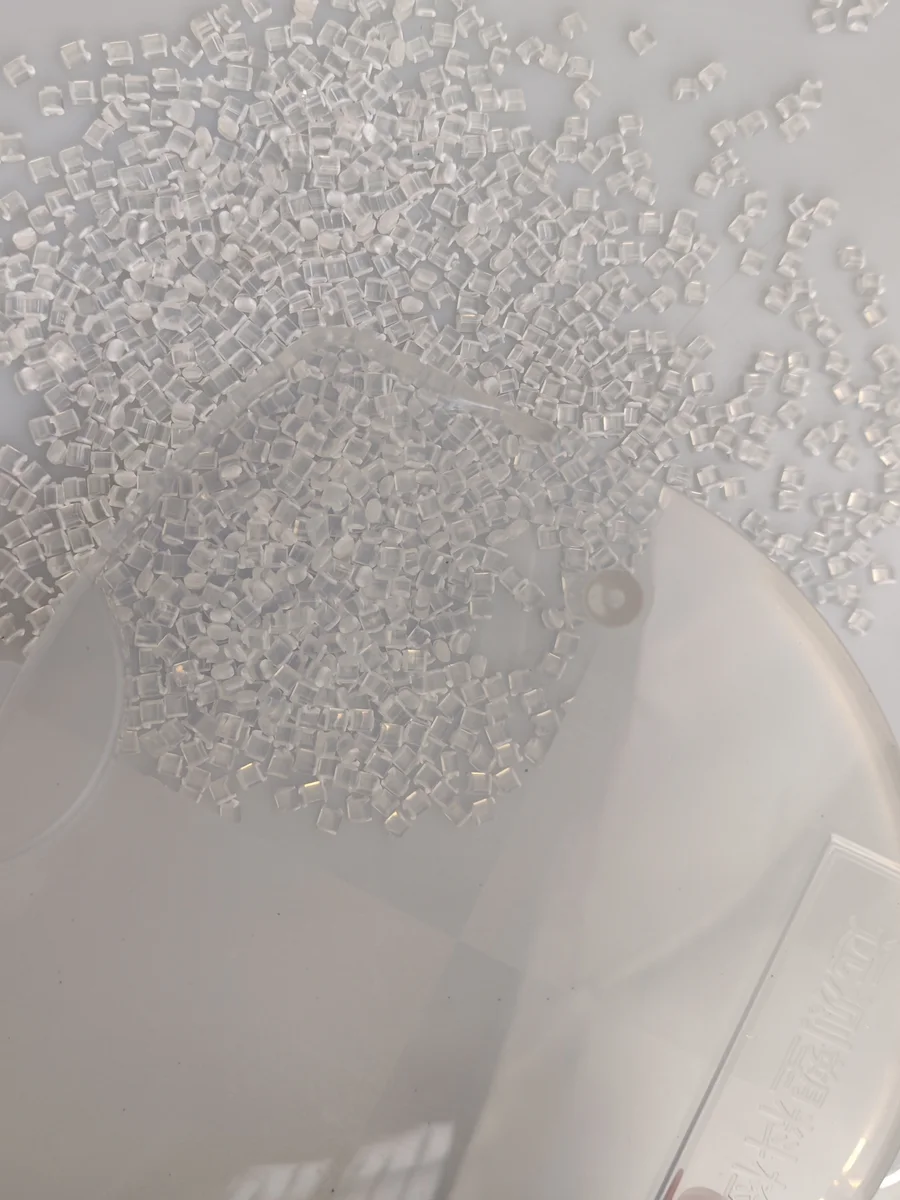
Yuyao Deyu Plastic Technology developed DGK-ABS KJD890TM transparent antistatic ABS based on polymer permanent antistatic technology. At 2 mm thickness, the material keeps excellent transparency while maintaining a stable surface-resistance range of 10^9-10^11 Ω·sq, solving the conflict between clear appearance and antistatic function.
For a material-level overview, see the existing DEYU guide to DGK-ABS KJD890TM transparent antistatic ABS as a clear ESD material. This page focuses on 20 specific application fields.
Semiconductor and Electronics Manufacturing
1. Wafer and chip carrier trays
During semiconductor manufacturing, wafers and chips move frequently between process steps. If a tray lacks antistatic performance, friction-generated charge may damage microcircuits. IC trays and wafer carriers molded from DGK-ABS KJD890TM keep surface resistance at 10^9-10^11 Ω·sq, controlling charge dissipation. The transparent material lets operators see chip quantity and placement without opening packaging, reducing secondary contamination.
2. SMT component reels and carrier tapes
In SMT lines, carrier tapes move chip components at high speed. The material must be transparent for optical inspection and antistatic to prevent static attraction from shifting components. DGK-ABS KJD890TM has high flow, with melt flow rate of 46.4 g/10 min, making it suitable for precision molding and thin-wall, high-accuracy carrier parts.
3. LCD and OLED panel trays
LCD and OLED panels require strict cleanliness and ESD control during production and transport. Transparent trays molded from DGK-ABS KJD890TM allow visual defect checks, while permanent antistatic behavior reduces micro-dust attraction on panel surfaces. Its low volatility and low ionic migration direction fit cleanroom use.
4. Electronic component turnover boxes and storage cases
Sensors, connectors, relays and other precision components need ESD-safe turnover and storage. Transparent antistatic boxes molded from DGK-ABS KJD890TM let staff confirm material type and quantity without opening the lid. Notched impact data of 5.3 kJ/m² Charpy and 12.7 kJ/m² Izod help the box resist frequent handling cracks.
5. Electronic test fixtures and clamps
PCB functional testing and chip programming fixtures contact sensitive components. Static from the fixture may disturb signals or damage parts. Transparent test fixtures made from DGK-ABS KJD890TM allow direct observation of probe-to-pad contact while providing a stable static-dissipation path.
Communication and Consumer Electronics
6. Transparent housings for routers, base stations and optical modules
5G communication devices and optical modules need enclosure materials with appearance quality and dust control. DGK-ABS KJD890TM prevents electrostatic dust attraction that can affect heat dissipation, while clear housing areas allow status LEDs to be seen. HDT at 0.45 MPa is 84.4°C, suitable for common communication equipment temperatures.
7. Smart home control panels and sensor housings
Smart speakers, thermostats and door/window sensors use transparent or translucent panels for home aesthetics. Static dust can affect sensor accuracy. DGK-ABS KJD890TM panels combine a clear LED visual effect with permanent antistatic performance so the surface stays cleaner during long-term use.
8. Transparent consumer electronics shells
Transparent shells are popular for TWS earbud cases, wireless mice and power banks. DGK-ABS KJD890TM keeps transparency while adding antistatic performance, reducing lint and dust attraction from pockets or bags. Gloss and dimensional stability support high-quality consumer appearance.
9. Electronic pens and styluses
Stylus housings need antistatic behavior to avoid signal interference and often use translucent styling. DGK-ABS KJD890TM keeps the pen body within 10^9-10^11 Ω·sq, reducing risk of static interference with capacitive touch recognition while allowing internal structure or LED indication to show through.
10. Game controller housings and accessories
Hands rubbing against game controllers can generate static charge during repeated operation. If the housing is not antistatic, accumulated charge may disturb button signals or wireless modules. DGK-ABS KJD890TM controller housings maintain stable antistatic behavior without relying on use time or ambient humidity.
Medical and Laboratory Equipment
11. Transparent panels for monitors and infusion pumps
In ICU and operating rooms, monitors and infusion pumps are regularly wiped with alcohol or disinfectant. Coated antistatic surfaces lose performance quickly. DGK-ABS KJD890TM anchors the antistatic component inside the resin; after 500 alcohol wipes, resistance drift can stay below one order of magnitude. The material is positioned for transparent windows and housings in medical equipment after relevant biocompatibility review.
12. Transparent medical guards and sterile operation shields
Protective guards for surgical robots and dental units must preserve visibility and reduce dust or droplet attraction. Molded DGK-ABS KJD890TM shields combine high light transmission, low haze and stable surface resistance for clean medical environments.
13. Laboratory instrument housings and dust covers
Spectrometers, microscopes and PCR instruments benefit from transparent covers that show samples and internal motion. Antistatic performance reduces dust attraction that can disturb optical accuracy. HDT of 84.4°C helps the housing avoid warpage during long-term instrument operation.
14. Nebulizer reservoirs and drug-delivery parts
Nebulizer chambers need transparency so users can see remaining liquid. Antistatic behavior reduces attraction of aerosol particles to the chamber wall, helping avoid dose loss. Transparent antistatic reservoirs molded from DGK-ABS KJD890TM support visible, even aerosol output.
15. Laboratory consumables
Petri dishes, tube racks and reagent bottles can attract microorganisms or dust if they charge statically. Transparent antistatic lab consumables molded from DGK-ABS KJD890TM provide stable surface resistance while keeping visibility for clean laboratory observation.
Home Appliances and Office Equipment
16. Transparent dust boxes for vacuum cleaners and robot cleaners
Dust boxes must be transparent so users can see fill level, but high-speed airflow charges ordinary transparent plastics and makes dust stick to the wall. DGK-ABS KJD890TM suppresses electrostatic adhesion, keeping the box visually clear. Impact strength helps the dust box resist daily knocks.
17. Transparent appliance panels
Washing-machine lids, water-purifier windows and air-purifier panels need long-term clarity and low dust attraction. Panels molded from DGK-ABS KJD890TM keep surface resistance at 10^9-10^11 Ω·sq, reducing static dust build-up and user cleaning frequency.
18. Office equipment panels
Printer, copier and scanner panels or paper-bin doors use clear windows to show paper level and operating status. Moving paper generates static charge and paper dust. DGK-ABS KJD890TM panels keep permanent antistatic performance, helping maintain a cleaner surface and lower maintenance demand.
Automotive, Industrial and Special Fields
19. Automotive instrument and display panels
Instrument clusters and in-vehicle display panels need high clarity for readable information and antistatic behavior to reduce dust on the display surface. Dimensional stability, HDT of 84.4°C and impact balance help DGK-ABS KJD890TM support -40°C to 85°C interior temperature cycling.
20. Transparent windows and guards for explosion-proof equipment
In coal mines, oil fields, dust environments and combustible gas locations, inspection windows and guards must reduce static accumulation to avoid spark risk. DGK-ABS KJD890TM transparent windows keep 10^9-10^11 Ω·sq surface resistance while allowing operators to observe internal operation. Impact strength helps protect safety during accidental knocks.
Key Performance Data for DGK-ABS KJD890TM
| Property | Test standard | Typical value |
|---|---|---|
| Surface resistivity | GB/T 1401-2002 | 1×10^9-10^11 Ω·sq |
| Flexural strength | GB/T 9341-2008 | 52.95 MPa |
| Flexural modulus | GB/T 9341-2008 | 1492.2 MPa |
| Tensile strength | GB/T 1040-2006 | 36.96 MPa |
| Elongation at break | GB/T 1040-2006 | 39.53% |
| Izod notched impact strength | GB/T 1843-2000 | 12.7 kJ/m² |
| Heat deflection temperature (0.45 MPa) | GB/T 1634-2004 | 84.4°C |
| Melt flow rate (220°C/10 kg) | GB/T 3682-2000 | 46.4 g/10 min |
| Density | GB/T 1033-1986 | 1.105 g/cm³ |
Injection Molding Notes
Recommended drying: 90°C for 3-4 hours. Recommended injection temperature: 205-220°C. These are laboratory starting values; actual production can be adjusted according to machine, mold and product requirements.
DGK-ABS KJD890TM transparent antistatic ABS has been commercialized in the fields above and supports small-batch validation from 5 kg. Fast sample delivery can be as short as 72 hours through DEYU official channels.