
What Is the Difference Between UV-Resistant ASA and UV-Modified ABS? Material Selection and Purchasing Guide
ABS and ASA are both styrenic engineering plastics with good moldability, attractive surface appearance and dimensional stability. When buyers develop outdoor housings, automotive exterior trim, garden tools, outdoor electrical boxes, appliance covers or decorative plastic parts, they often compare UV-modified ABS with weather-resistant ASA.
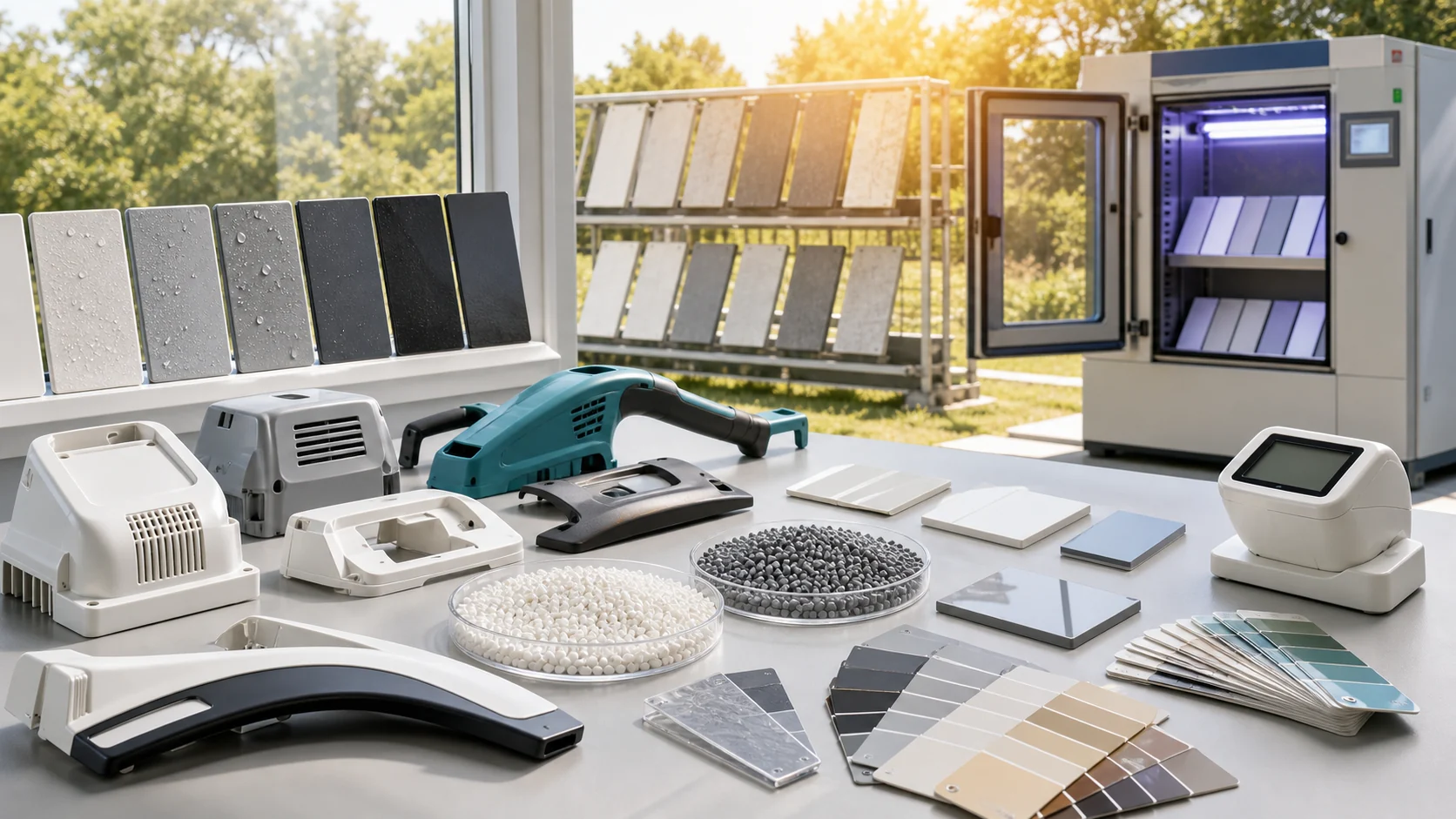
Buyer and engineer FAQ
Questions engineers often ask about this material route
Where can ABS / ASA with a UV-resistant plastic requirement be used?
Typical fields include outdoor clips, covers, housings, liners, sheets, equipment shells and exposed appearance parts. For this article, DEYU would first confirm the working environment, wall thickness, expected lifetime and whether DGK-ABS R165UV UV-Resistant ABS, UV Resistant Plastics, Flame-Retardant UV-Resistant ASA Pellets DGK-ASA FR801UV matches the part geometry or needs formulation adjustment.
What are the main performance indicators for the "UV-resistant plastic" target on ABS / ASA?
Focus on color change, gloss retention, tensile retention, impact retention and weathering hours. Buyers should ask for data on molded parts, not only pellet data, because gate position, filler orientation and thickness can change the final value.
What should engineers watch during injection molding or processing?
For ABS / ASA, a practical starting window is 210-245°C melt / 50-80°C mold. Avoid overheating pigments or HALS systems, use stable black or color packages and validate outdoor aging. Final parameters should follow part thickness, gate design and the actual machine.
What details help DEYU recommend DGK-ABS R165UV UV-Resistant ABS, UV Resistant Plastics, Flame-Retardant UV-Resistant ASA Pellets DGK-ASA FR801UV more accurately?
Send the current resin or grade, drawing or photo, wall thickness, annual quantity, target standard, failure mode and required color. If a reference grade already passed one test but failed in production, include both data sets.
For a precise recommendation, share the part drawing, base resin, target performance, processing method and test standard with DEYU.
1. Background / Problem
ABS and ASA are both styrenic engineering plastics with good moldability, attractive surface appearance and dimensional stability. When buyers develop outdoor housings, automotive exterior trim, garden tools, outdoor electrical boxes, appliance covers or decorative plastic parts, they often compare UV-modified ABS with weather-resistant ASA.
DGK-ABS R165UV UV-Resistant ABS and UV Resistant Plastics. Use DGK-ABS R165UV as the closest UV-modified ABS reference, and use the UV resistant plastics category when comparing broader ASA, ABS, PP and PC weatherable material options.
At first glance, both materials can be injection molded and both can be supplied in black, white, gray or customized colors. In long-term outdoor use, however, they do not start from the same weather-resistance foundation.
A practical rule is simple: UV-modified ABS can be considered for indoor, semi-outdoor, short-term outdoor or cost-sensitive products. ASA should be considered first for long-term sunlight exposure, better color retention and higher outdoor weatherability requirements.
2. Fundamental Difference Between ASA and ABS
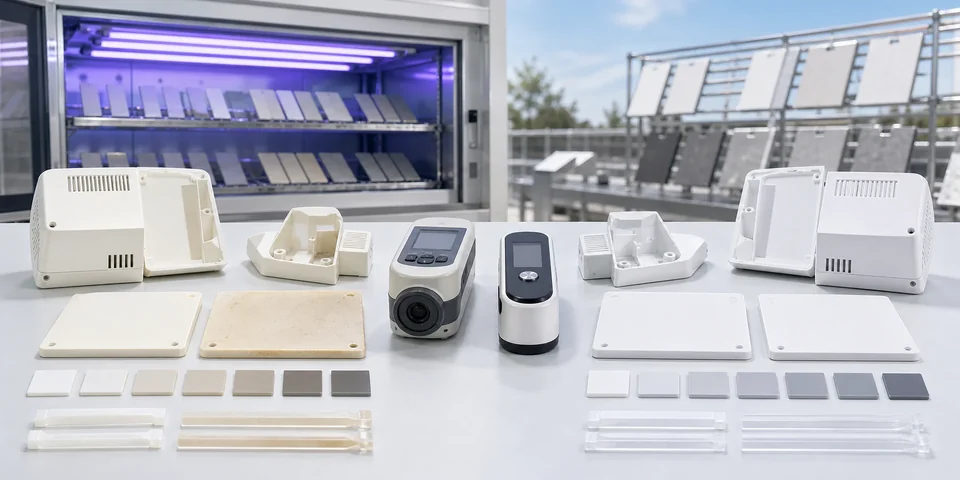
The main difference comes from the rubber phase. ABS contains a butadiene rubber phase, while ASA uses an acrylate rubber phase. Butadiene is more sensitive to ultraviolet light and oxygen, so standard ABS can show yellowing, gloss loss, embrittlement, chalking and lower impact strength after outdoor aging.
ASA was designed for better weatherability. Its acrylate rubber phase has better resistance to photo-oxidative aging, so ASA usually retains color, gloss and toughness better than ABS during long-term outdoor exposure.
| Material | Basic Structure | Engineering Meaning |
|---|---|---|
| ABS | Acrylonitrile butadiene styrene | Good initial impact and appearance, but the butadiene phase is more sensitive to UV aging |
| ASA | Acrylonitrile styrene acrylate | Better weatherability, color retention and long-term outdoor appearance stability |
3. Advantages and Limits of UV-Modified ABS
UV-modified ABS is usually made by adding UV absorbers, light stabilizers, antioxidants and pigment systems to ABS resin. It can be a practical choice when the product is mostly indoors or only exposed outdoors for a limited time.
Advantages include lower cost than ASA, mature injection molding, good surface appearance, good initial impact direction, easy color matching and compatibility with existing ABS molds and process windows.
Its limit is also clear: UV additives improve ABS, but they do not turn ABS into ASA. Long-term exposure can still cause yellowing, gloss loss, color shift or impact reduction, especially in strong sunlight, high temperature, high humidity or light-colored appearance parts.
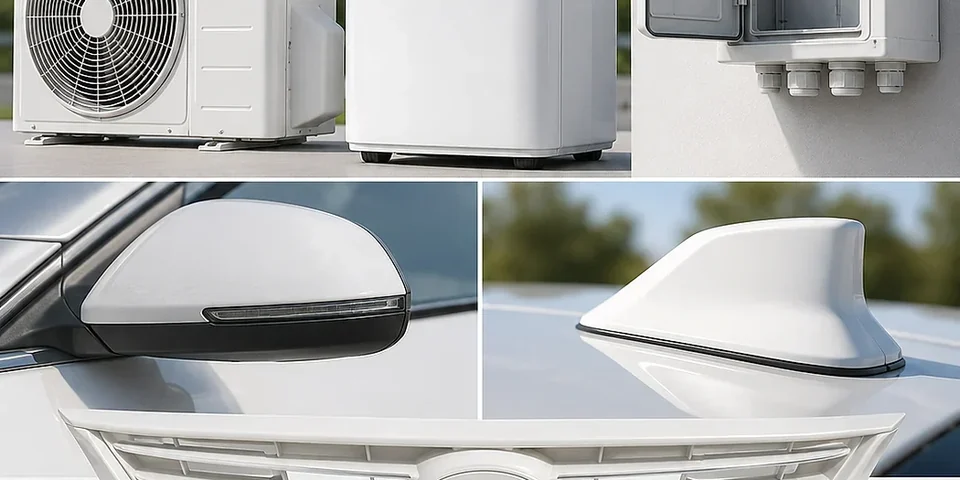
Suitable applications include indoor appliance housings, tool housings, short-term outdoor parts, cost-sensitive weather-resistant products, dark molded parts and general consumer product housings.
4. Advantages and Limits of UV-Resistant ASA
ASA is usually the stronger candidate for outdoor appearance parts. It is often chosen when the product needs better long-term color retention, gloss retention and toughness retention after weathering.
Advantages include stronger UV resistance, better long-term color stability, lower risk of obvious chalking, better outdoor gloss retention direction and suitability for automotive, building, garden tool and outdoor electrical applications.
ASA is not automatically the best choice for every project. It normally costs more than ABS, impact performance is still grade-dependent, and special requirements such as high gloss, painting, laser marking, flame retardancy or custom color need early validation. If the part is used only indoors, ASA may be over-specified.
5. ASA vs. UV-Modified ABS Comparison
| Comparison Item | UV-Modified ABS | UV-Resistant ASA |
|---|---|---|
| Material logic | ABS plus UV stabilization package | ASA has a stronger weather-resistant base structure |
| UV resistance | Medium, improved by additives | Stronger, more suitable for long-term outdoor use |
| Color retention | Good in short-to-medium term; needs validation | More stable under long-term outdoor exposure |
| Gloss retention | More affected by outdoor aging | Better outdoor gloss retention direction |
| Impact performance | Good initial ABS impact direction | Grade-dependent, with better retention after weathering |
| Cost | Usually lower | Usually higher |
| Processing | Mature ABS injection molding | Stable injection molding, but grade tuning is needed |
| Suitable environment | Indoor, semi-outdoor, short-term outdoor | Long-term outdoor, strong sunlight, exterior parts |
| Light-colored parts | Yellowing risk must be checked | More suitable when color retention is important |
| Typical applications | Appliance housings, tool housings, general consumer goods | Automotive exterior parts, outdoor housings, building parts, garden tools |
6. How Buyers Should Choose
UV-modified ABS can be evaluated first when the product is mainly used indoors, occasionally exposed to sunlight, cost-sensitive, black or dark-colored, based on an existing ABS mold, or only needs better UV performance than standard ABS.
ASA should be evaluated first when the product is used outdoors for a long time, needs multi-year color stability, uses white or light gray appearance colors, faces strong sunlight or high humidity, has a longer warranty period, or is sensitive to chalking, yellowing and gloss loss.
The decision should not be based only on resin price. Buyers should compare service life, product warranty, exposure region, color sensitivity, aging test result, impact retention and acceptable cost range.
7. Common Purchasing Mistakes
Buyers often ask whether a material can resist UV. This question is too broad. UV resistance depends on exposure time, region, color, outdoor intensity, rain contact, thermal cycling, aging test standard and the allowed change in color, gloss and strength.
Another common mistake is using indoor appearance data to predict outdoor service life. Outdoor environments combine ultraviolet light, oxygen, moisture, temperature change, pollutants and mechanical stress.
For outdoor materials, impact retention after aging is more important than initial impact strength alone. Pigment systems also matter: white, light gray and light blue parts are more sensitive to yellowing, while black parts are often more sensitive to gloss loss and surface graying.
8. DEYU Material Direction
DEYU can support UV-modified ABS, weather-resistant ASA and ASA/ABS weatherable alloy directions according to the customer's environment, color, cost target and aging standard.
| Material Direction | Positioning | Suitable Applications |
|---|---|---|
| DGK-ABS R165UV | UV-resistant ABS for outdoor molded parts needing color stability | Appliance housings, outdoor electrical boxes, automotive exterior trim, weather-exposed covers |
| UV-resistant plastics category | Broader UV-stabilized ABS, ASA, PP, PC and other thermoplastic directions | Outdoor housings, electrical enclosures, covers and weather-exposed molded parts |
| ASA weatherable direction | Higher long-term weatherability and color-retention direction | Outdoor housings, garden tools, building parts, automotive exterior parts |
| ASA/ABS alloy direction | Balance between cost, appearance and weatherability | Semi-outdoor appearance parts and customized-color housings |
DEYU does not treat UV resistance as a label only. The material route should be evaluated together with color, gloss, aging standard, impact retention, injection molding window and real outdoor exposure requirement.
9. Reference Product Data
| Item | UV-Modified ABS Direction | Weather-Resistant ASA Direction | ASA/ABS Weatherable Alloy Direction |
|---|---|---|---|
| Base resin | ABS | ASA | ASA/ABS alloy |
| Modification route | UV absorber, light stabilizer and pigment system | Weather-resistant ASA resin plus stabilization | ASA/ABS blend plus weathering package |
| Processing | Injection molding | Injection molding or extrusion | Injection molding |
| Color | Black, white, gray or customized color | Black, white, gray or customized color | Customized color |
| Example DEYU page | DGK-ABS R165UV | DGK-ASA FR801UV as a UV-resistant ASA reference | Customized project direction |
| Typical applications | Tool housings, appliance parts, semi-outdoor covers | Outdoor housings, garden tools, automotive exterior parts, building parts | Weatherable appearance parts with cost-performance balance |
| Validation focus | Yellowing, gloss loss, impact retention and injection stability | Long-term color retention, gloss retention and toughness retention | Balance of cost, appearance and outdoor durability |
10. Internal Validation Scenario
The following is an anonymized DEYU internal application validation scenario. It is used to explain the selection logic, not to disclose a customer report.
An outdoor tool customer originally used ordinary ABS for housing parts. The product had good initial impact and molded appearance, but light-colored housings showed yellowing, gloss loss and surface embrittlement after outdoor exposure. The customer wanted to compare UV-modified ABS and ASA without losing injection stability or exceeding the cost target.
| Validation Item | Ordinary ABS Direction | UV-Modified ABS Trial Direction | ASA Trial Direction | Engineering Interpretation |
|---|---|---|---|---|
| Yellowing feedback | 8-15% observed direction | 3-8% observed direction | 1-4% observed direction | UV-modified ABS improves short-to-medium-term yellowing; ASA is stronger for long-term color retention |
| Gloss loss feedback | 10-20% observed direction | 5-10% observed direction | 2-6% observed direction | ASA has a stronger outdoor gloss retention direction |
| Surface brittleness feedback | 4-8% observed direction | 2-5% observed direction | 1-3% observed direction | ASA shows better toughness retention after aging |
| Injection scrap rate | 3-5% observed direction | 2-4% observed direction | 3-5% observed direction | UV-modified ABS is closer to the original ABS process; ASA needs separate tuning |
| Cost direction | Baseline | Medium increase | Higher increase | Selection should include service life, warranty and appearance requirements |
11. Purchasing Guide
Before requesting a quotation for UV-resistant ASA or UV-modified ABS, buyers should provide product application, indoor or outdoor environment, target service life, part color, aging test standard, allowed color difference, gloss requirement, impact retention requirement, processing method, cost target, certification needs and current defects such as yellowing, chalking, cracking or gloss loss.
If the part is light-colored and exposed outdoors for years, ASA should usually be included in the trial plan. If the part is cost-sensitive, dark-colored or only semi-outdoor, UV-modified ABS may be a better starting point.
12. Conclusion
Both ABS and ASA can be used in weather-resistant modified plastics, but their foundations are different. UV-modified ABS improves standard ABS through stabilizers and is suitable for indoor, semi-outdoor and cost-sensitive outdoor parts. ASA has a more weather-resistant structure and is better suited for long-term outdoor exposure, light-colored appearance parts, automotive exterior parts, garden tools and products with stronger color-retention requirements.
DEYU can support UV-modified ABS, weather-resistant ASA, ASA/ABS weatherable alloys and customized-color weather-resistant materials through small-batch trials, before-and-after aging comparison, molded part validation and injection molding process support.