
Wear-Resistant PA66 Compounds for Bushings and Guide Parts
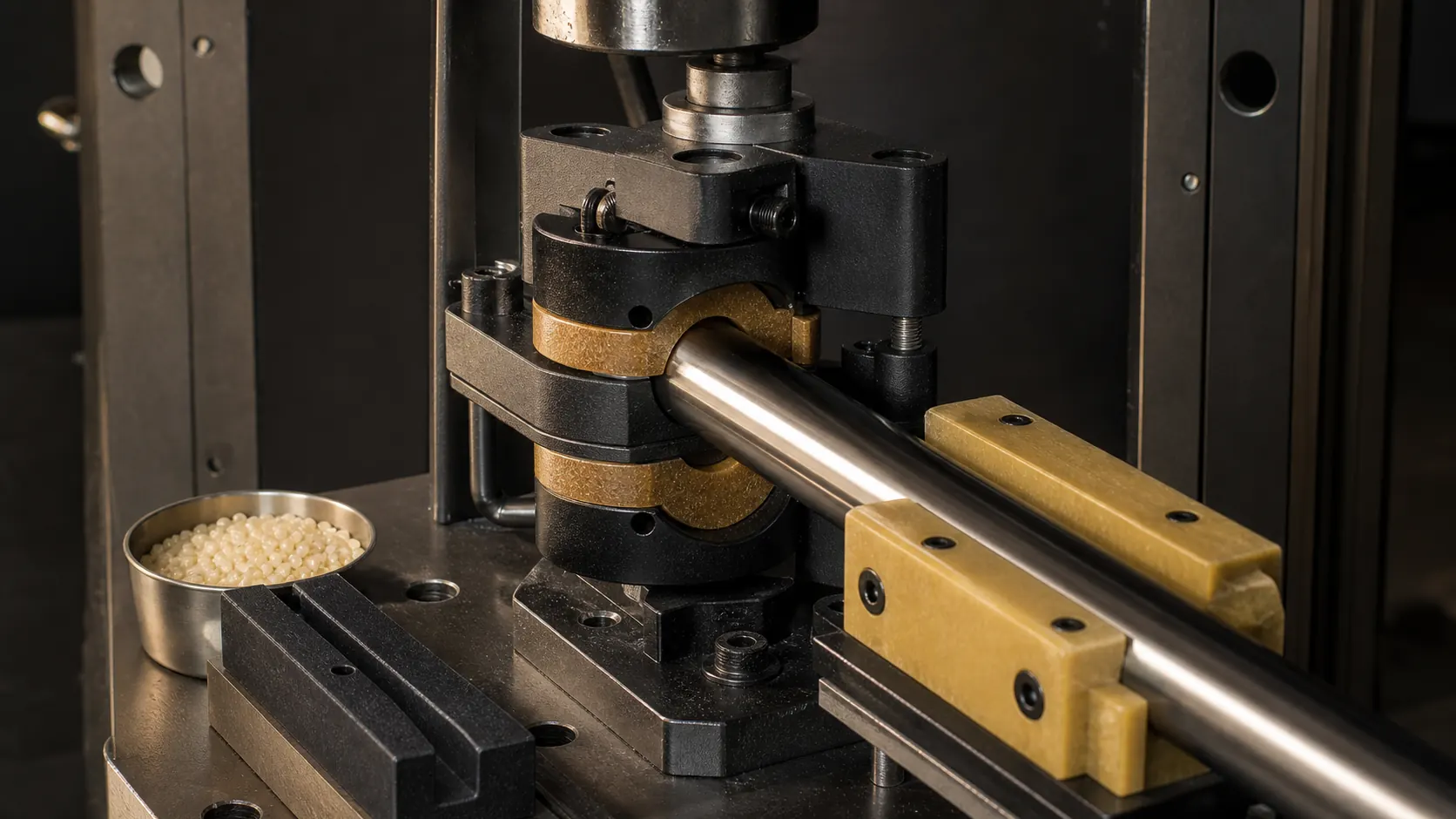
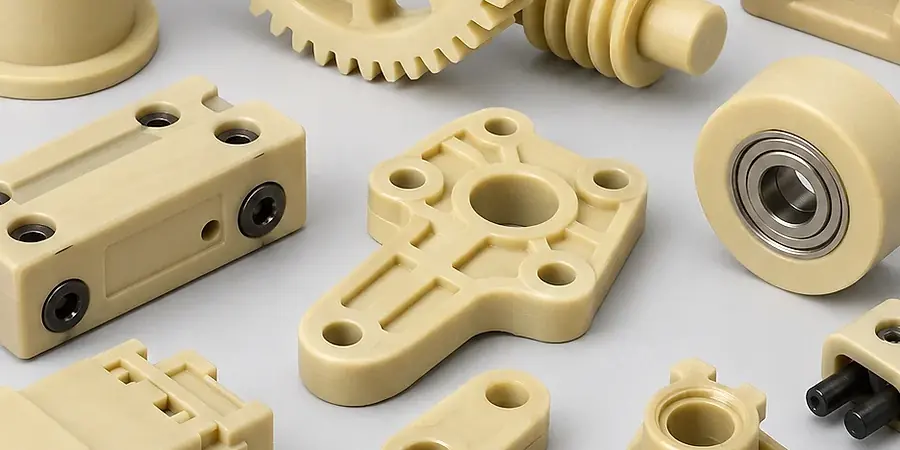
PA66 is widely used in engineering plastic parts because it offers strength, toughness, heat resistance, and load-bearing ability. It is selected for bushings, guide rails, sliding blocks, structural moving parts, automotive brackets, rollers, and support parts.
Buyer and engineer FAQ
Questions engineers often ask about this material route
Where can PA66 with a wear-resistant plastic requirement be used?
Typical fields include gears, rollers, bushings, sliding blocks, guide rails and low-noise moving parts. For this article, DEYU would first confirm the working environment, wall thickness, expected lifetime and whether DGK-PA66 FL20L, wear-resistant nylon compounds matches the part geometry or needs formulation adjustment.
What are the main performance indicators for the "wear-resistant plastic" target on PA66?
Focus on friction coefficient, wear depth, PV value, noise, dimensional stability and mating material compatibility. Buyers should ask for data on molded parts, not only pellet data, because gate position, filler orientation and thickness can change the final value.
What should engineers watch during injection molding or processing?
For PA66, a practical starting window is 260-295°C melt / 75-100°C mold, dry before molding. Dry PA grades correctly, control glass or aramid fiber orientation and validate wear on the real mating surface. Final parameters should follow part thickness, gate design and the actual machine.
What details help DEYU recommend DGK-PA66 FL20L, wear-resistant nylon compounds more accurately?
Send the current resin or grade, drawing or photo, wall thickness, annual quantity, target standard, failure mode and required color. If a reference grade already passed one test but failed in production, include both data sets.
For a precise recommendation, share the part drawing, base resin, target performance, processing method and test standard with DEYU.
1. Why PA66 Is Used in Wear-Resistant Parts
PA66 is widely used in engineering plastic parts because it offers strength, toughness, heat resistance, and load-bearing ability. It is selected for bushings, guide rails, sliding blocks, structural moving parts, automotive brackets, rollers, and support parts.
DGK-PA66 FL20L and wear-resistant nylon compounds. These routes are relevant when PA66 parts need wear resistance, toughness, dimensional control, and load-bearing performance
However, PA66 absorbs moisture and its friction behavior changes with humidity, temperature, and load. A wear-resistant nylon formulation must consider both sliding performance and mechanical stability.
2. Main Wear-Resistant PA66 Routes
PA66 plus PTFE is suitable for low-friction sliding parts. It can reduce friction, smooth movement, and lower noise in selected mechanisms. Validation should include friction coefficient, wear depth, impact retention, and surface quality.
PA66 plus aramid fiber is suitable when wear resistance and toughness are needed together. It can improve durability under repeated movement and reduce brittleness compared with some high-filler routes when properly balanced.
Glass fiber reinforced PA66 is suitable for high-stiffness and load-bearing parts. It improves modulus, dimensional stability, and structural strength, but fiber exposure and mating-part wear must be checked.
Hybrid PA66 systems combine reinforcement and lubrication when a part needs stiffness, wear resistance, and controlled friction at the same time.
3. Application Scenario: PA66 Bushing With Dry Sliding Wear
A PA66 bushing working in a dry sliding position may show wear marks and increased friction after operation. Possible causes include the wrong friction pair, insufficient internal lubrication, humidity-related property shift, excessive stiffness without surface lubrication, or surface roughness mismatch.
Technical route, application scenarios and real-project validation
For this topic, the useful work starts beyond the generic material name. Engineering validation begins with the failed part, the property that must be held and the test method that will confirm the result after processing.
How DEYU narrows the route
Projects like this follow a wear-resistant low-friction route focused on friction, wear powder and clearance growth. The team first defines the target indicator and the limits for color, impact strength, flow, shrinkage and surface quality. The goal is not to choose one “best” additive, but to define a repeatable formulation window on the molded part.
Where this logic is applied
- gears, sliders and guide blocks
- bushings, bearings and repeat-motion parts
- assemblies where noise, dry friction, service life and dimensional stability matter
These scenarios differ in wall thickness, cycle time, appearance requirements and inspection method. The same material family can need a different adjustment when the mold, part geometry or test method changes.
Anonymized customer case and validation method
In one real anonymized customer project, the starting route was already directionally correct, but the part-level validation was not stable enough. DEYU kept the original application goal and changed the validation parameters and formulation balance rather than narrowing the use case artificially.
| What was compared | Why the previous route was weak | What was adjusted | How the result was evaluated |
|---|---|---|---|
| Material before replacement | the previous resin generated wear powder, rising noise or clearance growth after repeated motion, even though basic strength looked acceptable | PTFE, MoS2, aramid or lubrication balance, mating surface, shrinkage, molding window and testing on the real contact pair | DEYU samples showed more predictable friction and wear behavior; validation was based on the working assembly rather than only a standard plaque |
| DEYU route | The value on a standard specimen did not fully represent the real molded part. | Short sample run, control specimens, processing window and measurement method. | The result was recorded as a working range; serial supply still needs confirmation on the actual mold. |
This makes the article useful for both engineers and purchasers: the engineer can see what must be tested, while purchasing can see what information should be sent before requesting samples.
DEYU would compare PA66 plus PTFE, PA66 plus aramid fiber, glass fiber reinforced PA66 with wear adjustment, and hybrid wear-resistant nylon. The best route depends on whether the failure is friction, wear depth, noise, cracking, deformation, or mating-part damage.
4. Validation Indicators
| Indicator | Purpose |
|---|---|
| Wear depth | Shows material loss |
| Friction coefficient | Shows sliding resistance |
| Noise | Shows movement smoothness |
| Moisture-conditioned performance | Important for nylon |
| Dimensional change | Affects fit and clearance |
| Surface damage | Shows compatibility with friction pair |
| Impact strength | Helps prevent brittle failure |
5. DEYU Support for Wear-Resistant Nylon
DEYU can support PA66 route comparison, PTFE modified nylon, aramid reinforced PA66, glass fiber reinforced PA66 with wear balance, hybrid nylon compounds, small-batch validation, color formulation, flowability tuning, and moisture-conditioned performance evaluation.
The customer should provide part geometry, counter material, load, speed, temperature, humidity exposure, current failure mode, and target lifetime.
Conclusion
Wear-resistant PA66 should be selected by friction condition, humidity, temperature, load, and mating material. PTFE, aramid fiber, glass fiber, and hybrid systems solve different problems. Final-part validation is essential before mass production.
Engineering decision path
This page is intended to work as a material-selection brief, not only as a product introduction. The engineering route starts with the failure mode, then narrows the base resin, additive package, molding window, and validation method.
- Start with the movement profile: rotation, oscillation, sliding guide, start-stop load, and dry or lubricated contact all change the PA66 formulation route.
- Check moisture absorption, clearance growth, creep, heat exposure, and mating material before selecting a reinforced or lubricated PA66 compound.
- Additive choice should consider PTFE, aramid, MoS2, silicone, or fiber reinforcement together with toughness and surface quality.
- Validate on molded bushings or guide parts with dimensional checks before and after conditioning, not only on standard test bars.
Anonymous customer cases
Case 1: small bushing in an actuator
The existing material passed initial assembly but clearance increased during use. DEYU focused on conditioned dimensions, friction route, and reinforcement balance so the customer could evaluate vibration risk before scale-up.
Case 2: guide part in a dusty industrial mechanism
The part needed better sliding life without visible surface defects. DEYU compared wear additives and PA66 reinforcement options, then recommended molded-part testing against the actual mating surface.
How DEYU supports the project
- DEYU can adjust conductivity, wear resistance, toughness, flame-retardant direction, color, and processing flow as a combined formulation target instead of treating each property separately.
- Sample batches can be aligned with customer molds, part thickness, gate position, and expected tests before commercial supply.
- For international inquiries, DEYU engineers help translate application requirements into resin route, test items, sample plan, and risk points for purchasing and technical teams.