PTFE, MoS2, Aramid Fiber and Glass Fiber: How to Choose Wear-Resistant Plastic Modification Routes
Wear-resistant plastics are often discussed as if one additive can solve every wear problem. In practice, PTFE, MoS2, aramid fiber, glass fiber, carbon fiber, silicone, UHMWPE, and internal lubricants solve different parts of the problem.
Buyer and engineer FAQ
Questions engineers often ask about this material route
Where can modified plastic with a wear-resistant plastic requirement be used?
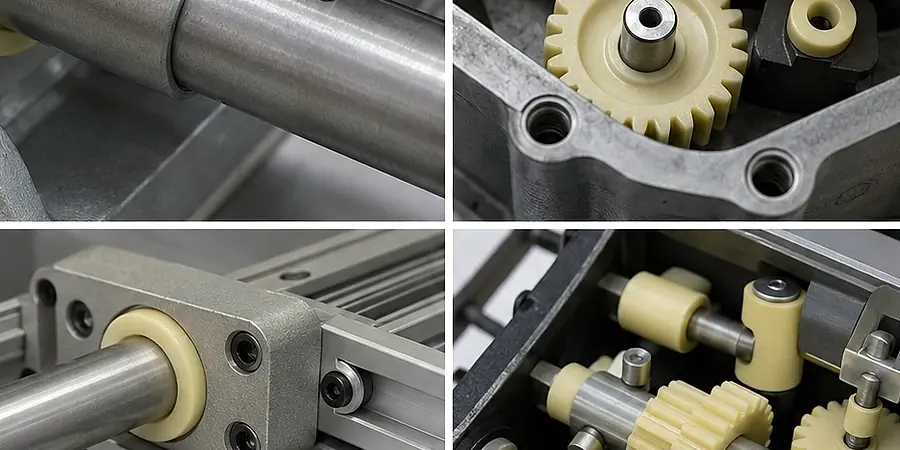
Typical fields include gears, rollers, bushings, sliding blocks, guide rails and low-noise moving parts. For this article, DEYU would first confirm the working environment, wall thickness, expected lifetime and whether DGK-POM TF90M, DGK-PA6 G25MS matches the part geometry or needs formulation adjustment.
What are the main performance indicators for the "wear-resistant plastic" target?
Focus on friction coefficient, wear depth, PV value, noise, dimensional stability and mating material compatibility. Buyers should ask for data on molded parts, not only pellet data, because gate position, filler orientation and thickness can change the final value.
What should engineers watch during injection molding or processing?
Dry PA grades correctly, control glass or aramid fiber orientation and validate wear on the real mating surface. Start from the base-resin processing window, then adjust by molded-part resistance, appearance and mechanical data.
What details help DEYU recommend DGK-POM TF90M, DGK-PA6 G25MS more accurately?
Send the current resin or grade, drawing or photo, wall thickness, annual quantity, target standard, failure mode and required color. If a reference grade already passed one test but failed in production, include both data sets.
For a precise recommendation, share the part drawing, base resin, target performance, processing method and test standard with DEYU.
1. Why the Modification Route Matters
Wear-resistant plastics are often discussed as if one additive can solve every wear problem. In practice, PTFE, MoS2, aramid fiber, glass fiber, carbon fiber, silicone, UHMWPE, and internal lubricants solve different parts of the problem.
DGK-POM TF90M and DGK-PA6 G25MS. These grades represent two common engineering routes: PTFE-based low friction and MoS2-supported load-bearing sliding
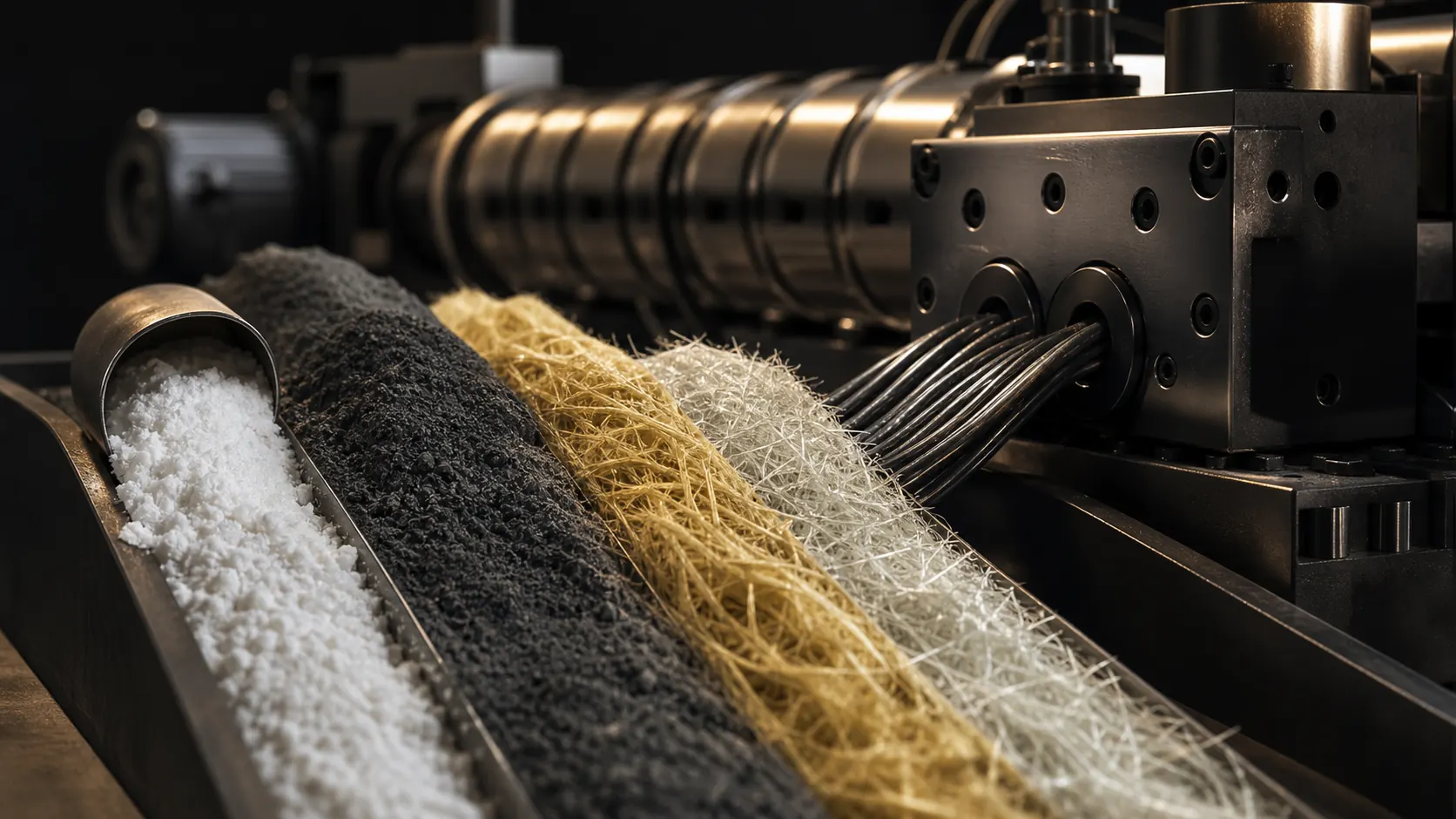
Some additives mainly reduce friction. Some increase stiffness. Some improve surface durability. Some protect the mating surface. Some improve load capacity but may create more abrasion against the counter material. The right route depends on the failure mode.
2. PTFE Route: Low Friction and Self-Lubrication
PTFE is selected when the main targets are lower friction, smoother start-up, reduced stick-slip, lower noise, and less dependence on external grease. It is common in POM/PTFE, PA/PTFE, PC/PTFE, PPS/PTFE, and PEEK/PTFE systems.
PTFE is suitable for gears, bushings, sliders, rollers, moving housings, valve parts, and precision mechanisms. The risk is that excessive PTFE can reduce tensile strength, impact strength, weld-line strength, and surface stability. PTFE content should be balanced against the mechanical requirement of the part.
3. MoS2 Route: Boundary Lubrication Under Load
MoS2 is a layered solid lubricant. It is especially useful in PA6, PA66, POM, PPS, and high-performance engineering plastics where the part needs stable dry sliding under load.
Typical applications include guide blocks, bushings, bearing cages, wear pads, industrial sliders, and dark-colored mechanical components. The main checks are dispersion, impact retention, dark color acceptance, and compatibility with the base resin.
4. Aramid Fiber Route: Wear Resistance With Toughness
Aramid fiber helps create a wear-resistant reinforcement network. Compared with some hard inorganic fillers, aramid can improve wear behavior while being less aggressive to the mating surface when the formulation is well balanced.
This route is useful for high-cycle sliding components, guide rails, bushings, gears, and industrial moving parts that require both toughness and abrasion resistance. Fiber dispersion, orientation, and surface quality should be checked during molding trials.
5. Glass Fiber and Carbon Fiber Routes
Glass fiber improves stiffness, heat resistance, and dimensional stability. Carbon fiber adds higher stiffness, lower shrinkage, possible conductivity, and improved heat behavior. However, neither route is automatically low-wear.
Exposed fiber may damage the counter surface. In sliding parts, these reinforcements are often combined with PTFE, MoS2, aramid, silicone, or internal lubricants to balance structural strength and friction performance.
6. Hybrid Routes for Real Parts
Many successful wear-resistant compounds are hybrid systems. A gear may need POM plus PTFE for low noise. A guide block may need PA6 plus MoS2 for load-bearing dry sliding. A bushing may need PA66 plus aramid for toughness and durability. A structural slider may need glass fiber for rigidity plus a lubricating system to reduce friction.
The best route is selected after reviewing movement type, load, speed, counter material, lubrication, target color, molding method, and part geometry.
7. DEYU Selection Logic
DEYU normally starts with the failure mode. If the problem is high friction or noise, PTFE and lubricant systems are checked first. If the problem is load-bearing wear, MoS2 or hybrid nylon routes may be tested. If the problem is surface damage and long service life, aramid reinforcement is considered. If deformation is the issue, glass fiber or carbon fiber may be added carefully.
Conclusion
Modification Route Comparison Table
The best wear-resistant plastic route is chosen by failure mode. PTFE mainly lowers friction, MoS2 supports dry sliding under load, aramid fiber improves toughness and surface durability, and glass fiber increases stiffness but may damage the mating surface if not balanced with lubricants. Hybrid systems are often better than a single additive when the part has both load and noise requirements.
| Modification route | Main benefit | Typical parts | Key caution |
|---|---|---|---|
| PTFE | Low friction, self-lubrication, reduced noise | POM gears, sliders, rollers, small bushings | Too much PTFE can reduce strength |
| MoS2 | Dry sliding stability and lower adhesive wear | PA6 guide rails, sleeves, industrial sliding blocks | Needs good dispersion and correct load range |
| Aramid fiber | Wear durability with better toughness | PA66 bushings, high-duty guide parts | Cost and processing must be controlled |
| Glass fiber | Stiffness, creep resistance and dimensional support | Structural sliders, brackets, loaded supports | May abrade the counter surface without lubrication |
| Hybrid system | Balance load, friction, noise and wear depth | Complex moving assemblies | Requires part-level validation |
For real projects, DEYU normally compares two candidate routes rather than assuming one additive is enough. A POM/PTFE gear and a PA6/MoS2 guide block solve different problems even if both are called wear-resistant plastic compounds.
Wear-resistant plastic modification is not a one-additive decision. PTFE, MoS2, aramid fiber, glass fiber, and hybrid packages must be selected according to the actual friction system. A small-batch trial using the real part and real counter material is the most reliable way to confirm the route.