Weather-Resistant PP for Black Outdoor Molded Components
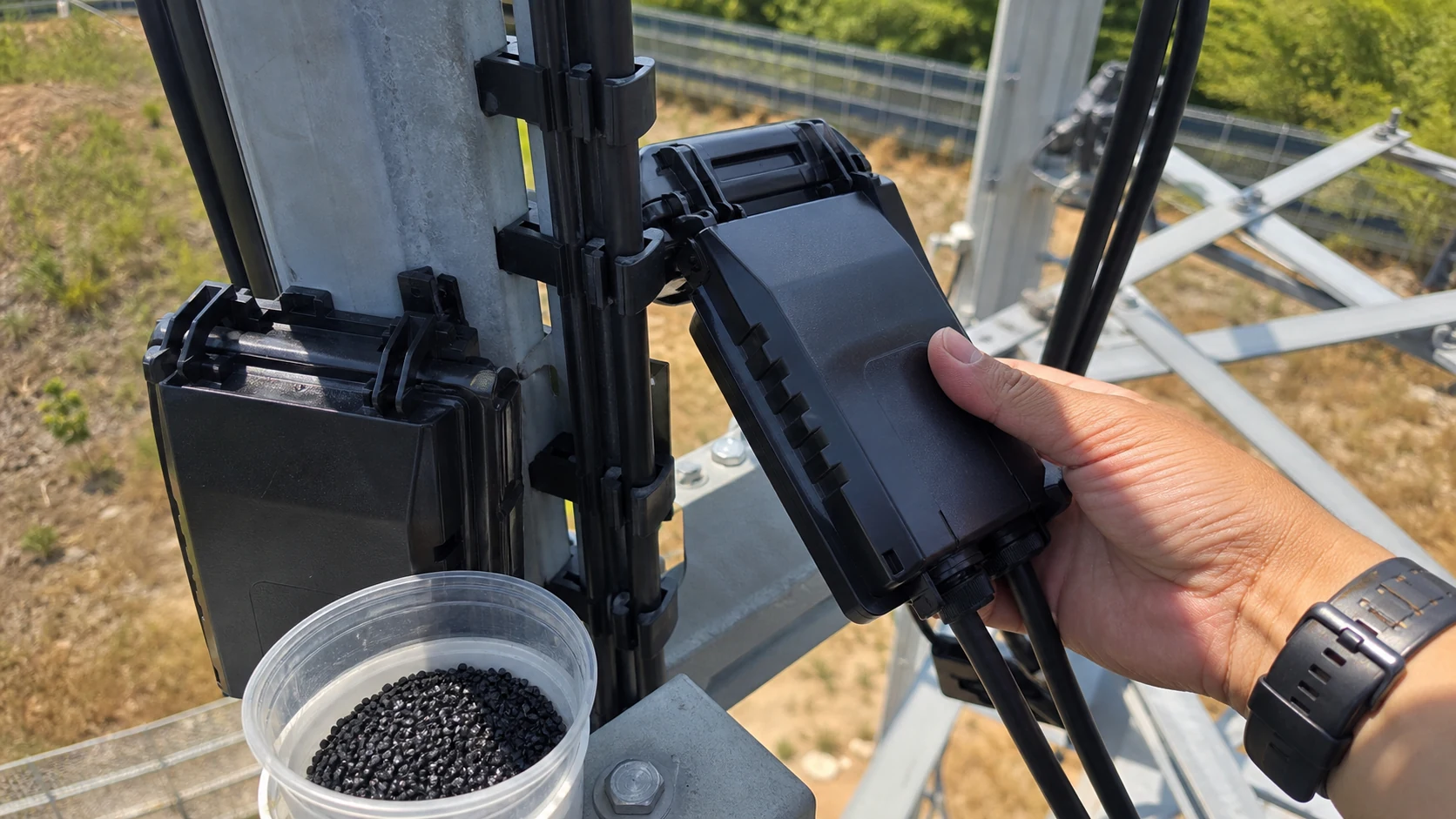
Black is the most common color for outdoor plastic components. From cable clips and automotive exterior parts to electrical enclosures and agricultural equipment covers, black molded parts dominate outdoor applications. This is not accidental—black parts often outperform other colors in outdoor weathering because of a remarkable material property: carbon black.
Buyer and engineer FAQ
Questions engineers often ask about this material route
Where can PP with a UV-resistant plastic requirement be used?
Typical fields include outdoor clips, covers, housings, liners, sheets, equipment shells and exposed appearance parts. For this article, DEYU would first confirm the working environment, wall thickness, expected lifetime and whether UV-resistant plastics matches the part geometry or needs formulation adjustment.
What are the main performance indicators for the "UV-resistant plastic" target on PP?
Focus on color change, gloss retention, tensile retention, impact retention and weathering hours. Buyers should ask for data on molded parts, not only pellet data, because gate position, filler orientation and thickness can change the final value.
What should engineers watch during injection molding or processing?
For PP, a practical starting window is 190-230°C melt / 30-60°C mold. Avoid overheating pigments or HALS systems, use stable black or color packages and validate outdoor aging. Final parameters should follow part thickness, gate design and the actual machine.
What details help DEYU recommend UV-resistant plastics more accurately?
Send the current resin or grade, drawing or photo, wall thickness, annual quantity, target standard, failure mode and required color. If a reference grade already passed one test but failed in production, include both data sets.
For a precise recommendation, share the part drawing, base resin, target performance, processing method and test standard with DEYU.
Background / Problem
Black is the most common color for outdoor plastic components. From cable clips and automotive exterior parts to electrical enclosures and agricultural equipment covers, black molded parts dominate outdoor applications. This is not accidental—black parts often outperform other colors in outdoor weathering because of a remarkable material property: carbon black.
Related DEYU plastics material references for this selection topic: UV-resistant plastics and UV-resistant PP compound for outdoor clips and covers.
Carbon black is both a pigment and a highly effective UV stabilizer. At loadings of 2.0–2.5%, carbon black absorbs UV radiation across the entire solar spectrum and converts it to harmless heat, physically shielding the polymer from photodegradation. This dual function—colorant and stabilizer—makes black PP compounds uniquely suited for long-term outdoor exposure.
However, the same property that makes carbon black effective—absorption of solar radiation—also creates a challenge: black parts get hot. A black surface in direct sunlight can reach temperatures 15–30°C higher than a white surface, accelerating thermal oxidation. This thermal load must be addressed through antioxidant packages, making the formulation of weather-resistant black PP a careful balancing act.
This article covers the material options, formulation approaches, performance data, and selection criteria for weather-resistant black PP compounds used in outdoor molded components.
Technical Difficulty / Why It Happens
The UV Degradation Challenge in Polypropylene
Polypropylene is susceptible to oxidative degradation due to the presence of tertiary carbon atoms in its chains. Without stabilization, PP can become brittle within weeks of outdoor exposure in high-UV climates. The photo-oxidation mechanism involves hydroperoxidation of the tertiary carbon atom, leading to chain scission and the build-up of degradation products such as α-methyl carboxylic acid.
How Carbon Black Protects
Carbon black provides UV protection through multiple complementary mechanisms:
1. Physical UV Screening — Carbon black particles absorb UV radiation and convert it to heat, which is dissipated through the plastic mass. The UV resistance is inversely proportional to carbon black particle diameter—smaller particles provide better UV stability.
2. Free Radical Termination — Carbon black can terminate free radicals generated during photo-oxidative reactions, further contributing to UV stability.
3. Surface Protection — Carbon black at the surface shields the underlying polymer from UV penetration. The black pigment was found to be the most effective in reducing discoloration and surface degradation in polymer composites.
Why Black Parts Outperform Other Colors
| Pigment Type | UV Absorption | Fade Resistance | Surface Protection | Cost |
|---|---|---|---|---|
| Carbon Black | Full spectrum | Excellent | Excellent | Low |
| Organic Pigments | Selective | Poor–Moderate | Poor | High |
| Inorganic Pigments | Moderate | Good–Excellent | Moderate | Moderate–High |
Research has shown that the presence of carbon black significantly increases UV durability of PP. A study comparing PP stabilized by carbon black versus HALS found that while PP(HALS) deteriorated very little in the first year, PP(CB) retained substantial ductility after 2 years with no further significant change thereafter.
The Heat Trade-Off
Black parts absorb more solar radiation, reaching higher surface temperatures. Studies on black-pigmented PP for solar thermal applications showed integral solar absorbance values of about 95%, with the black pigment content having a significant effect on long-term heat stability. This thermal load requires:
Primary antioxidants (hindered phenols) to scavenge peroxy radicals
Secondary antioxidants (phosphites) to decompose hydroperoxides
The HALS + Carbon Black Synergy
Hindered amine light stabilizers (HALS) function through a regenerative mechanism that continuously scavenges free radicals formed during photo-oxidation. The combination of carbon black with HALS and UV absorbers creates a robust stabilization package that maximizes protection against both UV radiation and thermal degradation.
Research has demonstrated that a combination of UV absorber + HALS produces a synergistic effect in PP protection, resulting in greater retention of mechanical properties, less incidence of cracks, and greater resistance to color increase and gloss loss.
DEYU Material Direction
DEYU typically recommends black weather-resistant PP compounds based on the specific application requirements: mechanical properties, service life, and processing method.
DEYU plastics' Black PP Compound Portfolio
DGK-FR130UV-BK — Flame-Retardant Black UV PP
DGK-FR130UV-BK is a high-impact, UV-stabilized black polypropylene compound with V-0 flame retardancy. It combines 5–10 years of UV resistance with high stiffness and good impact strength.
| Property | DGK-FR130UV-BK | Test Method |
|---|---|---|
| Density | 1.20 g/cm³ | GB 1033-96 |
| Tensile Strength | 28.2 MPa | GB 1040-92 |
| Flexural Strength | 53 MPa | GB 9341-88 |
| Notched Impact (Charpy) | 5.5 kJ/m² | GB 1043-93 |
| Heat Deflection Temperature (1.82MPa) | 120°C | GB 1634-88 |
| Flame Rating | V-0 | UL94 |
| UV Resistance | 5–10 years | — |
Applications: Black outdoor electrical enclosures, telecom equipment housings, flame-retardant components.
DGK-T130UV-BK — General-Purpose Black UV PP
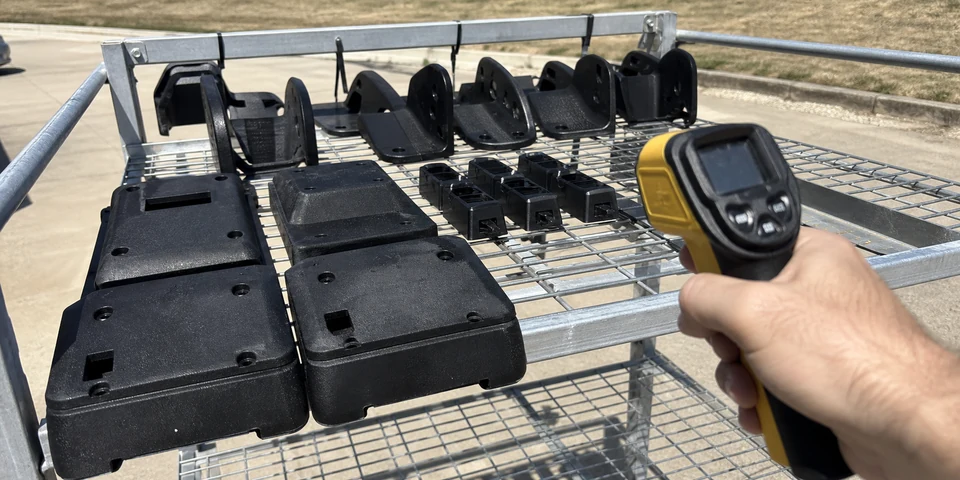
DGK-T130UV-BK is a UV-stabilized black PP grade suitable for injection molding. It offers good impact resistance, high stiffness, and 5–10 years of UV resistance.
| Property | DGK-T130UV-BK | Test Method |
|---|---|---|
| Density | 0.905 g/cm³ | ISO 1183 |
| Melt Flow Rate (230°C/2.16kg) | 14 g/10min | ISO 1133 |
| Tensile Modulus | 1500 MPa | ISO 527-2 |
| Tensile Yield Strength | 26 MPa | ISO 527-2 |
| HDT (0.45MPa) | 110°C | ISO 75-2/B |
| Notched Impact (23°C) | 9 kJ/m² | ISO 179/1eU |
Applications: Black outdoor housings, covers, cable management components.
High-Impact Black UV PP — RTP 154 HI UV (third-party market reference) BK (third-party market reference)
A high-impact, UV-stabilized black PP compound for demanding outdoor applications.
| Property | Value | Test Method |
|---|---|---|
| Density | ~0.91 g/cm³ | — |
| Tensile Strength | ~27 MPa | ASTM |
| Flexural Modulus | ~1300 MPa | ASTM |
| Notched Izod Impact | ~30 J/m | ASTM D256 |
| Melt Flow Index | 8 g/10min (230°C/2.16kg) | ASTM |
| HDT | ~110°C | ASTM |
Applications: Black automotive exterior components, consumer goods, outdoor parts requiring high impact resistance.
Formulation Architecture for Black UV PP
| Component | Function | Typical Loading |
|---|---|---|
| PP Base | Matrix polymer | 85–95% |
| Carbon Black | UV shielding + pigment | 2.0–2.5% |
| HALS | Radical scavenging | 0.3–0.5% |
| UV Absorber | Photon interception | 0.15–0.25% |
| Primary Antioxidant | Thermal protection | 0.15–0.25% |
| Secondary Antioxidant | Hydroperoxide decomposition | 0.05–0.15% |
Key formulation principles for black PP:
Carbon black loading: 2.0–2.5% provides optimal UV protection with minimal mechanical property impact
Particle size: Smaller particles (<25 nm) provide better UV stability
Antioxidant package: Critical for black parts due to higher heat absorption
HALS selection: Compatible with carbon black; high molecular weight types preferred for low volatility
Reference Product Data
Black UV PP Performance Comparison
| Property | DGK-FR130UV-BK | DGK-T130UV-BK | High-Impact Black UV PP |
|---|---|---|---|
| Base Resin | PP copolymer | PP | PP impact copolymer |
| Carbon Black Loading | 2.0–2.5% | 2.0–2.5% | 2.0–2.5% |
| Density (g/cm³) | 1.20 | 0.905 | ~0.91 |
| MFR (230°C/2.16kg) | — | 14 g/10min | 8 g/10min |
| Tensile Strength (MPa) | 28.2 | 26 | ~27 |
| Flexural Modulus (MPa) | — | 1500 | ~1300 |
| Notched Impact (kJ/m²) | 5.5 | 9 | ~2.5 (Izod J/m) |
| HDT (°C) | 120 | 110 | ~110 |
| Flame Rating | V-0 | HB | HB |
| UV Resistance | 5–10 years | 5–10 years | 5–10 years |
| Key Applications | FR enclosures, electrical housings | General outdoor, covers, clips | Automotive, high-impact components |
Weathering Performance Data
| Property | Unstabilized PP | Black PP (CB only) | Black PP (CB + HALS + AO) |
|---|---|---|---|
| UV Resistance | <1 year | 3–5 years | 5–10 years |
| Impact Retention (2000h QUV) | <30% | 65–75% | 85–92% |
| Tensile Retention (2000h QUV) | <35% | 70–80% | 88–95% |
| Surface Chalking | Severe | Moderate | None |
| Surface Cracking | Within weeks | After 2–3 years | None |
Data source: DEYU internal compound development data and industry literature; values are representative and may vary by specific grade and application.
Customer Debugging / Validation Scenario
Scenario: Outdoor Electrical Enclosure — Black PP UV Failure and Reformulation
Customer Profile: A manufacturer of outdoor electrical enclosures for utility metering applications. Black housings installed in a subtropical climate.
Initial Problem: After 18–24 months of field exposure, the customer observed:
Surface chalking: White powder on black surfaces
Color fading: Black turned to grayish-black (ΔE > 4.0)
Impact loss: Impact strength dropped 60%
Cracking: Stress cracks at mounting points
The material was a black PP with carbon black only (no HALS, no antioxidants).
Root Cause Analysis:
| Observation | Root Cause |
|---|---|
| Surface chalking | Carbon black provided some UV screening but did not prevent surface oxidation |
| Color fading | Carbon black particles at the surface degraded; no HALS to scavenge radicals |
| Impact loss | Chain scission in the PP matrix; no antioxidant protection |
| Cracking | Thermal oxidation from heat absorption; no antioxidant package |
Corrective Actions:
| Issue | Corrective Action |
|---|---|
| No HALS protection | Add HALS (0.4%) for radical scavenging |
| No antioxidant protection | Add primary antioxidant (0.2%) + secondary antioxidant (0.1%) |
| Carbon black loading | Optimize at 2.5% with fine particle size |
| Processing | Reduce melt temperature to preserve stabilizers |
Validation Results:
| Metric | Original (CB only) | Corrected (CB + HALS + AO) | Acceptance |
|---|---|---|---|
| ΔE after 2000h QUV | 4.8 | 1.2 | <3.0 |
| Impact Retention | 38% | 89% | >80% |
| Surface Chalking | Rating 3 | Rating 0 | <2 |
| Surface Cracking | Present | None | None |
| Field Pass Rate (24 months) | 72% | 99% | >97% |
Direction After Trial:
The customer transitioned to the corrected black PP formulation with carbon black + HALS + antioxidant package. DEYU supported the transition by providing technical datasheets, processing recommendations, and small-batch validation material.
Note: This is a composite validation scenario based on common industry experiences. Specific results may vary by application, geographic location, and processing conditions.
Validation Data Table
| Component Type | Critical Test | Typical Acceptance | Test Method |
|---|---|---|---|
| Black Outdoor Housings | ΔE after UV exposure | <3.0 | ASTM D2244 |
| Black Clips/Fasteners | Retention force after UV | >85% of original | Custom fixture |
| Black Enclosures | Impact retention after UV | >80% | ASTM D256 / ISO 180 |
| All Black Components | Surface chalking | Rating 0–1 | Visual / ASTM D4214 |
| All Black Components | Gloss retention | >70% | ASTM D523 |
| All Black Components | Thermal aging retention | >85% | ISO 2578 |
Result Interpretation
Interpreting Black PP Weathering Data
Color Change (ΔE) :
ΔE < 3.0: Acceptable for black outdoor parts
ΔE 3.0–5.0: Visible fading—may be acceptable for non-cosmetic parts
ΔE > 5.0: Significant discoloration—unacceptable
Surface Chalking (0 = none, 5 = severe):
0–1: Acceptable
2–3: Surface degradation occurring
4–5: Unacceptable—carbon black not adequately protecting the surface
Impact Retention :
85%: Excellent—polymer well-protected
70–85%: Acceptable—some degradation
<70%: Inadequate—significant chain scission
Common Failure Modes in Black PP
| Failure Mode | Likely Cause | Corrective Action |
|---|---|---|
| Surface chalking | Insufficient HALS; surface oxidation | Add HALS (0.3–0.5%) |
| Color fading | Carbon black degradation at surface | Increase carbon black loading; improve dispersion |
| Embrittlement | No antioxidant protection | Add primary + secondary antioxidants |
| Cracking at stress points | Thermal oxidation from heat absorption | Add antioxidant package; reduce stress concentration |
| Loss of gloss | Surface erosion | Add HALS + UV absorber |
Suitable Applications
| Application | Recommended Grade | Key Requirement |
|---|---|---|
| Outdoor electrical enclosures | DGK-FR130UV-BK | UV resistance, flame retardancy |
| Telecom equipment housings | DGK-FR130UV-BK or DGK-T130UV-BK | UV resistance, weatherability |
| Cable management clips | High-impact black UV PP | Retention force, flexibility |
| Automotive exterior parts | High-impact black UV PP | UV resistance, impact retention |
| Agricultural equipment covers | DGK-T130UV-BK | UV resistance, stiffness |
| Outdoor industrial parts | DGK-FR130UV-BK or DGK-T130UV-BK | UV resistance, dimensional stability |
| Solar panel clips/fasteners | High-impact black UV PP | UV resistance, retention force |
What Buyers Should Provide
To enable accurate black PP selection, buyers should provide the following information:
Part Information
Part function (enclosure, clip, cover, housing)
Part geometry and critical dimensions
Required service life (years)
Environmental Conditions
Geographic location(s) and climate zone
UV exposure (direct sunlight hours per day, orientation)
Temperature range (minimum and maximum, especially surface temperature)
Humidity and precipitation
Chemical exposure
Performance Requirements
Target mechanical properties (tensile, impact, flexural modulus)
Color tolerance (ΔE limit over service life)
Gloss and surface finish requirements
Regulatory requirements (UL94, automotive specifications)
Processing Information
Processing method (injection molding, extrusion)
Molding machine specs or extrusion line configuration
Annual production volume
Validation Requirements
Testing standards required
Acceptance criteria
Timeline for qualification
DEYU can support black PP selection by providing technical datasheets, small-batch validation quantities, processing guidance, and formulation recommendations based on specific application requirements and environmental conditions.
Conclusion
Black weather-resistant PP compounds offer a cost-effective and durable solution for outdoor molded components. The combination of carbon black’s UV shielding properties with HALS and antioxidant packages provides comprehensive protection against UV radiation, heat, and oxidation.
Key takeaways:
| Factor | Recommendation |
|---|---|
| Carbon black loading | 2.0–2.5% for optimal UV protection |
| Particle size | Fine particle size (<25 nm) for best UV stability |
| Stabilizer package | Carbon black + HALS + primary/secondary antioxidants |
| UV resistance target | 5–10 years for most outdoor applications |
| Heat protection | Critical for black parts—antioxidant package essential |
| Validation | Test color change, impact retention, and surface condition after UV exposure |
The practical selection path:
Define the part function — enclosure, clip, cover, or industrial part
Identify the critical failure mode — chalking, fading, or embrittlement
Select the PP base — copolymer for impact; homopolymer for stiffness
Choose the stabilizer package — carbon black + HALS + antioxidants
Optimize carbon black loading and particle size for the application
Validate with appropriate testing — UV, thermal aging, and field exposure
DEYU can support black weather-resistant PP selection and validation—from material recommendation to small-batch validation to production-scale supply—ensuring that black outdoor molded components deliver the durability and reliability that applications demand.