
Weather-Resistant PP for Outdoor Equipment Covers and Industrial Housings
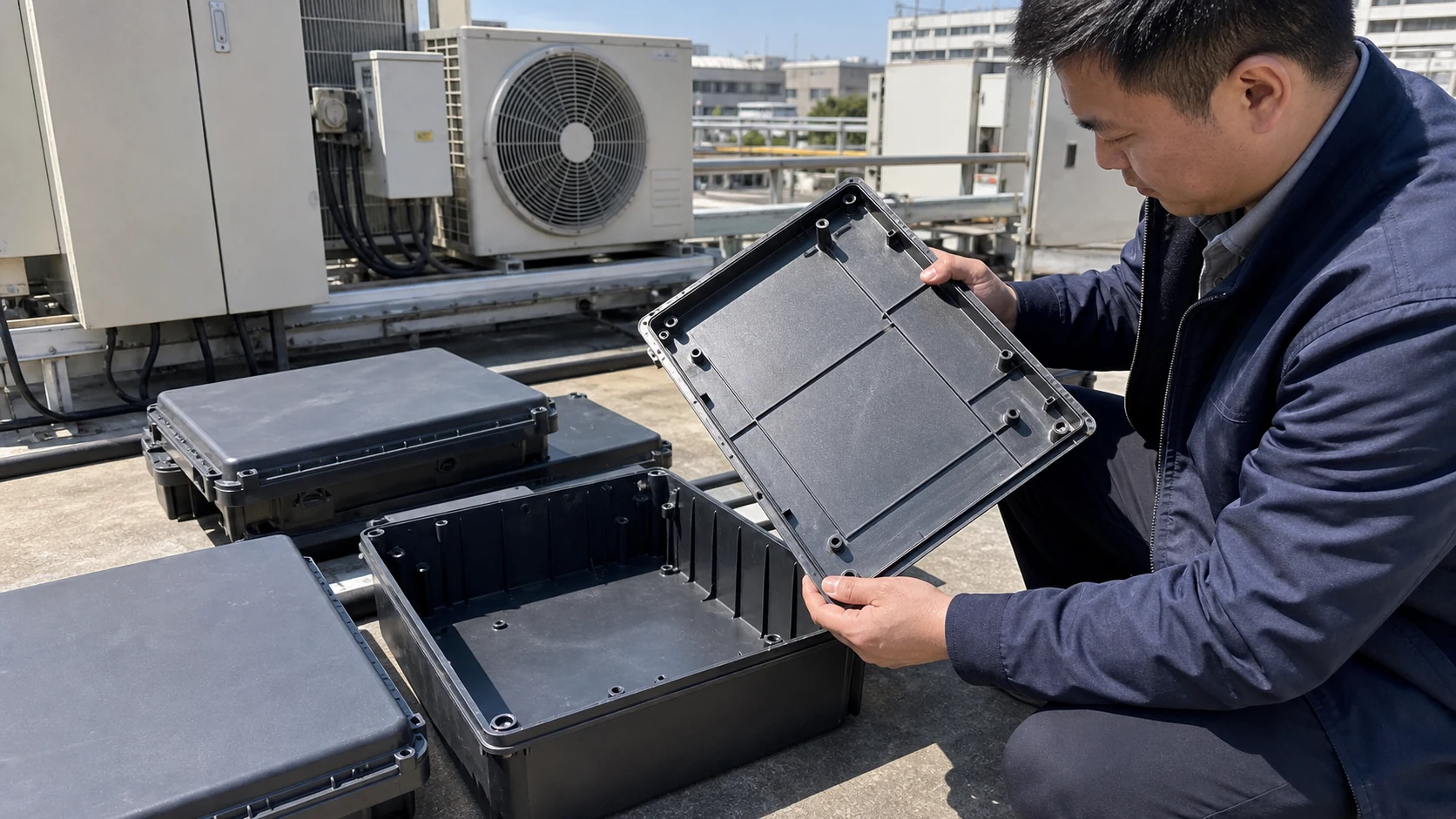
Outdoor equipment covers and industrial housings represent one of the largest and most demanding applications for weather-resistant plastics. From air conditioner exterior units and electrical enclosures to industrial control boxes and agricultural equipment housings, these components are exposed to the full fury of the outdoor environment: UV radiation, rain, temperature extremes from -20°C to +80°C, thermal cycling, and sometimes chemical exposure.
Buyer and engineer FAQ
Questions engineers often ask about this material route
Where can PP with a UV-resistant plastic requirement be used?
Typical fields include outdoor clips, covers, housings, liners, sheets, equipment shells and exposed appearance parts. For this article, DEYU would first confirm the working environment, wall thickness, expected lifetime and whether UV-resistant plastics product category, DGK-PP 66D modified PP matches the part geometry or needs formulation adjustment.
What are the main performance indicators for the "UV-resistant plastic" target on PP?
Focus on color change, gloss retention, tensile retention, impact retention and weathering hours. Buyers should ask for data on molded parts, not only pellet data, because gate position, filler orientation and thickness can change the final value.
What should engineers watch during injection molding or processing?
For PP, a practical starting window is 190-230°C melt / 30-60°C mold. Avoid overheating pigments or HALS systems, use stable black or color packages and validate outdoor aging. Final parameters should follow part thickness, gate design and the actual machine.
What details help DEYU recommend UV-resistant plastics product category, DGK-PP 66D modified PP more accurately?
Send the current resin or grade, drawing or photo, wall thickness, annual quantity, target standard, failure mode and required color. If a reference grade already passed one test but failed in production, include both data sets.
For a precise recommendation, share the part drawing, base resin, target performance, processing method and test standard with DEYU.
Background / Problem
Outdoor equipment covers and industrial housings represent one of the largest and most demanding applications for weather-resistant plastics. From air conditioner exterior units and electrical enclosures to industrial control boxes and agricultural equipment housings, these components are exposed to the full fury of the outdoor environment: UV radiation, rain, temperature extremes from -20°C to +80°C, thermal cycling, and sometimes chemical exposure.
Related DEYU plastics material references for this selection topic: UV-resistant plastics product category and DGK-PP 66D modified PP.
Traditional metal housings —galvanized steel, aluminum, or painted sheet metal —offer durability but come with significant drawbacks: high weight, corrosion susceptibility (especially in coastal or industrial environments), higher cost, and more complex manufacturing processes. These limitations have driven a steady shift toward engineering plastics for outdoor housings over the past two decades.
Polypropylene (PP) has emerged as a leading candidate for this application class. It offers:
Low density —lighter than metal, reducing shipping and installation costs
Excellent chemical resistance —resistant to oils, greases, and many industrial chemicals
Good fatigue resistance —important for housings with snap-fit or hinged access panels
Cost-effectiveness —significantly lower material cost than engineering plastics like PC/ABS or nylon
Design flexibility —complex geometries can be molded in a single part, reducing assembly costs
However, unmodified PP is not suitable for outdoor exposure. Its inherent sensitivity to UV radiation —due to the presence of tertiary carbon atoms in the polymer backbone —leads to rapid photo-oxidation, surface degradation, embrittlement, and loss of mechanical properties. Without modification, PP exposed to direct sunlight can lose over 50% of its mechanical strength within one to two years.
For outdoor equipment covers and housings, the stakes are particularly high. These parts are often:
Large and expensive to replace —field replacement costs far exceed material costs
Critical to equipment protection —failure compromises the equipment inside
Subject to aesthetic requirements —color stability matters for brand identity
Exposed to both UV and heat —dark-colored parts in direct sunlight can reach surface temperatures of 70—0°C, accelerating degradation
Technical Difficulty / Why It Happens
The UV Degradation Mechanism in PP
Polypropylene is inherently susceptible to photodegradation. The polymer chain contains tertiary carbon atoms that are highly vulnerable to free radical attack. When UV radiation (particularly wavelengths below 300 nm) reaches the PP surface, the following occurs:
Initiation —UV energy breaks C–C or C–H bonds, creating free radicals at tertiary carbon sites
Propagation —these free radicals react with atmospheric oxygen to form peroxy radicals, which abstract hydrogen from other polymer chains
Chain scission —the polymer backbone breaks, reducing molecular weight
Surface degradation —a brittle, degraded layer forms on the exposed surface
The consequences for outdoor housings are severe:
Loss of impact strength —the housing becomes brittle and cracks under load
Surface cracking —micro-cracks allow moisture ingress to the protected equipment
Color change (yellowing) —aesthetic degradation, particularly problematic for light-colored housings
Loss of gloss —the surface becomes dull and chalky
Reduced dimensional stability —warpage compromises seals and fits
The Heat Factor —Thermal Oxidation
Outdoor housings are exposed to elevated temperatures in addition to UV radiation. Dark-colored parts in direct sunlight can reach surface temperatures of 70—0°C. At these temperatures:
Thermal oxidation accelerates —even without UV, heat causes oxidative chain scission
Stabilizers are consumed faster —UV stabilizers and antioxidants deplete more rapidly at higher temperatures
Photo-oxidation rates increase exponentially —for every 10°C temperature rise, the rate of photodegradation approximately doubles
The Rigidity Challenge —Large Housings Need Stiffness
Outdoor housings are typically large, thin-walled parts that must maintain their shape under wind loads, handling, and thermal cycling. Unfilled PP has limited stiffness (flexural modulus typically 1200—500 MPa), which is often insufficient for large enclosures.
To address this, manufacturers add mineral fillers such as talc or calcium carbonate. Talc-filled PP can achieve flexural moduli of 2000—000 MPa or higher, providing the rigidity needed for large housings. However, fillers can affect UV stability and require careful formulation.
Thermal Cycling —Expansion and Contraction Fatigue
Outdoor housings experience daily thermal cycling:
Daytime: surface temperatures can reach 60—0°C in direct sunlight
Nighttime: temperatures drop to ambient or below (sometimes below freezing)
These temperature swings cause cyclic expansion and contraction. The coefficient of thermal expansion (CTE) of PP is approximately 100—50 × 10⁻⁶ /°C —significantly higher than metals. Over thousands of cycles, this thermal fatigue can cause:
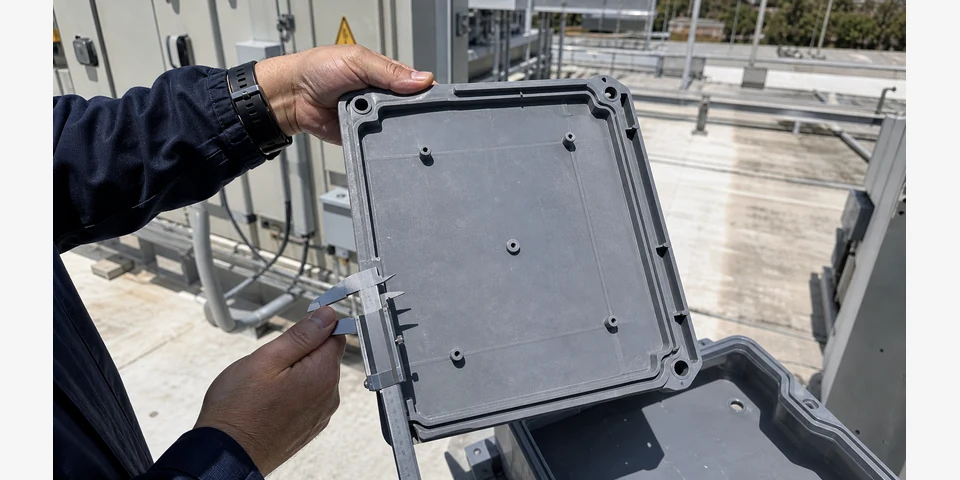
Stress cracking at corners and mounting points
Loss of seal integrity —gaskets and seals lose compression
Fastener loosening —screws and clips lose tension
Humidity and Moisture —Not Just a UV Problem
Outdoor housings face rain, dew, and high humidity in addition to UV. For PP, moisture does not cause hydrolysis (unlike PA or PC), but it does contribute to degradation through:
Stabilizer extraction —water can leach out certain UV stabilizers from the surface
Surface erosion —rain can physically erode the degraded surface layer, exposing fresh polymer to UV
Thermal shock —sudden rain on a hot housing can cause rapid cooling and thermal stress
The Stabilizer Challenge —Balancing Protection and Cost
Effective UV stabilization of PP for outdoor housings requires a carefully balanced additive package. Too little stabilizer -?rapid degradation. Too much stabilizer -?increased cost and potential for blooming (additive migration to the surface, causing haze or stickiness).
The level and type of UV inhibitor needed varies depending upon:
Wall thickness —thinner sections require more protection
Geographic location —Florida or Arizona UV is far more intense than Northern Europe
Service lifetime —5-year housings require different stabilization than 20-year housings
Color —dark colors absorb more heat and UV
DEYU Material Direction
DEYU addresses the challenges of outdoor equipment covers and industrial housings through a comprehensive modification strategy that targets UV resistance, heat resistance, rigidity, and long-term durability.
1. Multi-Component UV Stabilization System
DEYU uses a synergistic UV stabilization package combining:
Hindered amine light stabilizers (HALS) —scavenge free radicals generated during photo-oxidation
UV absorbers (benzotriazole or hydroxyphenyl triazine types) —absorb harmful UV radiation before it reaches the polymer backbone
Primary and secondary antioxidants —protect against thermal oxidation during processing and service
High molecular weight HALS —resist extraction by water and provide longer-lasting protection
This combination provides protection beyond simple UV absorption —it addresses both photo-oxidation and thermal oxidation, which are the two primary degradation mechanisms for outdoor PP housings.
2. Mineral Filler Systems for Rigidity and Heat Resistance
DEYU offers mineral-filled PP compounds with controlled filler loading and dispersion:
| Filler Type | Typical Loading | Benefits | Considerations |
|---|---|---|---|
| Talc | 10—0% | High stiffness, good heat resistance, cost-effective | Can affect surface appearance |
| Calcium carbonate (CaCO? | 10—5% | Good stiffness, excellent impact balance, good surface | Slightly lower stiffness than talc |
| Glass fiber (GF) | 10—0% | Very high stiffness and heat resistance | Higher density, potential surface finish issues |
| Hybrid (talc + GF) | 15—5% each | Balanced properties, optimized stiffness-toughness | Complex formulation |
Talc-filled PP compounds, in particular, have become the material of choice for air conditioner exterior housings and similar applications. The talc reinforcement dramatically improves:
Flexural modulus —from 1200—500 MPa to 2000—000 MPa or higher
Heat deflection temperature (HDT) —from 90—00°C to 120—40°C
Dimensional stability —reduced warpage and thermal expansion
3. Impact Modification for Toughness
Outdoor housings must withstand impacts from:
Wind-blown debris —branches, stones, hail
Installation and maintenance —dropped tools, accidental bumps
Thermal stresses —differential expansion between sections
DEYU incorporates impact modifiers that maintain toughness without sacrificing stiffness:
Polyolefin elastomers (POE) —provide excellent low-temperature impact resistance
Compatibilized rubber systems —maintain adhesion to the PP matrix
Controlled morphology —optimized rubber particle size for maximum energy absorption
4. Processing Optimization for Large Parts
Outdoor housings are often large, complex parts that require:
High flowability —to fill long flow paths and thin sections
Low warpage —to maintain dimensional accuracy for seals and fittings
Good surface appearance —for aesthetic requirements
DEYU formulations are optimized for excellent processability with:
Controlled melt flow rates (MFR) that balance flow with mechanical properties
Low shrinkage formulations for dimensional stability
Surface finish optimization for aesthetic applications
5. Material Family Overview
| DEYU Series | Base Resin | Filler System | UV Stabilization | Key Features | Typical Applications |
|---|---|---|---|---|---|
| DGK-COVER201 | PP Copolymer | Talc 20% | Standard UV + HALS | Good stiffness, cost-effective | Standard outdoor housings, covers |
| DGK-COVER301 | PP Copolymer | Talc 20% + impact modifier | Enhanced UV + HALS | Stiffness + toughness balance | Demanding housings, cold climates |
| DGK-COVER401 | PP Copolymer | CaCO?20% | Enhanced UV + HALS | Good surface finish, impact resistance | Aesthetic housings, consumer products |
| DGK-COVER501 | PP Copolymer | Talc 20% + GF 15% | Premium UV + HALS + antioxidants | High stiffness + heat resistance | Large enclosures, high-temperature applications |
| DGK-COVER601 | PP Copolymer | Talc 20% | Premium UV + HALS + hydrolysis-resistant | Maximum weatherability | Critical outdoor equipment |
Reference Product Data
Below is representative data for DEYU plastics' weather-resistant PP compounds for outdoor covers and housings (DGK-COVER series):
| Property | Test Method | DGK-COVER201 | DGK-COVER301 | DGK-COVER501 | Unfilled PP (reference) |
|---|---|---|---|---|---|
| Base Resin | —/td> | PP Copolymer | PP Copolymer | PP Copolymer | PP Copolymer |
| Filler | —/td> | Talc 20% | Talc 20% | Talc 20% + GF 15% | None |
| Impact Modifier | —/td> | None | POE | None | None |
| Density | ASTM D1505 | 1.04—.06 g/cm³ | 1.04—.06 g/cm³ | 1.10—.15 g/cm³ | 0.90—.91 g/cm³ |
| MFR (230°C/2.16kg) | ASTM D1238 | 8—2 g/10min | 6—0 g/10min | 5— g/10min | 8—2 g/10min |
| Tensile Strength | ASTM D638 | 28—2 MPa | 26—0 MPa | 35—5 MPa | 30—5 MPa |
| Flexural Modulus | ASTM D790 | 2000—800 MPa | 1800—500 MPa | 3500—000 MPa | 1200—500 MPa |
| Notched Impact (23°C) | ASTM D256 | 40—0 J/m | 80—10 J/m | 60—0 J/m | 80—00 J/m |
| Notched Impact (-20°C) | ASTM D256 | 15—5 J/m | 35—0 J/m | 25—5 J/m | <20 J/m |
| HDT (0.45 MPa) | ASTM D648 | 120—30°C | 115—25°C | 135—45°C | 90—00°C |
| HDT (1.8 MPa) | ASTM D648 | 65—5°C | 60—0°C | 80—0°C | 50—0°C |
| Molding Shrinkage | ASTM D955 | 0.8—.2% | 0.8—.2% | 0.5—.8% | 1.5—.0% |
| UV Stability (xenon arc, 2000h) —ΔE | ASTM G155 | <2.0 | <1.8 | <1.5 | >5.0 |
| UV Stability (xenon arc, 3500h) —ΔE | ASTM G155 | <3.0 | <2.5 | <2.0 | Severe degradation |
| Tensile Retention (2000h UV) | ASTM D638 | >80% | >82% | >85% | <50% |
| Impact Retention (2000h UV) | ASTM D256 | >70% | >75% | >80% | <30% |
| UL Outdoor Rating | UL 746C | —/td> | —/td> | F1 | Not rated |
| Typical Applications | —/td> | Standard housings | Impact-resistant housings | High-rigidity large enclosures | Indoor use only |
Note: Values are representative. Actual data depends on specific grade and formulation.
Customer Debugging / Validation Scenario —DEYU Internal Customer Data
Scenario: Air Conditioner Outdoor Unit Cover —Premature Yellowing and Cracking
Background: A major appliance manufacturer used a commercially available talc-filled PP compound for air conditioner outdoor unit covers. The material had acceptable initial properties and was specified as “UV-stabilized.—/p>
After 18 months of field deployment in a subtropical region (high UV, high temperature, high humidity), the covers showed:
Noticeable yellowing (ΔE > 4.0) —unacceptable for the brand’s white color requirement
Surface micro-cracking at rib intersections and corners
Reduced impact strength —covers cracked during routine maintenance
Gloss loss —the surface became dull and chalky
Root Cause Analysis:
DEYU plastics' internal analysis of the failed covers revealed:
| Factor | Finding |
|---|---|
| UV stabilizer level | Inadequate for the UV intensity —stabilizers were depleted |
| Thermal oxidation | Significant —high surface temperatures (70—5°C) accelerated degradation |
| Talc dispersion | Poor —filler agglomerates created stress concentration points |
| Surface degradation depth | 150—00 microns —sufficient to cause micro-cracking at stress points |
The material had adequate UV stabilization for moderate environments but was under-protected for the subtropical climate.
Trial Setup —DEYU Internal Validation:
Trial quantity: 500 covers (injection molded)
Monthly production: 5,000 units
Test duration: 24 months outdoor exposure (subtropical, high UV)
Comparison: Incumbent talc-filled PP vs. DEYU DGK-COVER501
Validation Metrics —DEYU Internal Test Data:
| Parameter | Incumbent PP | DEYU DGK-COVER501 | Test Method |
|---|---|---|---|
| Trial quantity | 250 pcs | 250 pcs | —/td> |
| Initial ΔE (white color) | —/td> | —/td> | CIE Lab |
| ΔE after 12 months | 3.2 | 1.5 | CIE Lab |
| ΔE after 24 months | 4.8 (failed) | 2.2 | CIE Lab |
| Initial flexural modulus | 2200 MPa | 3800 MPa | ASTM D790 |
| Flexural retention (24 months) | 65% | 88% | ASTM D790 |
| Initial notched impact (23°C) | 45 J/m | 70 J/m | ASTM D256 |
| Impact retention (24 months) | 48% | 82% | ASTM D256 |
| Surface cracking (24 months) | Visible at ribs/corners | None | Visual inspection |
| Gloss retention (60°, 24 months) | 35% | 78% | ASTM D523 |
| Field failure rate (24 months) | 5.2% | 0.3% | Customer data |
Result Interpretation —DEYU Internal Analysis
DEYU plastics' internal validation revealed that:
The incumbent material failed because the UV stabilization package was inadequate for the actual service environment. The combination of high UV intensity, high temperature, and thermal cycling exceeded the material's protection capability.
DEYU DGK-COVER501 succeeded because:
The premium UV stabilization package (HALS + UV absorbers + antioxidants) provided protection through 24 months of subtropical exposure
The talc + glass fiber hybrid filler system maintained dimensional stability and reduced warpage
The higher stiffness (3800 MPa flexural modulus) improved resistance to thermal cycling stress
The surface remained smooth and glossy with minimal color change
The key insight: “UV-stabilized—is not a one-size-fits-all designation. Material selection must match the actual service environment —not a generic specification.
Direction After Trial —DEYU Customer Recommendation
Based on DEYU plastics' internal validation results, the customer:
Converted full production to DEYU DGK-COVER501 for all subtropical and tropical regions
Adopted DEYU DGK-COVER301 for temperate regions where UV exposure is moderate
Updated material specification to require ΔE ≤2.5 after 24 months for white and light-colored housings
Implemented a regional material selection protocol —different grades for different climates
Suitable Applications
DEYU plastics' weather-resistant PP compounds for covers and housings are suitable for:
| Application Category | Specific Components | Key Requirements | Recommended Grade |
|---|---|---|---|
| HVAC Equipment | Air conditioner outdoor unit covers, side panels, grilles, top covers | UV stability, heat resistance, color stability, rigidity | DGK-COVER501 |
| Electrical Enclosures | Junction boxes, distribution boxes, meter housings, control panels | UV resistance, impact resistance, dimensional stability, UL rating | DGK-COVER401 |
| Industrial Equipment | Pump housings, compressor covers, machine guards | Chemical resistance, impact resistance, weatherability | DGK-COVER301 |
| Telecom Infrastructure | Outdoor cabinets, antenna housings, base station enclosures | Long-term weatherability, dimensional stability, UV resistance | DGK-COVER501 |
| Solar Equipment | Inverter housings, combiner boxes, junction boxes | High HDT, UV resistance, humidity resistance | DGK-COVER601 |
| Agricultural Equipment | Sprayer tanks, irrigation control boxes, equipment covers | UV + moisture resistance, impact resistance | DGK-COVER301 |
| Transportation | Exterior trim covers, trailer housings, equipment covers | UV resistance, impact resistance, color stability | DGK-COVER401 |
| Outdoor Lighting | Luminaire housings, street light covers, solar light enclosures | UV stability, heat resistance, color retention | DGK-COVER401 |
What Buyers Should Provide
To ensure optimal material selection for outdoor equipment covers and housings, DEYU recommends buyers provide:
Part drawings / 3D models —geometry, wall thickness, critical features (ribs, bosses, corners, mounting points)
Service environment —geographic location, UV intensity, temperature range (min/max), humidity, rainfall
Color requirements —light colors require more UV stabilization; dark colors absorb more heat
Expected service life —how many years the cover must survive
Performance requirements —flexural modulus, impact strength, HDT, dimensional tolerances
Testing and certification requirements —UL 746C (F1 rating), IP rating, UV standard (ASTM G154, G155)
Current material and failure data —what material is used and what issues are observed
Production volume and processing method —for cost optimization
DEYU can support with:
Material recommendations based on your specific environmental and performance requirements
Small-batch validation trials —molded covers or test plaques for weathering testing
Color matching —custom color formulations with UV-stable pigment systems
Processing optimization —injection molding parameters to minimize residual stress and optimize part quality
Regional material selection —different grades for different climates
Conclusion
Outdoor equipment covers and industrial housings represent one of the most demanding applications for weather-resistant plastics. The combination of UV radiation, temperature extremes, thermal cycling, humidity, and mechanical loads creates a degradation environment that standard PP cannot withstand without significant modification.
The key technical challenges are:
UV photo-oxidation —chain scission and surface degradation from solar radiation
Thermal oxidation —heat-accelerated degradation, particularly for dark-colored parts
Insufficient rigidity —large, thin-walled housings require filler reinforcement
Thermal cycling fatigue —daily expansion and contraction causes stress cracking
Stabilizer depletion —UV stabilizers and antioxidants are consumed over time
Color stability —aesthetic requirements demand minimal yellowing
DEYU plastics' approach addresses these challenges through:
Multi-component UV stabilization —HALS + UV absorbers + antioxidants for comprehensive protection
Mineral filler systems —talc, CaCO? and glass fiber for stiffness and heat resistance
Impact modification —POE and rubber systems for toughness without sacrificing stiffness
Processing optimization —formulations designed for large, thin-walled parts
Application-specific validation —testing matched to the actual service environment
For engineers and buyers who need outdoor covers and housings that maintain their appearance and structural integrity for years, DEYU offers validated, production-ready solutions backed by comprehensive weathering testing and application-specific support.
For specific grade recommendations and trial samples, please contact DEYU with your application details and environmental requirements.