
Why Conductive ABS Surface Resistance Changes After Cleaning or Abrasion
A practical failure-analysis guide for quality engineers and molders dealing with conductive ABS parts that pass initial ESD testing but drift after IPA cleaning, detergent residues, wiping, handling or abrasion. It explains the difference between migratory antistatic layers and permanent bulk-conductive networks, then gives a validation route for cleaning cycles, abrasion cycles and stable molded-part resistivity.
Buyer and engineer FAQ
Questions about conductive ABS after cleaning and abrasion
Why can conductive ABS pass testing when new but fail after cleaning?
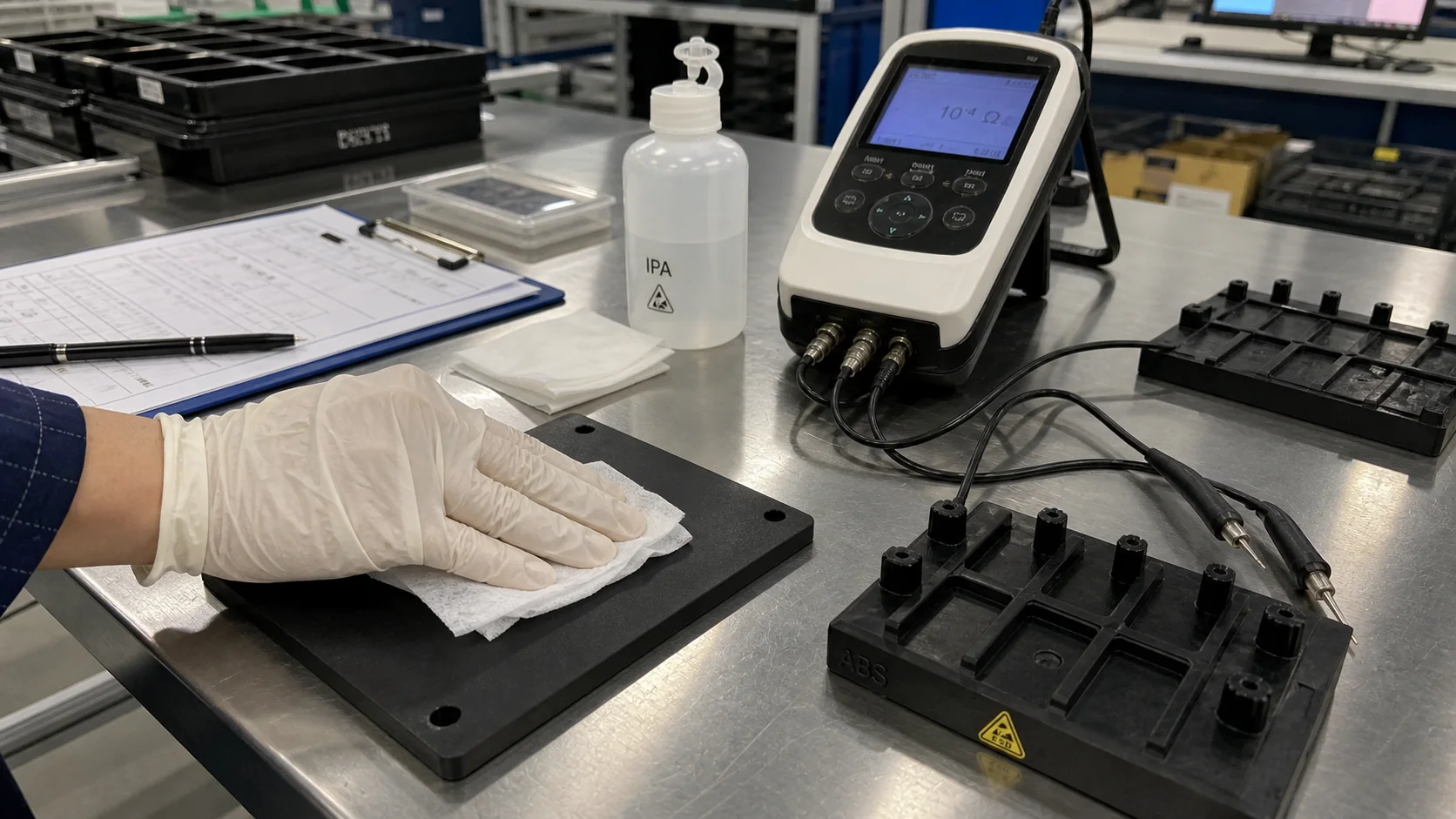
If the material relies on a migratory antistatic surface layer, IPA or detergent cleaning can remove that layer and expose insulating ABS. Permanent conductive ABS with graphite, carbon black or carbon fiber keeps the network through the bulk material.
Can cleaning residues also make a permanent conductive ABS look worse?
Yes. Silicone, wax, surfactant or oil residues can form an insulating film between the test electrodes and the conductive network. Cleaning protocol and post-cleaning measurement must be validated together.
What is the minimum validation before using conductive ABS fixtures in production?
Measure baseline resistance, run the actual cleaning protocol for 10 cycles, add 500-1000 handling or abrasion cycles, then measure the same locations again under controlled conditions.
Which DEYU grade should be tested first for cleaning-stable conductive ABS?
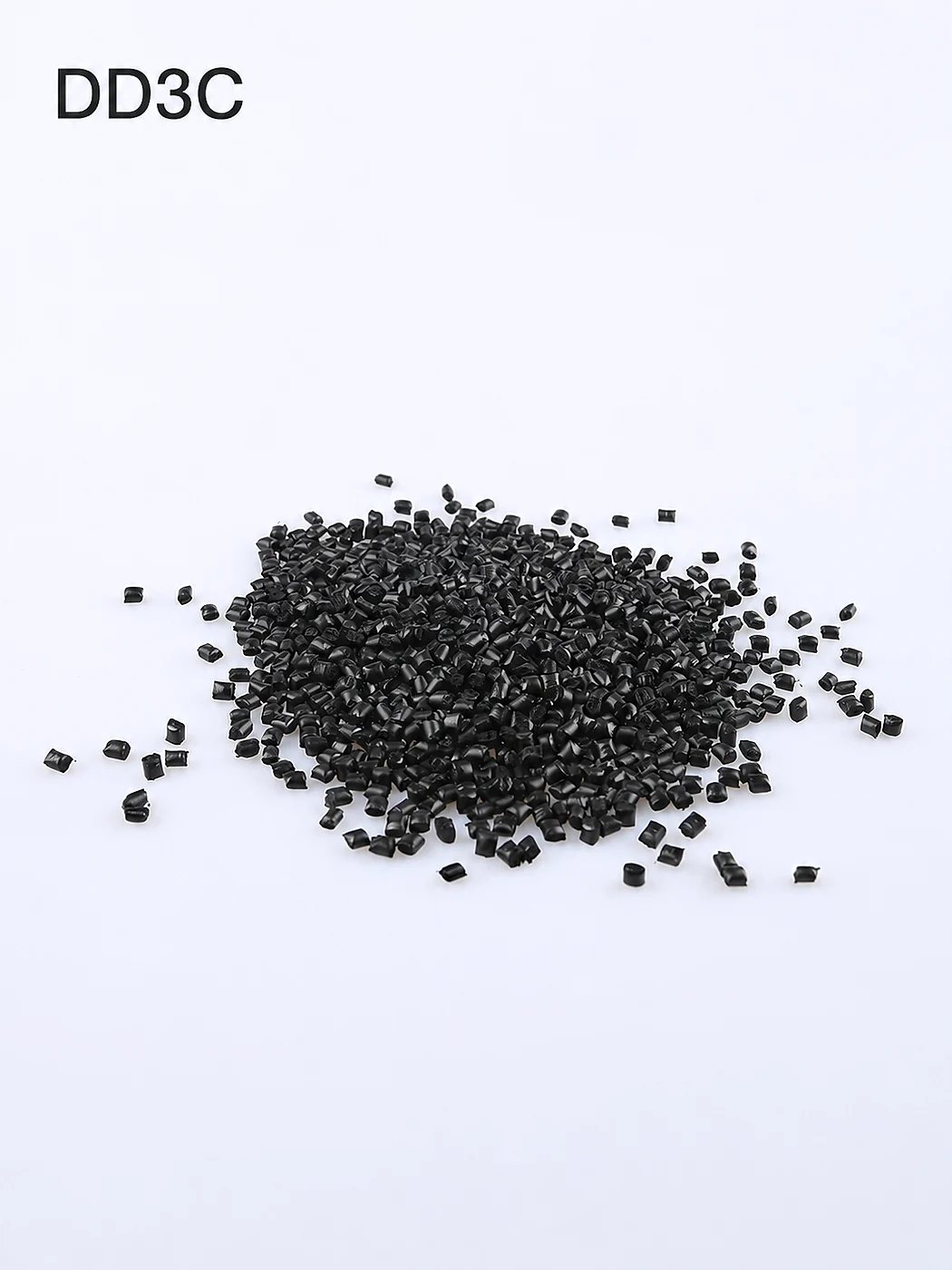
For many ESD fixtures and trays, DGK-ABS DD3C is the first trial because graphite conductivity is permanent, stable and cost-effective. Use CF15L when rigidity or load-bearing strength is also required.
For a precise recommendation, send cleaning agent, resistance target, abrasion condition, drawing and current failure data.
Background / Problem
Conductive ABS (Acrylonitrile Butadiene Styrene) is widely used in electronics housings, ESD-safe fixtures, production tooling, and component handling equipment. Its combination of good mechanical properties, surface quality, and permanent conductivity makes it a material of choice for applications requiring electrostatic discharge (ESD) protection.
A recurring and frustrating problem reported by quality engineers and production managers: conductive ABS parts that pass surface resistivity testing when new show significant resistance changes after routine cleaning or surface abrasion. The same tray that measured 10³—0Ω·cm at qualification may read 10⁶€?0Ω·cm after a cleaning cycle—or after 500 handling cycles. Parts that should remain conductive drift into the dissipative or even insulative range.
Related DEYU references for stable conductive ABS after cleaning: DGK-ABS DD3C graphite conductive ABS and DD3C stable surface resistance data guide.
Surface resistivity of ABS/PDSM copolymer composites can be around 10⁹€?0¹Ω when using migratory antistatic agents—but these values are not stable when the surface is cleaned or worn.
This is not a theoretical concern. In electronics manufacturing environments, components are cleaned regularly to remove dust, oils, and process residues. Handling equipment undergoes repeated contact and abrasion. If the ESD protection degrades with cleaning or wear, the very purpose of using conductive ABS is defeated.
The core question: Why does surface resistivity change after cleaning or abrasion—and what can engineers do to prevent it?
Technical Difficulty / Why It Happens
Mechanism 1: Cleaning-Induced Changes
Cleaning is essential in electronics manufacturing—but it can significantly affect the surface resistivity of conductive ABS. The mechanism depends on the type of conductive system used:
For migratory antistatic systems (surface-active agents that migrate to the surface):
Solvents and detergents can strip the migratory additive layer from the surface
The bulk material remains insulating—once the surface layer is removed, resistivity increases dramatically
Cleaning cycles deplete the additive reservoir over time
For carbon black-filled or graphite-filled systems (permanent conductive fillers):
Cleaning does not deplete the conductive network—but it can leave residual films that act as insulators
Some cleaning agents leave non-conductive residues (surfactants, waxes, oils) that coat the surface
These residues create an insulating barrier between the measurement electrodes and the conductive network beneath
For carbon fiber-filled systems:
Similar to carbon black—the conductive network is permanent
Surface contamination from cleaning residues can mask the underlying conductivity
The ANSI/ESD STM11.11 standard specifies that the surface shall be cleaned with distilled water, then isopropyl alcohol, then distilled water again before measurement. This standard cleaning protocol is designed to remove contaminants that would otherwise affect the measurement. However, this very protocol reveals the problem: if cleaning changes the measured resistivity, the material's "as-cleaned" performance may differ significantly from its "as-molded" performance.
Mechanism 2: Abrasion-Induced Changes
Abrasion occurs through normal use—handling, sliding contact with components, cleaning with abrasive wipes, and contact with automated equipment.
For migratory antistatic systems:
Abrasion physically removes the thin surface layer of migratory additive
Once removed, the insulating base polymer is exposed
Resistivity increases permanently—the additive cannot regenerate a surface layer if it has been abraded away
For carbon black-filled and graphite-filled systems (bulk-conductive):
Abrasion removes the surface layer of polymer, but exposes fresh conductive filler beneath
The conductive network extends throughout the material volume
Resistivity may remain stable or even improve slightly as fresh conductive material is exposed
For carbon fiber-filled systems:
Similar to carbon black—bulk conductivity means fresh fiber network is exposed
However, severe abrasion can fracture or dislodge surface fibers, potentially disrupting the surface conductive network
The key distinction: migratory antistatic systems degrade with abrasion; permanent conductive systems do not. This is why bulk-conductive compounds are preferred for applications subject to wear.
Mechanism 3: The Role of Measurement and Conditioning
The measurement itself can be affected by surface condition. ANSI/ESD STM11.11 requires conditioning at 23°C and 12% humidity—conditions that are not feasible or practical to implement in production mode. This means:
Production measurements are often made at higher humidity than the standard
Higher humidity can reduce measured resistivity (moisture films are conductive)
A part that passes at 12% RH may appear to fail in the production environment—or vice versa
Furthermore, the standard specifies that the surface shall be cleaned with distilled water, then isopropyl alcohol, then distilled water again. This cleaning procedure itself can change the measured resistivity, particularly for materials with surface treatments.
Mechanism 4: Contamination from the Cleaning Process
Many cleaning products leave residues specifically designed to improve appearance or leave a protective film.?—9-L11.? These residues can directly conflict with ESD requirements—they are often insulating.
| Residue Type | Effect on Resistivity |
|---|---|
| Surfactants | Can leave non-conductive films |
| Waxes and polishes | Insulating layers that increase resistivity |
| Silicone-based products | Strong insulators—can increase resistivity by orders of magnitude |
| Soaps and detergents | May leave ionic residues that affect measurement |
Even thin, invisible layers can significantly alter electrical behavior.?—13-L14.? Surface contamination is one of the most common—and overlooked—causes of ESD failure.?—14-L15.?
DEYU Material Direction —Stable Conductivity Through Cleaning and Wear
DEYU addresses the cleaning and abrasion challenges through a permanent conductive filler approach—not migratory additives.
The DEYU Advantage
| Aspect | Migratory Antistatic ABS | DEYU Conductive ABS (Carbon Black/Graphite/Carbon Fiber) |
|---|---|---|
| Conductivity mechanism | Surface additive layer | Bulk conductive network |
| Cleaning effect | Additive stripped—resistivity increases | Stable—cleaning removes contamination only |
| Abrasion effect | Surface layer removed—resistivity increases | Fresh conductive material exposed |
| Humidity dependence | High | None |
| Permanence | Limited (depletes over time) | Permanent |
DEYU Product Portfolio for Stable Conductivity
| Product | Filler Type | Surface Resistivity | Cleaning Resistance | Abrasion Resistance |
|---|---|---|---|---|
| DGK-ABS DD3C | Graphite | 10³—0Ω·cm | High | High |
| DGK-ABS CF15L | Carbon fiber (15%) | ≤0Ω·cm | High | High |
| DGK-ABS KJD678R-BZ | Carbon black | 10⁷€?0Ω·sq | High | High |
| DGK-ABS FR V0 | Carbon black + FR | 10⁷€?0Ω·sq | High | High |
All DEYU conductive ABS compounds use permanent conductive networks—graphite particles, carbon black aggregates, or carbon fibers distributed throughout the bulk material. The conductive properties are not dependent on a surface layer, so cleaning and abrasion do not deplete the conductive network.
Recommended Cleaning Protocol for Conductive ABS
DEYU recommends the following cleaning protocol for conductive ABS parts:
Pre-clean: Remove loose debris with a soft brush or compressed air
Solvent cleaning: Use isopropyl alcohol (IPA) or a mild detergent solution
Rinse: Rinse with distilled or deionized water
Dry: Allow to dry completely before resistivity measurement
Verify: Measure surface resistivity after cleaning to confirm performance
Avoid:
Abrasive cleaners or scrubbing pads
Silicone-based products
Waxes or polishes
Strong solvents that may attack the ABS matrix
Reference Product Data
DEYU Conductive ABS —Typical Properties
| Property | Test Method | DGK-ABS DD3C (Graphite) | DGK-ABS CF15L (Carbon Fiber) | DGK-ABS KJD678R-BZ (Carbon Black) |
|---|---|---|---|---|
| Base Resin | —/td> | ABS | ABS | ABS |
| Filler Type | —/td> | Graphite | Carbon fiber (15%) | Carbon black |
| Surface Resistivity | GB/T1401-2002 | 10³—0Ω·cm | ≤0Ω·cm | 10⁷€?0Ω·sq |
| Tensile Strength | GB/T1040-2006 | 19 MPa | ≤7.6 MPa | 35—5 MPa |
| Flexural Modulus | GB/T9341-2008 | 1600 MPa | ≤160 MPa | 2000—500 MPa |
| Heat Distortion Temp | GB/T1633-2000 | 84°C | ≤2°C @ 1.8 MPa | 85—5°C |
| Cleaning Resistance | Internal | High | High | High |
| Abrasion Resistance | Internal | High | High | High |
Values are typical ranges, not guaranteed minimums or maximums.
Customer Debugging / Validation Scenario
Validation Scenario: Electronics Manufacturer —Surface Resistance Change After Cleaning
Background: An electronics manufacturer was using an antistatic ABS compound for ESD-safe production fixtures. The fixtures passed initial surface resistivity testing at qualification (<10Ω·cm). However, after routine cleaning with isopropyl alcohol (IPA) to remove dust and handling oils, the surface resistivity of the fixtures increased to 10⁸€?0¹Ω·cm—exceeding the specification. The cleaning protocol was standard, and the fixtures were not visibly damaged.
The issue was traced to the migratory antistatic additive in the control material. The IPA cleaning was stripping the surface-additive layer, exposing the insulating ABS base.
The manufacturer evaluated DEYU DGK-ABS DD3C (graphite conductive ABS) as a replacement, tracking surface resistivity before and after cleaning cycles.
Trial Protocol:
| Parameter | Detail |
|---|---|
| Trial quantity | 100 fixtures |
| Monthly production volume | 2,000 fixtures |
| Control material | Migratory antistatic ABS |
| Test material | DEYU DGK-ABS DD3C |
| Cleaning protocol | IPA wipe, 10 cycles |
| Test method | GB/T1401-2002 |
| Measurement locations | 5 locations per fixture |
Validation Data:
| Metric | Control Material (Migratory Antistatic ABS) | DEYU DGK-ABS DD3C |
|---|---|---|
| Initial surface resistivity | 10⁵€?0Ω·cm | 10³—0Ω·cm |
| Resistivity after 1 IPA wipe | 10€?0Ω·cm | 10³—0Ω·cm |
| Resistivity after 5 IPA wipes | 10⁸€?0Ω·cm | 10³—0Ω·cm |
| Resistivity after 10 IPA wipes | 10⁹€?0¹Ω·cm | 10³—0Ω·cm |
| Resistivity after 500 handling cycles | 10⁹€?0¹Ω·cm | 10³—0Ω·cm |
| Fixture pass rate (post-cleaning) | 45% | 98% |
| Production downtime (cleaning-related failures) | High | None |
Direction After Trial:
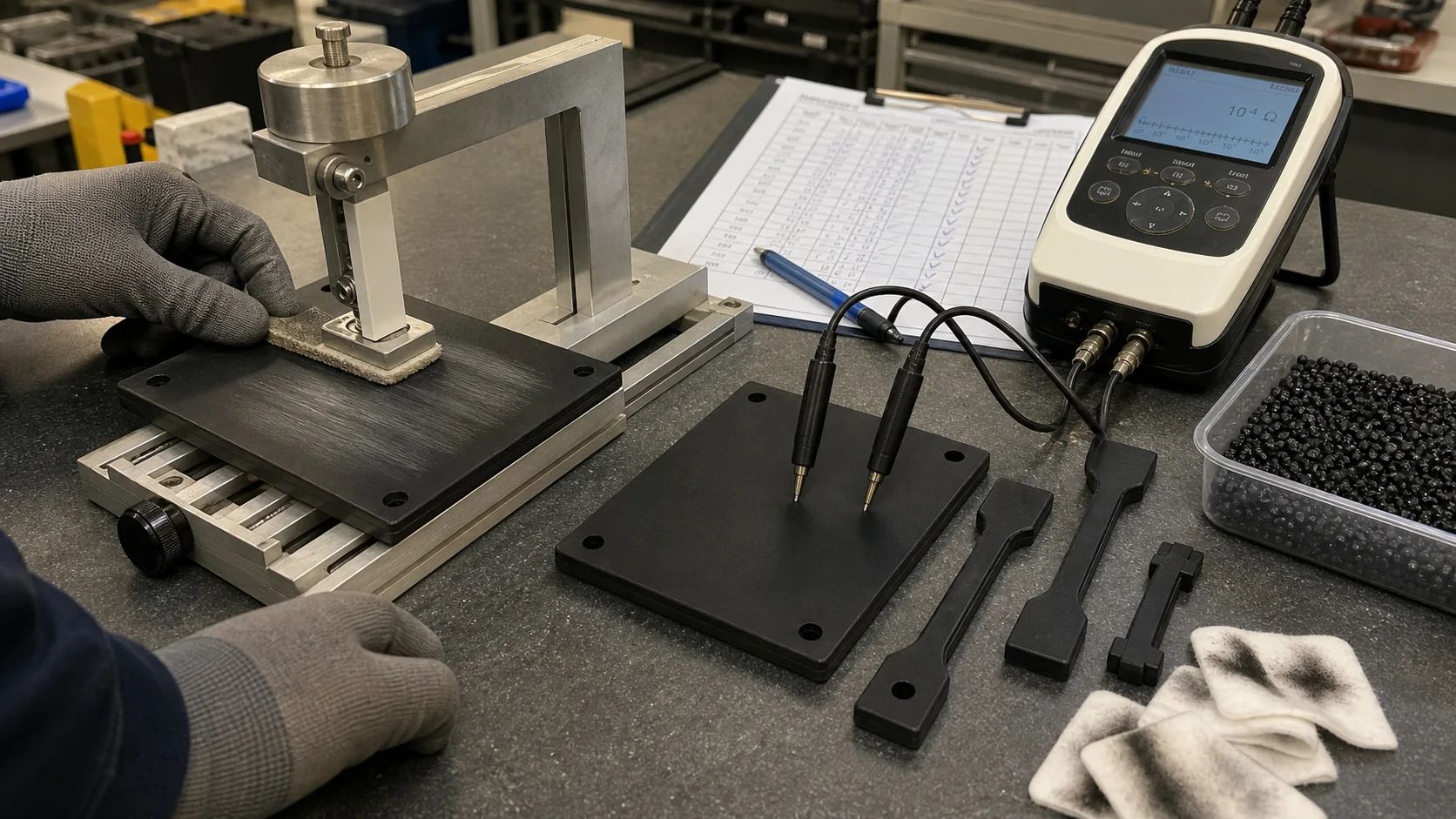
The control material showed progressive resistivity increase with each cleaning cycle—the migratory additive was being stripped from the surface. DGK-ABS DD3C maintained stable resistivity through 10 cleaning cycles and 500 handling cycles, because the graphite conductive network is distributed throughout the bulk material, not just on the surface.
Areas for further refinement identified:
DGK-ABS DD3C required drying (3— hours at 90°C) before molding—DEYU provided processing guidelines
The graphite-filled material is black, which was acceptable for this application
Slightly higher material cost compared to the migratory antistatic ABS—offset by elimination of cleaning-related failures
Result Interpretation:
This validation scenario illustrates the fundamental difference between surface-dependent and bulk-conductive ESD materials. Migratory antistatic additives provide conductivity through a thin surface layer that can be removed by cleaning. Permanent conductive fillers (graphite, carbon black, carbon fiber) provide conductivity throughout the material volume—cleaning removes contamination but does not affect the conductive network.
Recommended Validation Protocol for Cleaning and Abrasion
DEYU recommends the following validation protocol for conductive ABS parts subject to cleaning or abrasion:
Phase 1: Baseline Measurement
Measure surface resistivity on freshly molded parts (per GB/T1401-2002 or ANSI/ESD STM11.11)
Document measurement locations for repeatability
Establish baseline resistivity range
Phase 2: Cleaning Cycle Testing
Subject parts to 10 cleaning cycles using the intended cleaning protocol
Measure surface resistivity after cycles 1, 3, 5, and 10
Document any resistivity drift
If resistivity increases >1 order of magnitude, investigate cleaning agent compatibility
Phase 3: Abrasion Testing
Subject parts to 500—000 handling cycles (simulated or actual)
Measure surface resistivity at regular intervals
Inspect surfaces for visible wear
Document resistivity stability
Phase 4: Production Qualification
Establish acceptable resistivity range after cleaning and abrasion
Define in-process monitoring plan
Qualify the material based on real-world performance, not just initial measurement
Suitable Applications —Where Cleaning and Abrasion Resistance Matters
| Application | Cleaning Frequency | Abrasion Risk | Recommended Grade |
|---|---|---|---|
| ESD production fixtures | Daily | High | DGK-ABS DD3C or DGK-ABS CF15L |
| Electronics handling trays | Weekly | Moderate | DGK-ABS DD3C |
| Semiconductor cleanroom parts | Daily | Low | DGK-ABS DD3C (low-outgassing) |
| Assembly line tooling | Daily | High | DGK-ABS CF15L |
| Test and inspection jigs | Weekly | Moderate | DGK-ABS DD3C |
| Component shipping containers | As needed | Moderate | DGK-ABS DD3C |
| Automation grippers and end-effectors | Daily | High | DGK-ABS CF15L |
| ESD-safe work surfaces | Daily | Moderate | DGK-ABS DD3C |
What Buyers Should Provide
To diagnose and prevent cleaning- or abrasion-related resistivity changes in your conductive ABS application, please provide the following information to DEYU:
| Information Needed | Why It Matters |
|---|---|
| Current material (grade and supplier) | Establishes whether the issue is related to migratory additives or filler type |
| Cleaning protocol | Solvents, detergents, wipes, frequency—identifies potential cleaning-related contamination or stripping |
| Current failure mode | Resistivity drift after cleaning, after handling, or both—helps diagnose root cause |
| Failure rate / scrap rate | Quantifies the problem and establishes improvement targets |
| Handling frequency (cycles per day/week) | Determines abrasion resistance requirements |
| Part drawing / 3D model | Identifies high-wear areas and critical surfaces |
| Target surface resistivity range | Defines conductive (<10 vs. dissipative (10⁶€?0 requirement |
| Processing method | Injection molding—determines grade suitability |
| Environmental conditions | Temperature, humidity, chemical exposure—affects material selection |
| Monthly / annual production volume | Determines commercial viability of custom formulation |
Conclusion
Surface resistivity changes in conductive ABS after cleaning or abrasion are a well-documented engineering challenge. The root cause depends on the conductive mechanism:
Migratory antistatic systems rely on a thin surface layer of additive that can be stripped by cleaning or abraded away. Once removed, the insulating base polymer is exposed, and resistivity increases permanently.
Permanent conductive systems (carbon black, graphite, or carbon fiber-filled) distribute the conductive network throughout the bulk material. Cleaning removes only surface contamination, and abrasion exposes fresh conductive material—resistivity remains stable.
DEYU's recommended solution—permanent conductive ABS compounds (DGK-ABS DD3C, DGK-ABS CF15L, DGK-ABS KJD678R-BZ)—provides stable resistivity through cleaning and abrasion because the conductive network is not dependent on a surface layer.
Validation data from an electronics fixture trial demonstrated that DGK-ABS DD3C maintained stable resistivity (10³—0Ω·cm) through 10 cleaning cycles and 500 handling cycles, while a migratory antistatic control material showed resistivity drift from 10⁵€?0Ω·cm to 10⁹€?0¹Ω·cm.
For applications where ESD performance must remain reliable through routine cleaning and handling—strong>permanent conductive ABS compounds are not an option. They are a necessity.
DEYU can provide small-batch validation quantities for cleaning and abrasion testing. Contact DEYU's technical team with your part drawings, performance requirements, and current failure data for a customized material recommendation.