
Conductive TPU Compound for Flexible ESD and Wear-Resistant Contact Parts
Conductive TPU is selected when a part must bend, compress or roll like an elastomer, but still dissipate static charge after repeated contact and abrasion.
Engineering FAQ
Conductive TPU Compound for Flexible ESD and Wear-Resistant Contact Parts
When should conductive TPU be selected instead of conductive PP or ABS?
Use conductive TPU when the part must stay flexible, elastic or wear-resistant under rolling, sealing, bending or rubbing contact. PP and ABS are better for rigid housings and trays.
Is surface resistance alone enough to approve conductive TPU?
No. Conductive TPU should be checked for resistance, static decay, hardness, elongation, abrasion depth and resistance stability after flexing or wear.
Which filler route is best for flexible ESD TPU parts?
CNT is often preferred when flexibility and low particle generation matter. Carbon black is economical for standard ESD parts, while carbon fiber is used when wear and reinforcement are priorities.
What information helps DEYU recommend a conductive TPU grade?
Send the drawing, hardness target, resistance range, wear cycle, flexing condition, process method, operating environment, current failure mode and production volume.
Background / Problem
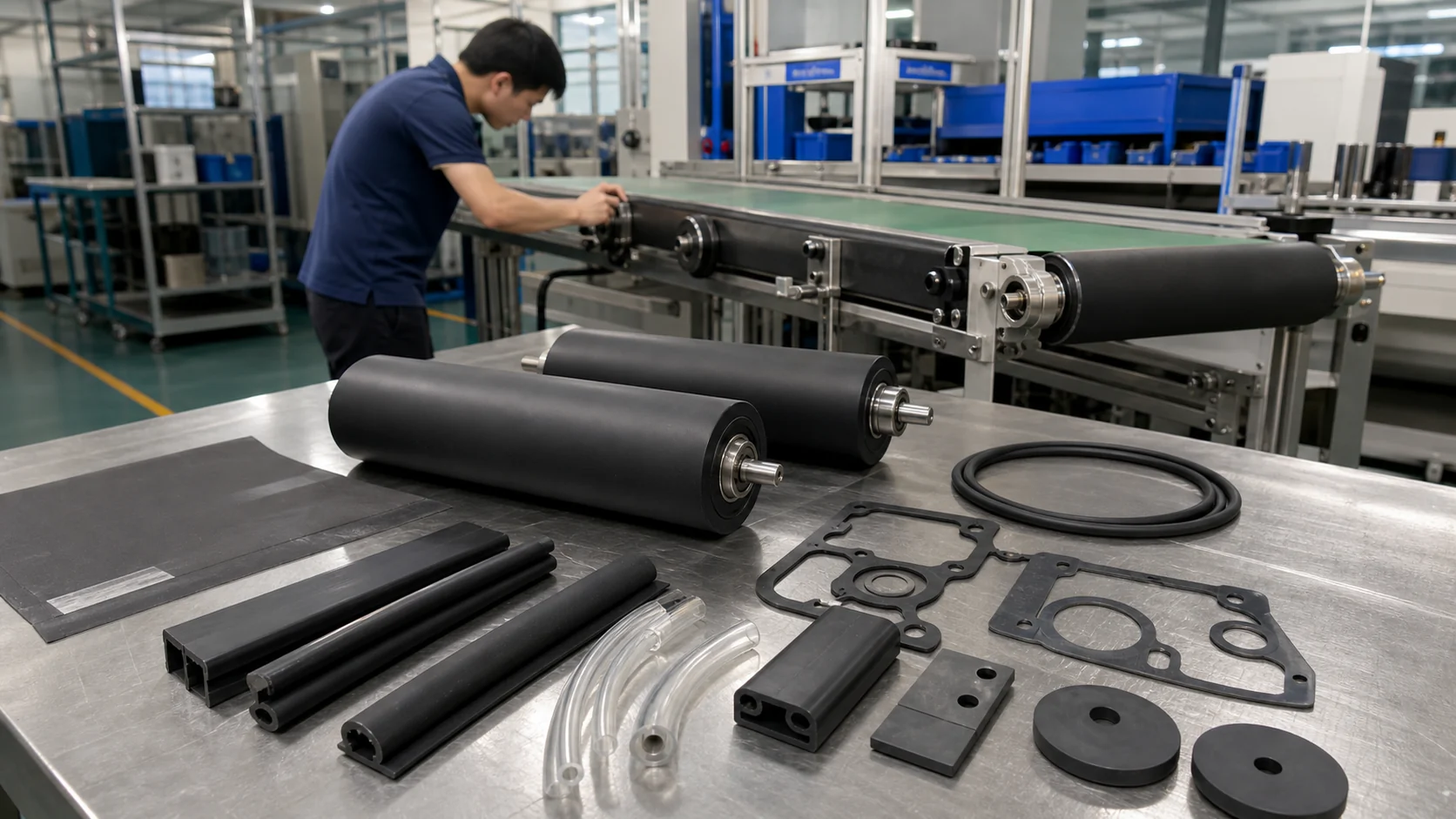
Thermoplastic polyurethane (TPU) combines the processing convenience of thermoplastics with elastomer performance: high elasticity, excellent abrasion resistance, good chemical resistance and a wide hardness range from Shore 60A to 80D. It is widely used for seals, gaskets, rollers, conveyor belts, protective covers, hoses, tubing, shoe soles and ergonomic grips that must withstand repeated contact, friction and mechanical stress.
Standard TPU, however, is an electrical insulator. In electronics manufacturing, charge can build on TPU rollers, sleeves or mats, attracting dust and creating ESD risk for sensitive components. In automotive or industrial systems, static discharge may interfere with electronic modules or create risk in fuel-handling and powder-handling environments.
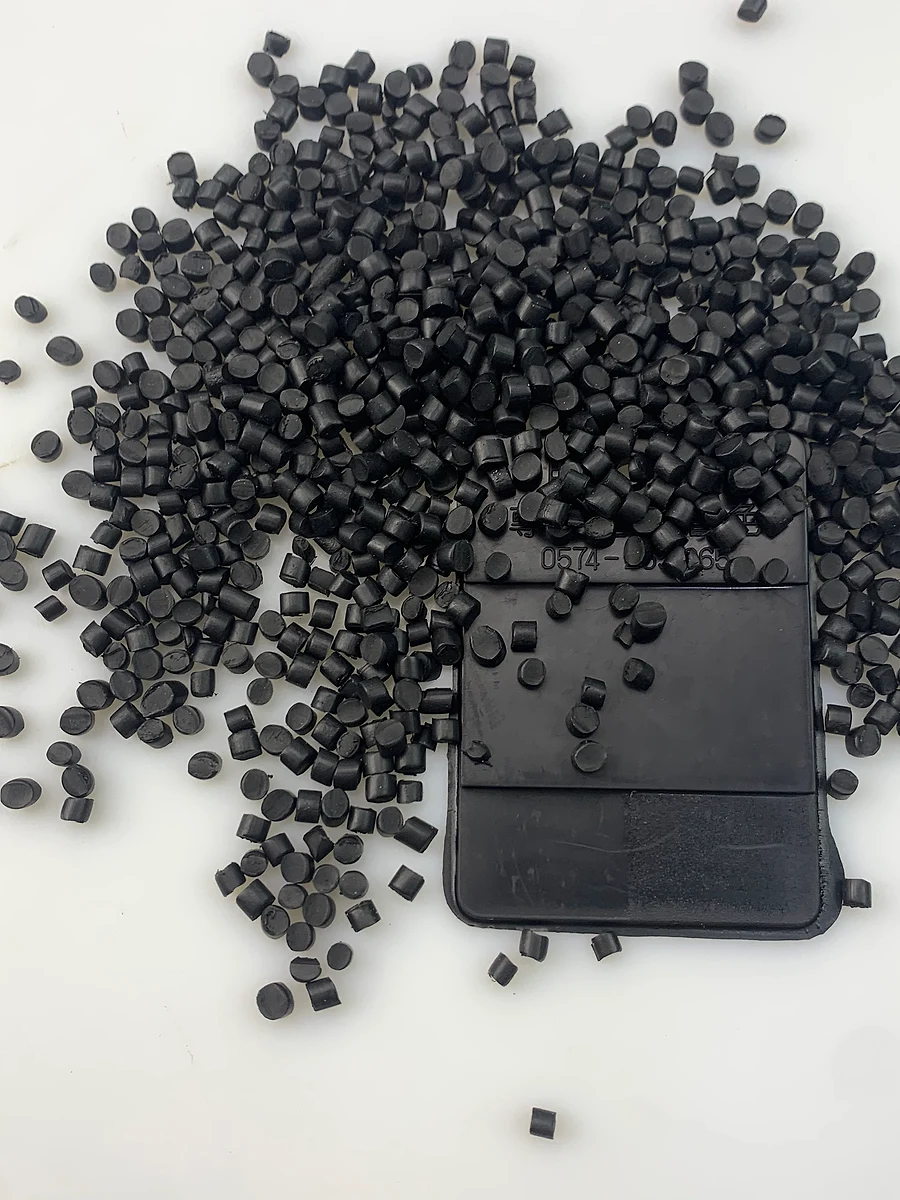
Conductive TPU compounds solve this by incorporating conductive fillers such as carbon black, carbon nanotubes (CNT), carbon fiber or graphene into the TPU matrix. The goal is permanent, humidity-independent static dissipation while preserving TPU flexibility, resilience and wear resistance.
For a public DEYU product reference, see DGK-TPU DD3-4ML conductive TPU pellets. For elastomer family comparison, see the conductive elastomers TPV / TPU / TPE selection guide.
| Requirement | Why It Matters |
|---|---|
| Permanent, stable conductivity | ESD protection must remain reliable through flexing, abrasion, cleaning and environmental changes. |
| Excellent wear resistance | Contact parts experience continuous rolling, sliding or rubbing; abrasion resistance determines service life. |
| Flexibility and elasticity | Parts must bend, compress and recover without cracking or losing conductivity. |
Technical Difficulty: Why Conductive TPU Requires Careful Formulation
Conductive filler percolation threshold
| Filler Technology | Typical Percolation Threshold | Key Characteristics |
|---|---|---|
| Carbon black (CB) | ~5-7 wt% | Cost-effective; higher loading; can increase hardness and reduce elasticity. |
| Carbon nanotubes (CNT) | ~1-3 wt% | Low loading; strong conductivity; better retention of flexibility when dispersed well. |
| Graphene | ~0.5-2 wt% | High aspect ratio; low percolation threshold; dispersion control is critical. |
| Carbon fiber | ~8-15 wt% | Adds reinforcement and wear resistance; conductivity is more directional. |
The conductive filler challenge
Conductive TPU needs a percolation network through the polymer. Filler particles must be close enough for tunneling or contact, but excessive loading makes an elastomer harder and less flexible. CNT and graphene routes can reduce the percolation threshold; carbon black is economical but usually needs more loading.
The toughness-conductivity balance
Rigid plastics tolerate more filler than TPU. In TPU, the filler must be dispersed without destroying elongation, elastic recovery and soft-touch behavior. For flexible contact parts, a passing resistance value is not enough if the part cracks, stiffens or sheds particles during use.
Wear resistance as TPU's advantage
TPU is one of the most abrasion-resistant organic materials. A well-formulated conductive TPU keeps this advantage while adding ESD control. Poor dispersion or excessive filler, however, can create abrasive agglomerates and shorten the life of rollers or seals.
Permanent network versus migratory antistatic additives
Migratory antistatic additives work mainly at the surface and can be depleted by cleaning or wear. Contact parts need a conductive network through the bulk material so that fresh material exposed by abrasion remains conductive.
| Approach | Mechanism | Permanence | Suitability for Contact Parts |
|---|---|---|---|
| Migratory antistatic additive | Surface-active agent migrates to the part surface | Limited; depleted by cleaning and wear | Poor for rollers, seals and rubbing contact parts |
| Permanent conductive filler | Conductive network exists through the material bulk | Permanent; not lost when the surface wears | Strong fit for wear-resistant ESD contact parts |
DEYU Material Direction: Conductive TPU for Flexible ESD Contact Parts
| Product | Technology Route | Surface Resistivity | Key Features | Best Applications |
|---|---|---|---|---|
| DGK-TPU CNT Series | Carbon nanotubes / MWCNT | 10^3-10^5 ohm-cm | Low filler loading, strong conductivity, flexibility retention | Flexible ESD parts, seals, gaskets, tubing, wearables |
| DGK-TPU CB Series | Conductive carbon black | 10^4-10^6 ohm-cm | Cost-effective route with good wear resistance | Conveyor rollers, soles, standard industrial ESD parts |
| DGK-TPU CF Series | Carbon fiber reinforcement | 10^3-10^5 ohm-cm | High wear resistance and mechanical reinforcement | High-wear contact parts and automotive components |
| DGK-TPU Permanent Antistatic | Permanent antistatic system | 10^9-10^11 ohm/sq | Dissipative range, non-migrating, color options | Cleanroom parts and electronics handling where conductivity is not required |
| Feature | Benefit |
|---|---|
| Permanent conductive network | Humidity-independent static dissipation; suitable for repeated contact. |
| Wear resistance | TPU base resin supports long service life under rolling and sliding friction. |
| Flexibility and elasticity | Bends, flexes and recovers without brittle failure when formulation is balanced. |
| Temperature resistance | Polyester TPU can be selected for higher heat; polyether TPU helps in hydrolysis-sensitive environments. |
| Chemical resistance | Good resistance to oils, greases and many organic media, depending on grade. |
| Processability | Injection molding, extrusion and calendering routes can be supported by grade design. |
Target applications
| Industry | Typical Parts |
|---|---|
| Electronics manufacturing | ESD conveyor rollers, belts, protective sleeves, soft covers, component handling totes, cleanroom mats, cable strain reliefs and ESD-safe fixtures. |
| Automotive | Fuel-line covers, anti-static seals, EV shielding interfaces, vibration damping pads, under-hood dampers and flexible protective parts. |
| Industrial equipment | Conveyor rollers and guides, gaskets, stoppers, grommets, hose mandrels, valves, pads, casters and high-friction contact parts. |
| Footwear and wearables | Anti-static soles, heels, flexible sensor housings, conductive textile interfaces and wearable elastomer components. |
| Medical and cleanroom devices | Soft medical device accessories, cleanroom-compatible flexible goods, dust-control mats and dissipative transparent or natural-color parts when carbon black is not acceptable. |
Reference Product Data
DGK-TPU CNT
| Property | Test Method | Typical Value | Unit |
|---|---|---|---|
| Base resin | - | TPU, polyester or polyether | - |
| Filler type | - | Multi-walled carbon nanotubes (MWCNT) | - |
| Color | - | Black | - |
| Processing | - | Injection molding / extrusion | - |
| Surface resistivity | ANSI/ESD STM11.11 / GB/T 1401 | 10^3-10^5 | ohm-cm |
| Static decay time | FTMS101C 4046.1 | <2 seconds, 5000 V to 50 V | - |
| Hardness | ASTM D2240 / ISO 868 | 70-95 | Shore A |
| Tensile strength | ASTM D412 / GB/T 528 | 15-35 | MPa |
| Elongation at break | ASTM D412 / GB/T 528 | 300-600 | % |
| Tear strength | ASTM D624 | 80-120 | N/mm |
| Abrasion resistance | ISO 4649 / DIN 53516 | Excellent | - |
| Continuous service temperature | - | Up to 130 C polyester; up to 90 C polyether | C |
| Drying temperature | - | 90-100 | C |
| Drying time | - | 3-4 | hours |
| Melt temperature | - | 185-210 | C |
| Mold temperature | - | 38-60 | C |
DGK-TPU CB
| Property | Test Method | Typical Value | Unit |
|---|---|---|---|
| Surface resistivity | ANSI/ESD STM11.11 / GB/T 1401 | 10^4-10^6 | ohm-cm |
| Hardness | ASTM D2240 / ISO 868 | 60-90 | Shore A |
| Tensile strength | ASTM D412 / GB/T 528 | 15-25 | MPa |
| Elongation at break | ASTM D412 / GB/T 528 | 300-500 | % |
| Abrasion resistance | ISO 4649 / DIN 53516 | Excellent | - |
| Drying temperature | - | 90-100 | C |
| Drying time | - | 3-4 | hours |
| Melt temperature | - | 185-210 | C |
Recommended Processing Parameters
| Parameter | DGK-TPU CNT | DGK-TPU CB | DGK-TPU CF |
|---|---|---|---|
| Drying temperature | 90-100 C | 90-100 C | 90-100 C |
| Drying time | 3-4 hours | 3-4 hours | 3-4 hours |
| Recommended residual moisture | <=0.1% | <=0.1% | <=0.1% |
| Melt temperature | 185-210 C | 185-210 C | 190-210 C |
| Mold temperature | 38-60 C | 38-60 C | 40-60 C |
| Injection pressure | Medium | Medium | Medium to high |
- Drying is essential because TPU absorbs moisture. Insufficient drying can cause hydrolysis, bubbles, silver streaks and unstable mechanical performance.
- Avoid excessive residence time and temperatures above 220 C unless the grade and equipment have been verified. TPU is more thermally sensitive than many rigid engineering plastics.
- Injection molding, extrusion, calendering and some 3D-printing routes can be supported, but the grade must match the process, hardness and target resistance.
Customer Debugging and Validation Scenario
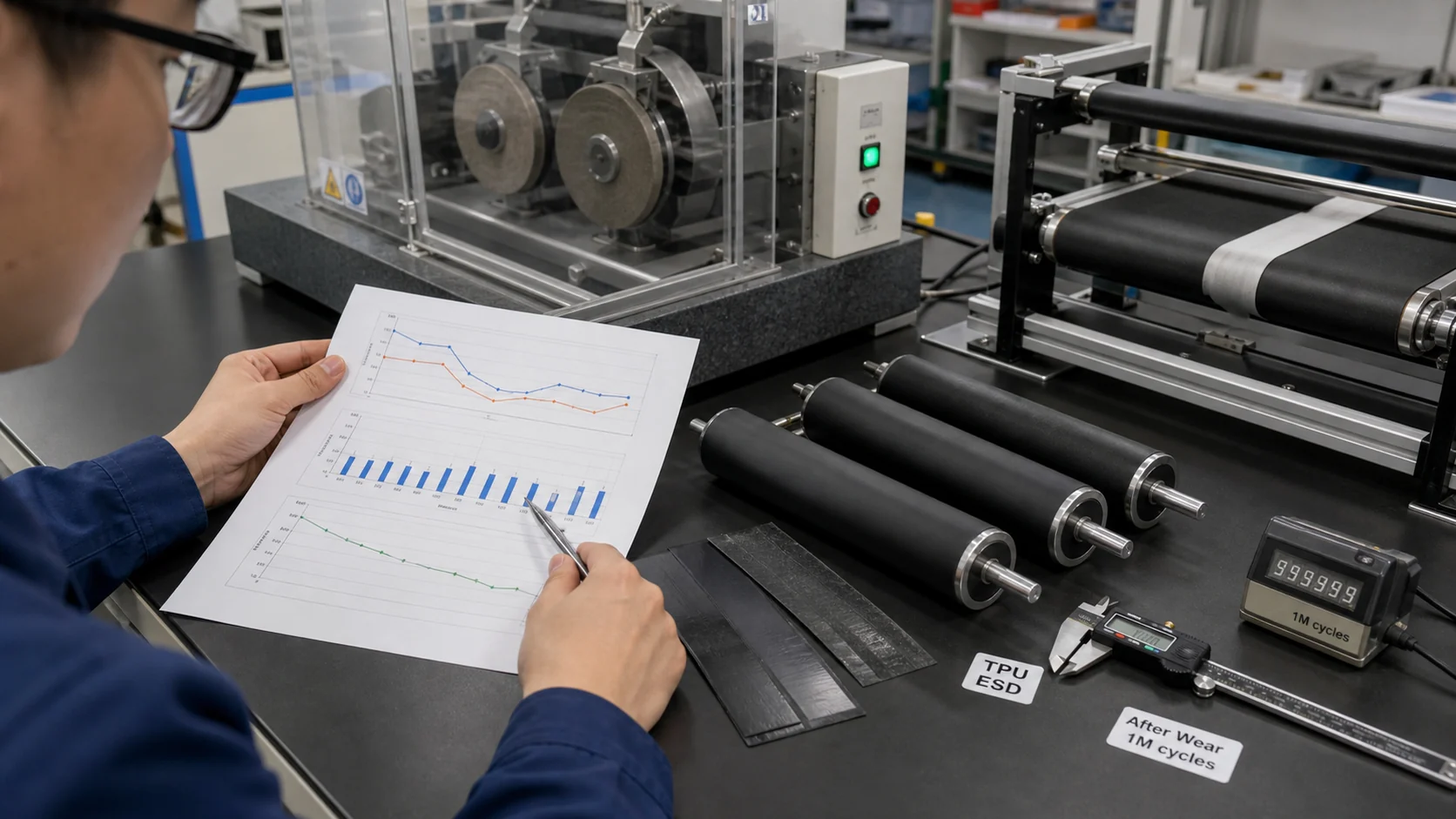
An electronics manufacturer used standard TPU conveyor rollers on a PCB assembly line. The rollers had good mechanical life, but rotation generated static charge. Dust collected on PCB surfaces, and occasional discharge damaged sensitive components.
The customer evaluated a DEYU DGK-TPU CNT conductive TPU route as a replacement and tracked surface resistivity, static voltage, wear depth and line pass rate.
| Parameter | Detail |
|---|---|
| Trial quantity | 200 rollers |
| Monthly volume | 1,000 rollers |
| Material | DGK-TPU CNT trial direction |
| Processing method | Injection molding |
| Drying | 3-4 hours at 90-100 C |
| Melt temperature | 190-210 C |
| Target surface resistivity | <10^6 ohm-cm |
| Wear test | 1,000,000 cycles of continuous rotation |
| Metric | Standard TPU Control | DGK-TPU CNT |
|---|---|---|
| Surface resistivity | >10^12 ohm-cm | 10^3-10^5 ohm-cm |
| Static charge after operation | 2,000-5,000 V | <100 V |
| Dust accumulation on PCBs | Significant | Minimal |
| ESD-related component damage | 3.2% | <0.5% |
| Wear depth after 1,000,000 cycles | 0.08 mm | 0.09 mm |
| Roller surface condition | Polished, intact | Polished, intact |
| Assembly line pass rate | 94% | 98.5% |
| Projected replacement interval | 800,000 cycles | >2,000,000 cycles |
DGK-TPU CNT delivered stable 10^3-10^5 ohm-cm surface resistivity, reduced charge to below 100 V and lowered ESD-related component damage from 3.2% to less than 0.5%. Wear depth remained close to the standard TPU control, showing that the conductive network did not destroy TPU's abrasion advantage.
The result demonstrates the core value of conductive TPU: conductivity, flexibility and wear resistance must be validated together. A low resistance number without wear life is not enough, and excellent wear without ESD control does not solve the electronics manufacturing problem.
Selection Decision Framework
| Material Route | Choose When | Typical Applications |
|---|---|---|
| CNT conductive TPU | Maximum flexibility, low particle generation, strong conductivity and long life under repeated flexing are required. | Seals, gaskets, tubing, flexible sensors, wearables and cleanroom contact parts. |
| CB conductive TPU | Cost-effective conductivity and standard ESD control are enough, with simple molded geometry. | Conveyor rollers, shoe soles, industrial pads and standard ESD parts. |
| CF conductive TPU | Maximum wear resistance, higher tear strength or mechanical reinforcement is needed. | High-wear conveyor parts, automotive contact parts and heavy-duty industrial components. |
| Permanent antistatic TPU | A dissipative range is acceptable and black carbon-filled color is not suitable. | Cleanroom walls, windows, doors, mats and vacuum tubing. |
What Buyers Should Provide
| Information Needed | Why It Matters |
|---|---|
| Part drawing or 3D model | Shows wall thickness, flex points, roller diameter, sealing lips and high-wear zones. |
| Target resistance range | Defines whether the part needs conductive, static-dissipative or antistatic behavior. |
| Hardness requirement | Shore A or Shore D target controls grade choice and filler loading tolerance. |
| Operating temperature | Helps choose polyester or polyether TPU and check heat-aging risk. |
| Wear and flexing requirement | Defines whether CB, CNT or CF route is more suitable. |
| Environment | Oil, grease, solvent, UV, moisture and cleanroom needs affect formulation. |
| Processing method | Injection, extrusion, calendering or printing require different flow and melt-strength windows. |
| Current failure mode | Static, dust, wear, cracking or unstable resistance points to the correct technical route. |
| Production volume and compliance | Volume, RoHS, REACH, FDA or other requirements determine sampling and custom formulation scope. |
Conclusion
| Dimension | Benefit |
|---|---|
| Conductivity | 10^3-10^5 ohm-cm conductive range can provide permanent, humidity-independent ESD protection. |
| Wear resistance | TPU keeps a strong service-life advantage in rolling and sliding contact. |
| Flexibility | 300-600% elongation at break supports bending, compression and recovery. |
| Permanence | Bulk conductive networks are not washed away or depleted by surface wear. |
| Processability | Injection molding, extrusion and calendering can be supported when the grade matches the process. |
DEYU can provide small-batch validation quantities for process optimization and in-plant testing. Send drawings, hardness, resistance target, wear conditions and production volume so the technical team can recommend a conductive TPU route that fits the real part.