
High-Conductive PP vs Conductive PP: Choosing DDL28 or DD2-3A by Current Path
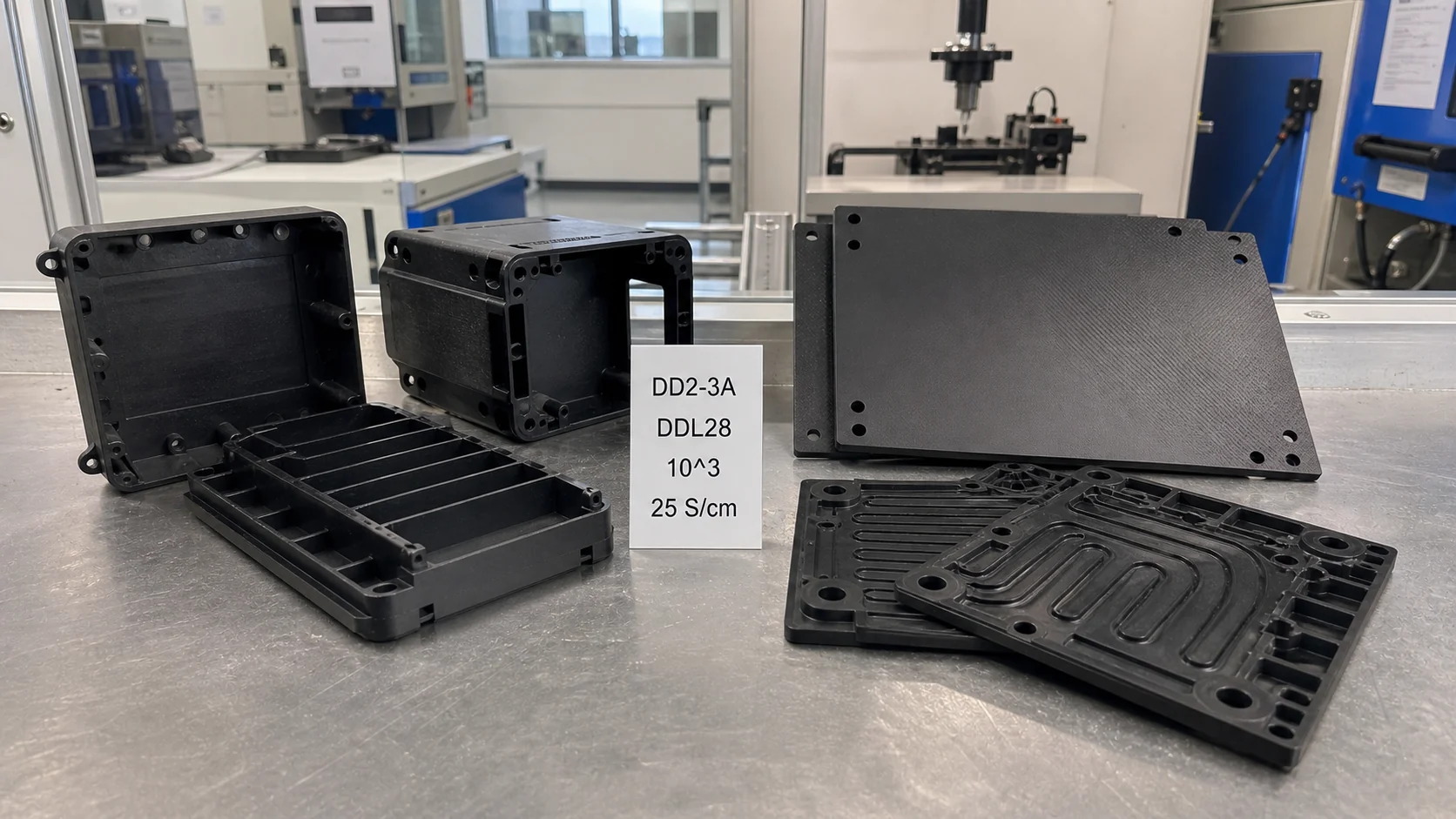
DDL28 and DD2-3A are both conductive PP grades, but they are not interchangeable. One is selected for bulk current conduction in sheets and bipolar plates; the other is selected for surface conductivity in injection-molded EMI and ESD parts.
Article FAQ
High-Conductive PP vs Conductive PP: Choosing DDL28 or DD2-3A by Current Path
Is DDL28 always better because it is more conductive?
No. DDL28 is better only when bulk current conduction is required. For injection-molded EMI or ESD housings, DD2-3A is usually more appropriate and more cost-effective.
Can DD2-3A be used for bipolar plates?
Not as a direct substitute. DD2-3A is a surface-conductive molded-part grade. Bipolar plates require bulk conductive plate validation, where DDL28 is the relevant route.
Why does the unit matter so much?
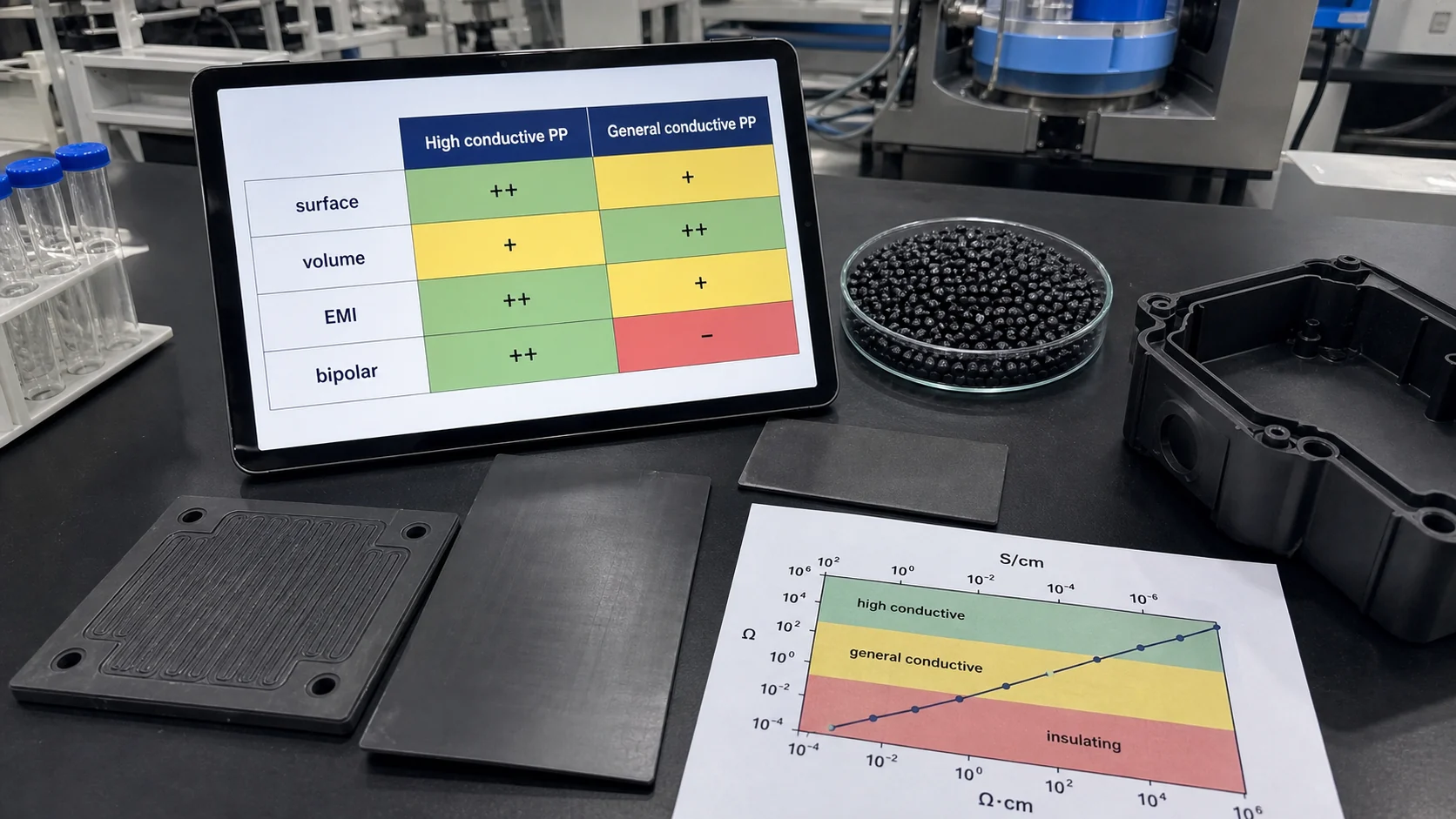
Ohm surface resistance, ohm volume resistance, ohm-centimeter resistivity and S/cm conductivity describe different electrical paths. A buyer should specify the exact standard and part test method.
Which product image is used in this article?
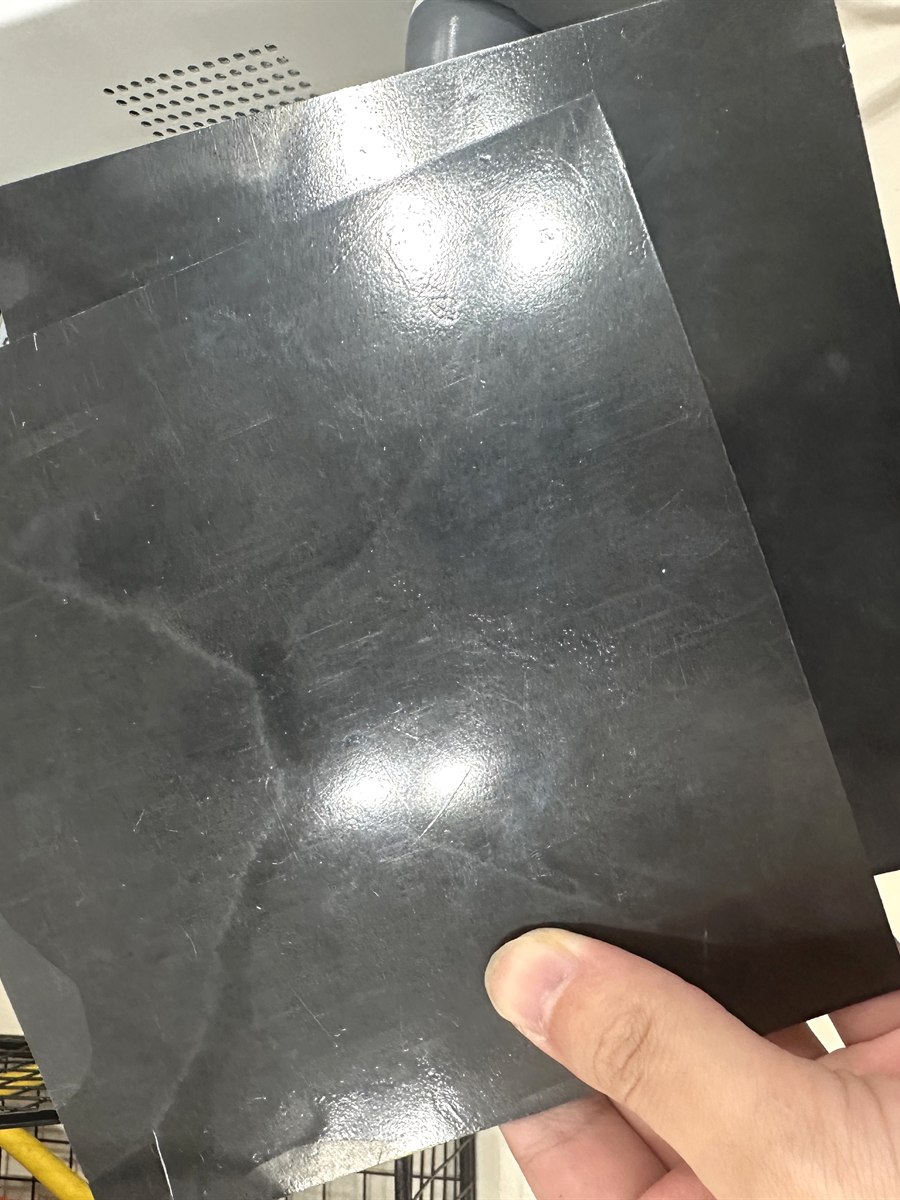
The product figure references an existing DGK-PP DDL28 sheet sample image from the site library. The image is not copied into the solution folder.
The Selection Problem
Standard PP is light, chemically resistant and economical, but its natural surface resistivity is commonly above 10^12 ohm. Conductive fillers change PP from an insulator into a material that can dissipate static charge, shield electromagnetic interference or conduct current.
The key is that these three functions do not require the same conductivity level. An EMI shielding enclosure normally needs a stable surface path. A bipolar plate or current collector needs current to travel through the bulk of the plate. This is why DGK-PP DD2-3A conductive PP and DGK-PP DDL28 high-conductive PP should be compared by function, not by asking which one is simply more conductive.
Over-specifying DDL28 for a normal shielding enclosure can add unnecessary material and processing cost. Under-specifying DD2-3A for a bipolar plate can create field failure because surface dissipation is not the same as bulk current conduction.
| Grade | Conductivity signal | Main application space |
|---|---|---|
| DGK-PP DD2-3A | Surface resistance 10^2-10^3 ohm | EMI shielding, ESD parts, electronic housings, injection-molded components |
| DGK-PP DDL28 | Conductivity 25-28 S/cm; volume resistance 0.4-0.5 ohm | Flow battery bipolar plates, conductive sheets, current-collecting plates, extrusion or open-roll processing |
Electrical Difference: Surface Resistance vs Bulk Conduction
DD2-3A is judged mainly by surface resistance. It gives a low-resistance path across the molded surface, which is useful for shielding covers, grounding clips, trays, sensor housings and electronic enclosures. The part can be injection molded with complex ribs, bosses and thin walls.
DDL28 is judged by bulk conductive behavior. Public DEYU data list conductivity at 25-28 S/cm and volume resistance at 0.4-0.5 ohm. This makes it relevant to sheets, bipolar plates and flow-channel plates where current must pass through the material body, not only along the skin.
| Electrical unit | What it describes | Typical grade link |
|---|---|---|
| Ohm / surface resistance | Charge movement along the molded surface | DD2-3A |
| Ohm / volume resistance | Resistance through a defined bulk sample or plate | DDL28 |
| S/cm conductivity | How readily the material body conducts current | DDL28 |
| Ohm-cm resistivity | Geometry-normalized volume resistance; only comparable when the test method is clear | Project-specific confirmation |
Product Data Comparison From Public DEYU Pages
| Parameter | DGK-PP DD2-3A | DGK-PP DDL28 | Selection meaning |
|---|---|---|---|
| Resistance / conductivity | Surface resistance 10^2-10^3 ohm | 25-28 S/cm; volume resistance 0.4-0.5 ohm | Surface dissipation and bulk conduction are different targets |
| Density | 0.99 g/cm3 | 1.4 g/cm3 | DDL28 carries much higher conductive filler content |
| Tensile strength | 23.1 MPa | 25 MPa | Both need part-level mechanical validation |
| Flexural data | Flexural modulus 3472 MPa | Flexural strength >30 MPa | Do not compare modulus and strength as the same item |
| Impact | Izod notched 112 J/m | Project confirmation required | DDL28 geometry is normally sheet/plate based |
| Processing | Injection molding | Extrusion / open-roll milling; sheet sample | Machine and mold route decide the grade choice |
| Typical product form | Pellets for molded parts | Pellets / sheet sample | DD2-3A is a molded-part grade; DDL28 is often validated as sheet or plate |
Processing Route and Geometry Fit
| Processing route | Best fit | Risk if mismatched |
|---|---|---|
| Injection molding | DD2-3A for complex housings, trays and clips | Using DDL28 may create high viscosity, gate wear or unnecessary cost |
| Extrusion | DDL28 for conductive sheets and profiles | DD2-3A may not deliver enough through-thickness conduction |
| Open-roll / sheet validation | DDL28 for bipolar plate development | DD2-3A surface data cannot replace bulk plate testing |
| Compression or plate forming | DDL28 when flow channels or plate contact resistance matter | A surface-resistance grade can fail current collection |
| Secondary machining or welding | DDL28 project-specific review | Conductive continuity after machining must be checked |
Application Fit and Wrong-Grade Cost
| Application | Recommended grade | Why |
|---|---|---|
| EMI shielding enclosure | DD2-3A | Surface resistance is the primary requirement and injection molding is practical |
| ESD tray or sensor housing | DD2-3A | Low surface resistance with PP moldability |
| Military or aerospace auxiliary enclosure | DD2-3A | Stable surface conductivity and molded-part toughness |
| Fuel cell or flow battery bipolar plate | DDL28 | Bulk conduction and plate geometry are required |
| Vanadium redox flow battery plate | DDL28 | Conductivity plus PP chemical resistance are both relevant |
| Current collection sheet | DDL28 | The current path passes through the sheet body |
| General low-resistance connector | DD2-3A or custom | Depends on contact design and surface path length |
Customer Validation Scenario
A contract manufacturer planned two product lines at the same time: an avionics shielding enclosure with target surface resistance below 10^4 ohm, and a lightweight bipolar plate with required bulk conduction for an energy stack. The initial purchasing idea was to simplify procurement with one conductive PP grade.
DEYU separated the two requirements. The shielding enclosure needed surface conductivity, molded geometry, ribs and screw features; DD2-3A was the logical route. The bipolar plate needed through-thickness and in-plane current transport across a flat plate, so DDL28 was selected for sheet and plate validation.
| Validation item | Avionics EMI enclosure | Energy-stack bipolar plate |
|---|---|---|
| Target electrical function | Surface dissipation / shielding | Bulk current conduction |
| Recommended grade | DGK-PP DD2-3A | DGK-PP DDL28 |
| Process | Injection molding | Extrusion / open-roll / plate forming |
| Key validation | Resistance map on molded part | Conductivity, volume resistance and plate contact behavior |
| Cost logic | Avoid over-specifying DDL28 | Avoid under-specifying DD2-3A |
Selection Framework
| Decision question | Choose DD2-3A when... | Choose DDL28 when... |
|---|---|---|
| Which resistance unit is specified? | Ohm / surface resistance | S/cm, volume resistance or plate current path |
| What is the part shape? | 3D molded enclosure, tray, clip or connector | Flat sheet, bipolar plate, flow-channel plate |
| What is the function? | ESD, grounding, EMI attenuation | Current collection, bipolar plate, battery electrode |
| What process is planned? | Injection molding | Extrusion, open-roll, sheet or plate forming |
| What is the cost target? | High-volume molded component cost | Performance-first energy component cost |
Buyer Information Checklist
- Resistance unit and test standard: surface resistance, volume resistance, resistivity or conductivity.
- Application type: EMI shielding, ESD, grounding, bipolar plate, electrode or current collector.
- Part drawing, wall thickness, plate thickness, flow-channel geometry and contact area.
- Processing route: injection molding, extrusion, open-roll milling, compression or secondary machining.
- Environmental exposure: temperature, acid electrolyte, humidity, vibration and cleaning.
- Production volume and whether the target is lowest cost or highest conductivity.
- Existing failure data, if one grade passed a lab coupon but failed on a production part.
Conclusion
DD2-3A and DDL28 answer different engineering questions. DD2-3A is a conductive PP for molded parts where surface resistance, EMI shielding and ESD control matter. DDL28 is a high-conductive PP route for sheets, bipolar plates and current-collection components where bulk conductive behavior matters. Correct selection starts from the resistance unit and current path, then confirms process compatibility and part-level validation.