
Flame-Retardant and Antistatic Plastics for Outdoor Use: From Technical Challenges to Engineering Implementation
Outdoor equipment materials must survive ultraviolet radiation, temperature cycling, rain and pollutants while retaining flame retardancy, static dissipation, mechanical strength and processing stability. This guide compares PP, ABS, PA and PC/ASA routes and explains which claims require molded-part, fire, weathering and system-level validation.
Buyer and engineer FAQ
Questions engineers often ask about this material route
Why are flame retardancy and antistatic performance difficult to combine?
Flame retardants, conductive fillers and antistatic phases can change each other's dispersion, thermal behavior and percolation network. Their combined loading can also reduce impact strength and narrow the processing window, so each formulation must be tested as a complete system.
Can standard antistatic ABS be used outdoors for years?
Not by default. Standard ABS needs project-specific UV stabilization and verification, and ASA, PC/ASA or UV-modified PC may be more suitable for continuous exposure. Service life cannot be claimed from resin name alone.
Which tests should an outdoor flame-retardant antistatic part pass?
At minimum, validate surface or volume resistance at defined points, UL 94 at actual thickness, UV and moisture aging, temperature cycling, impact after aging, dimensional stability and the relevant product-level electrical or enclosure standard.
Are the RRU, filter-cavity and rack values standard product guarantees?
No. They are project targets or case references. EMI shielding, dielectric loss, whole-rack load and long outdoor life depend on geometry, grounding, thickness, fasteners and test method and must be confirmed on the finished assembly.
Outdoor environments challenge plastics far more severely than indoor service. Ultraviolet radiation breaks polymer chains and can cause embrittlement, fading and chalking. Daily and seasonal temperature swings impose repeated expansion and contraction, while rain, salt spray and industrial pollutants accelerate chemical degradation. Flame retardancy and antistatic performance are already demanding modification targets on their own; combining them can sharply reduce mechanical retention and narrow the processing window.
1. Combined Requirements in Outdoor Applications
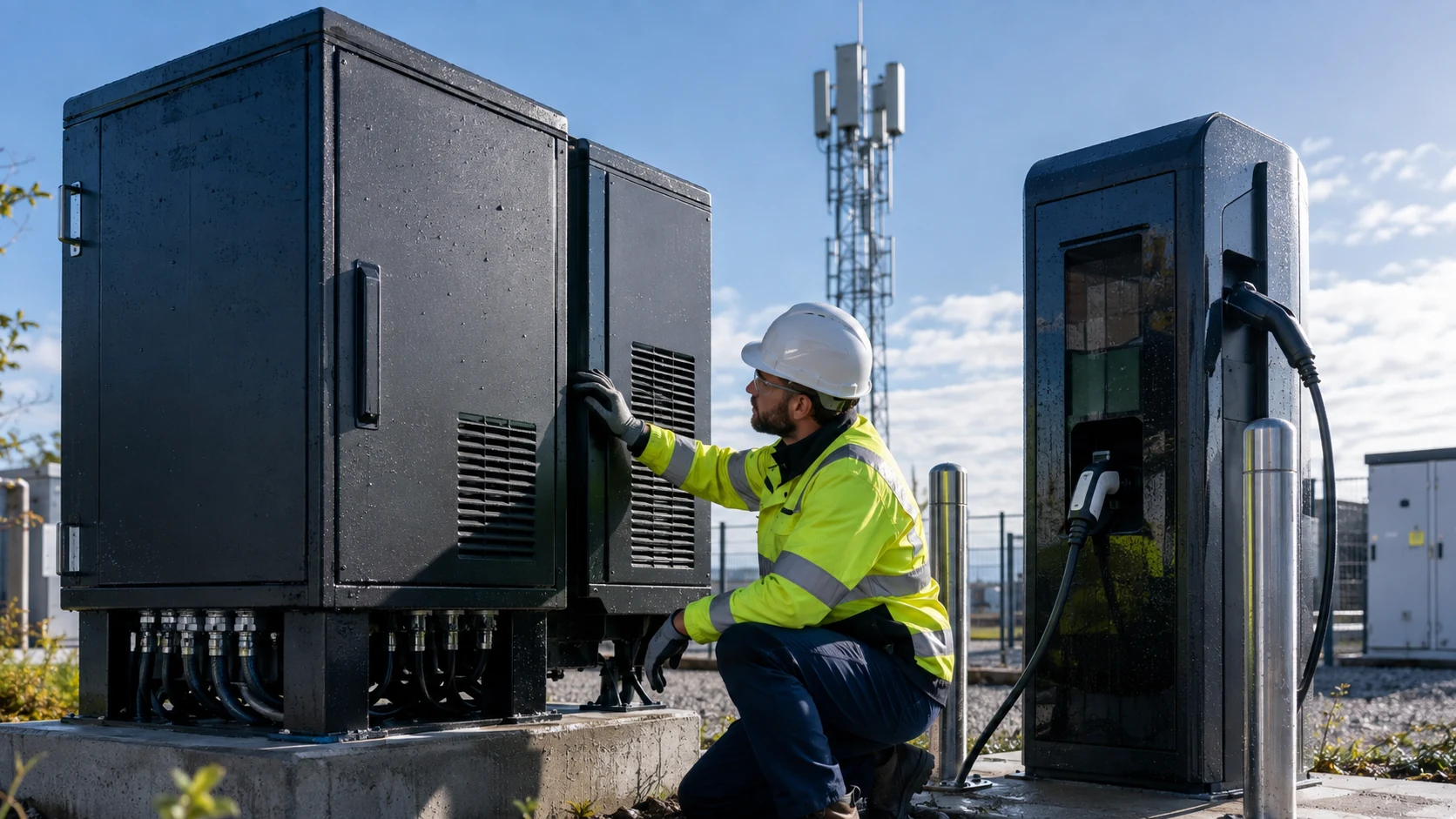
Outdoor communication equipment includes 5G remote radio unit housings and FTTH optical terminal enclosures. These projects may require UL 94 V-0, stable static dissipation, -40 C to 85 C temperature cycling and UV-aging resistance. Static control is one part of the enclosure design and must be coordinated with grounding, sealing, RF/EMI behavior and component protection rather than treated as a stand-alone guarantee against module damage.
New-energy equipment includes EV charging-pile housings and outdoor energy-storage enclosures, where flame behavior and static control must coexist with weathering and mechanical strength. Industrial and public applications include distribution boxes, LED-light housings and outdoor surveillance enclosures. In mining equipment and gas-pipeline protection, a static spark can become an ignition source, so conductivity, bonding and flame performance become safety-critical system requirements.
Different resin systems solve different parts of this combined requirement. The following sections compare their engineering roles without treating one formulation as universal.
2. Why Flame Retardancy and Antistatic Performance Can Conflict
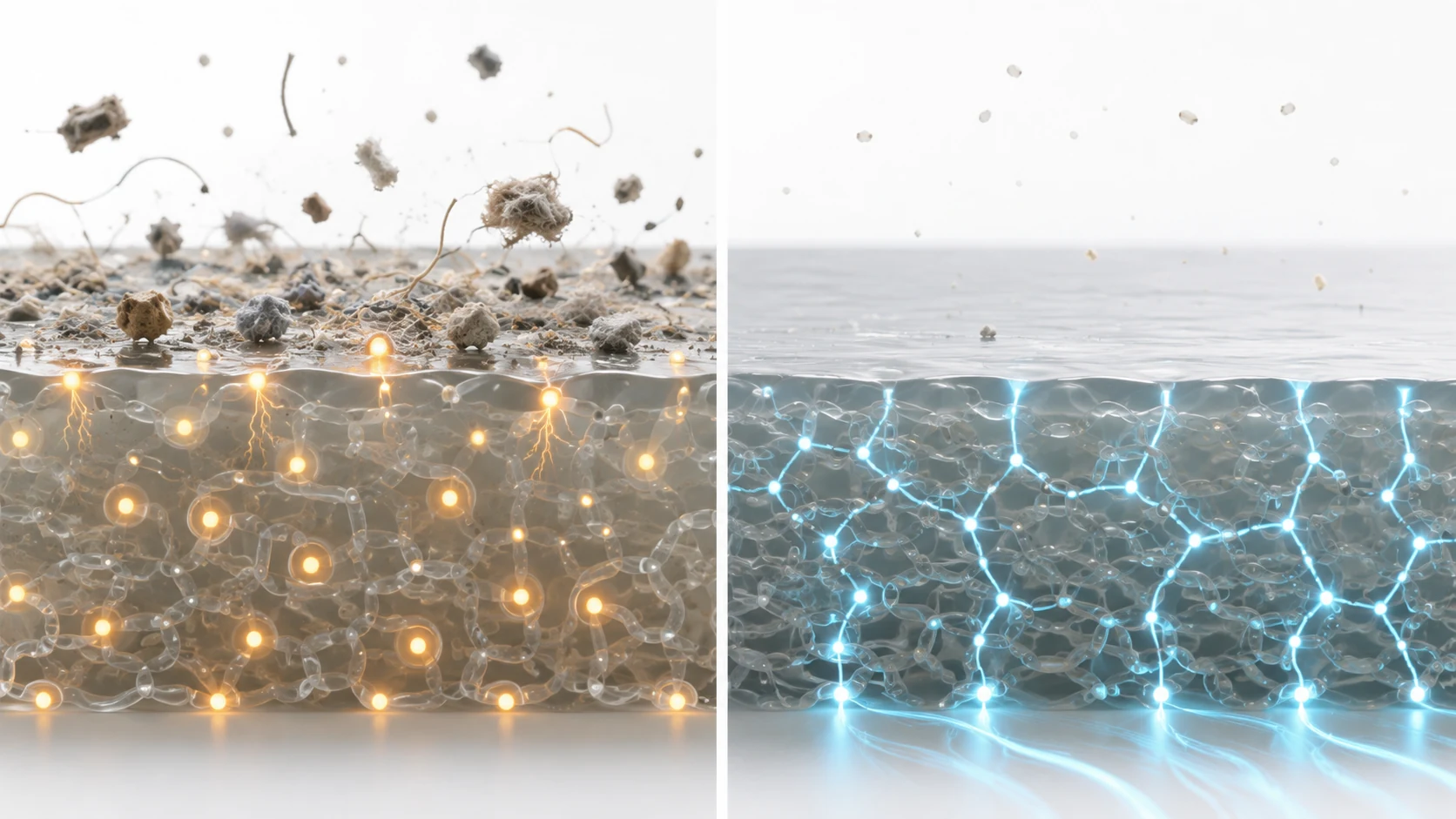
The first conflict is interaction between functional additives. Some antistatic chemistries can interfere with flame-retardant action or lower heat resistance. Simultaneous antistatic and flame-retardant modification of PC/ABS is especially demanding because several conventional antistatic agents are themselves combustible and can increase the burden on the flame-retardant package.
The second conflict is mechanical loss from combined loading. Flame retardants, conductive fillers and compatibilizers occupy volume and change interfacial adhesion. As total additive loading rises, notched impact, flexural strength and melt flow may decline. Data from one formulation cannot be transferred automatically to another resin, thickness or color.
The third challenge is outdoor durability. UV radiation and repeated humidity and temperature changes can accelerate migration, hydrolysis or decomposition. Migrating small-molecule antistatic agents are particularly vulnerable to extraction and surface depletion. Some flame-retardant systems also require careful moisture and hydrolysis validation.
DEYU's main technical direction is a polymeric permanent antistatic phase combined with toughening, flame-retardant and weathering packages. Anchoring the dissipation phase within the matrix reduces the blooming and short service life associated with migrating additives, but UV and flame results still require grade- and part-specific verification.
3. PP Route: Balancing Low Weight and Cost
Polypropylene has a density of about 0.90-0.91 g/cm3 and offers chemical resistance and convenient processing. It is also readily combustible, with an oxygen index often around 17-18%. A V-0 target therefore needs a substantial flame-retardant package, while conductive performance requires a network-forming phase. Combining the two can reduce toughness and flow.
DGK-PP DD4-5FR-JC is a DEYU project direction intended to balance conductivity and flame retardancy in PP for extrusion and injection molding. Project data targets 10^4-10^5 ohm surface resistance and UL 94 V-0 at the agreed specimen thickness. The closest published website product is DGK-PP DD4-5A-JC; because the FR suffix is not a separate public product page, purchasers should obtain the current project TDS and verify resistance, UL 94 thickness, impact and UV exposure on production samples.
Good dispersion supports a flatter extruded sheet and reduces bloom or frost. Potential components include conductive flame-retardant sheet, housings and protection parts for distribution boxes, charging equipment away from continuous direct exposure and industrial safety equipment. A general PP service window of roughly -20 C to 100 C is only a material-direction reference. UV stabilization, pigment, wall thickness and outdoor life must be specified for the actual project.
4. ABS Route: Balanced Appearance and Mechanical Performance
ABS offers good surface quality, impact behavior and moldability, but simultaneous flame-retardant and antistatic modification can reduce toughness. DGK-ABS KJD789F is described as a project-grade route using toughening and flame-retardant coordination, with target surface resistance of 10^7-10^9 ohm/sq, UL 94 V-0, 89 C heat-deflection temperature and 1.05 g/cm3 density. The polymeric antistatic phase is intended to avoid migration and blooming.
Application directions include IC trays, PCB storage boxes, chip containers and cleanroom housings; internal printer and appliance parts; antistatic bins and fixtures; and communication or automotive-electronic structures. KJD789F currently has no dedicated public product page, so these values must be confirmed against the latest TDS and molded sample.
Standard ABS should not be assumed suitable for long-term direct outdoor exposure. A project requiring years of sun exposure needs a verified UV-stabilized ABS package or a switch to ASA, PC/ASA or another weatherable resin. A statement such as five to ten years of UV life is meaningful only when exposure standard, location, color, thickness and acceptance limits are defined.
5. PA Route: Structural Strength and Higher Temperature
Polyamide is valuable where outdoor parts need higher strength, wear resistance and thermal stability. DGK-PA6 KJD678R is an antistatic PA6 project direction described around 10^6-10^8 ohm surface resistance. DEYU also uses the DGK-PADD67 project designation for an antistatic PA6/PA66 direction balancing structure, heat resistance and static dissipation. Neither name should be treated as a current public catalogue product without the latest project TDS.
The following DGK-PADD67 values are project test references rather than universal catalogue guarantees:
| Property | DGK-PADD67 project value | Typical project requirement |
|---|---|---|
| Surface resistance | 5 x 10^6-8 x 10^7 ohm | 10^6-10^9 ohm |
| Tensile strength | 75-85 MPa | >=60 MPa |
| Heat-deflection temperature, 1.82 MPa | 185 C | >=170 C |
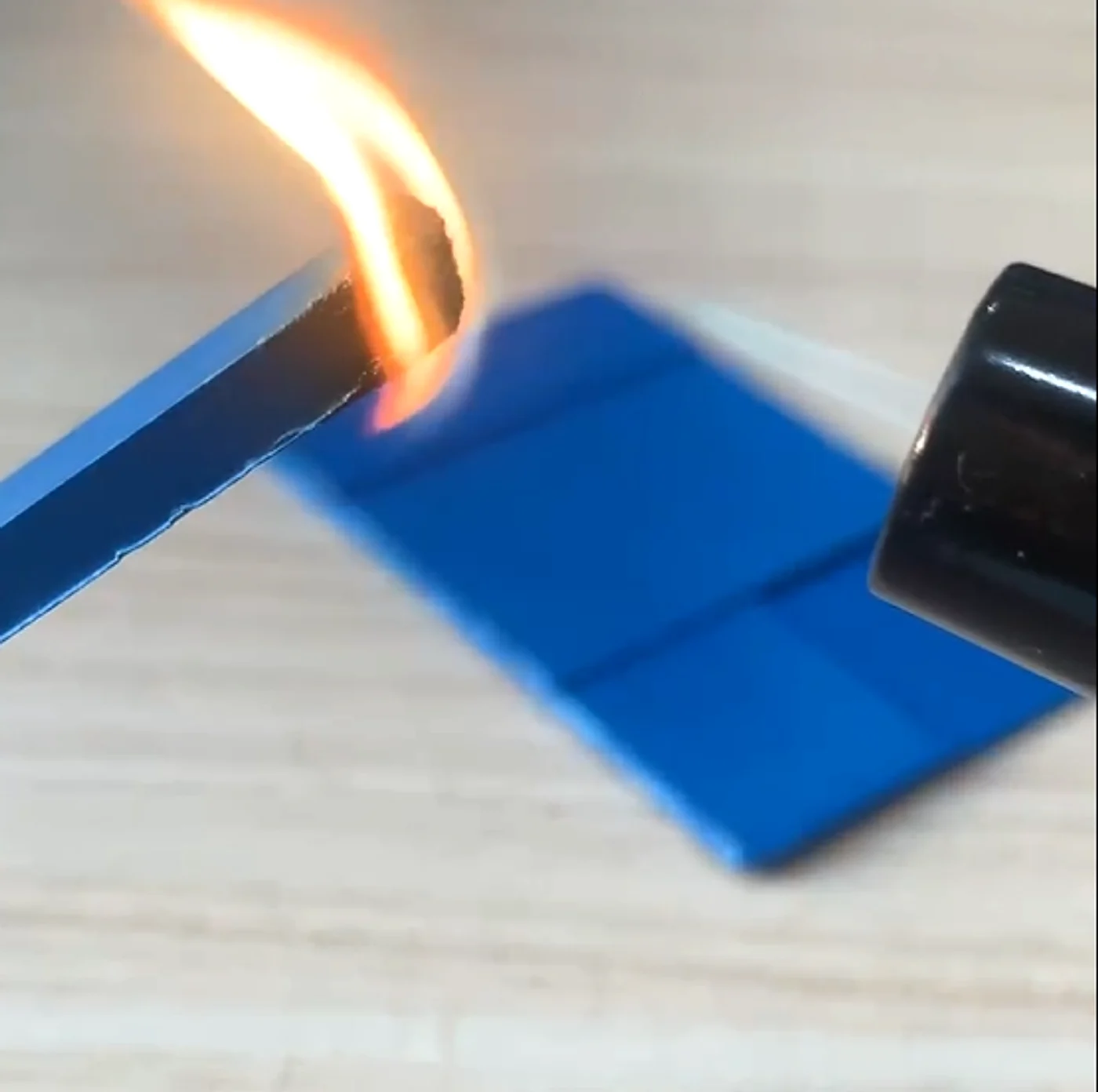
| UL 94 rating | V-0 at 1.6 mm | V-0 or V-2 |
| Electrolyte exposure, 85 C for 7 days | Mass change <0.5% | <1% |
The permanent polymer-alloy route integrates the dissipation phase into the nylon matrix. A referenced -40 C to 85 C thermal-cycle program showed resistance variation below 0.5 order of magnitude. This result remains conditional on conditioning, moisture content, electrode method and molded geometry.
A project application placed this material direction in an EV battery-pack frame and high-voltage connector protection, targeting about 30% mass reduction versus a metal reference and static control during assembly and transport. These are component-program results, not a blanket replacement claim. Structural load, creep, crash, electrical clearance and electrolyte compatibility must be approved on the complete part.
6. PC, PC/ASA and Specialty Routes for Long Outdoor Exposure
For continuous sunlight and rain, ASA, PC/ASA and UV-stabilized PC are generally more appropriate starting points than standard ABS. DEYU's PC conductive, antistatic, flame-retardant and carbon-fiber-reinforced directions are developed for high strength and dimensional stability. A transparent PC project direction has been referenced at 85-88% light transmission at 3 mm and 10^8-10^9 ohm/sq; optical, resistance and flame results must be validated together at the production thickness.
For higher structural requirements, a PA66 carbon-fiber-reinforced flame-retardant project called TQW25 has been described with 25% carbon fiber, V-0 and 10^4-10^5 ohm surface resistance. Intended directions include communication-equipment covers, battery frames and high-strength mining components. TQW25 has no public product page; the published DGK-PA6 KJD789R-G30F page is the closest verified website reference for a flame-retardant antistatic reinforced nylon route.
DEYU can also customize UV-stabilized PP and other resins while combining reinforcement, flame retardancy, thermal conductivity or static control. Outdoor lifetime is a design target, not a fixed property. It depends on UV dose, climate, pigment, stabilizer package, section thickness and the agreed color, gloss and impact-retention limits.
7. Project Cases: From Laboratory Targets to Outdoor Assemblies
Case 1: 5G RRU Housing
A distributed 5G RRU housing program sought lower mass than aluminum while targeting permanent static dissipation, UL 94 V-0 and more than 50% component mass reduction. The proposed direction used a graphene-modified conductive PC/ABS alloy with a halogen-free flame-retardant package intended to meet RoHS and REACH material restrictions.
This is a project-development direction rather than a standard grade guarantee. A radio housing must also be validated for shielding and grounding, thermal management, sealing, fastener retention, UV exposure, dimensional stability and RF performance. Mass reduction must be measured against the actual aluminum assembly and equivalent structural duty.
Case 2: Massive-MIMO Filter Cavity and Cover
A macro-base-station filter program specified project targets including at least 80 dB EMI shielding, 10^4-10^6 ohm surface resistance, halogen-free V-0, dielectric constant no more than 3.0, dielectric loss no more than 0.005, -40 C to 85 C cycling, salt spray and UV resistance. A customized CNT-reinforced PPS route with weathering additives was proposed.
These targets must not be inferred from filler name or bulk resistance alone. A highly connected conductive network can conflict with low dielectric loss, and filter-cavity RF behavior depends strongly on geometry, plating or conductive layers, joints and grounding. EMI, dielectric and RF acceptance therefore requires the same finished component and frequency range used by the customer.
Case 3: Antistatic Server-Rack Rails and Brackets
A data-center rack-component project required 10^6-10^9 ohm static dissipation and at least 4000 MPa flexural modulus. The material direction was a 20% carbon-fiber-reinforced PA66 dissipative compound, with a project thermal-conductivity reference of 0.8 W/(m K) to assist local heat spreading.
The stated rack load of at least 800 kg is a whole-rack operating condition, not a claim that one plastic rail or bracket carries the full load. The load path, metal interfaces, fasteners, creep, fatigue, fire behavior and elevated-temperature deformation must be validated at assembly level.
Case 4: Conductive Gas-Pipeline Protection Sleeve
DGK-PE DD4JC is a project-grade direction for a conductive protection sleeve around gas-pipeline systems, intended to dissipate charge while working with a 3PE corrosion-protection system. It has been referenced in a gas-group project. Because there is no dedicated public product page, conductivity, environmental stress-crack resistance, joining, burial environment and bonding design must be confirmed through the current project specification.
8. DEYU Technical Scope and Source Verification
Yuyao DEYU Plastic Technology Co., Ltd. develops conductive and antistatic compounds across ABS, PP, PE, PC, PA6, PA66, POM and PBT, with additional work in PPS, PEEK, PMMA, TPE, TPR, TPU, HIPS, HDPE and LDPE. Functional directions include conductivity, static dissipation, wear resistance, flame retardancy, light blocking, UV resistance and carbon- or glass-fiber reinforcement.
The development platform ranges from carbon black and carbon nanotubes to polymeric permanent antistatic phases and multifunction combinations such as conductive plus flame-retardant or antistatic plus wear-resistant. Engineers convert installation environment, mechanical duty and safety requirements into measurable material and part specifications before sampling.
The company is located at No. 83 Shunyu Road, Yangming Industrial Park, Yuyao, Zhejiang, China, and supports formulation customization, sample trials and production-scale validation. Public product pages are linked only where an exact or close published grade exists; other names in this article remain project directions requiring current documentation.
9. Quick Selection and Engineering Notes
| Outdoor application | Recommended direction | Resistance target | Flame target | Engineering note |
|---|---|---|---|---|
| Distribution box or charging housing away from continuous direct sun | DGK-PP DD4-5FR-JC project direction | 10^4-10^5 ohm | V-0 at agreed thickness | Lightweight; extrusion/injection; verify UV and impact |
| Outdoor electronic housing or communication structure | DGK-ABS KJD789F project direction | 10^7-10^9 ohm | V-0 | 89 C HDT reference; not for unverified long direct exposure |
| RRU or optical-module housing | Conductive PC/ABS project compound | 10^7-10^8 ohm target | V-0 target | Validate EMI, grounding, heat, weathering and mass reduction |
| 5G filter cavity or other RF-intensive component | CNT-reinforced PPS project compound | 10^4-10^6 ohm target | V-0 target | EMI and dielectric targets require component-level RF testing |
| Continuous outdoor exposure | UV-modified ASA, PC/ASA, PC or PP | Customized | Customized | Life depends on exposure standard, color, thickness and retention limits |
| High-strength outdoor battery structure | DGK-PADD67 PA6/PA66 project direction | 5 x 10^6-8 x 10^7 ohm | V-0 at 1.6 mm project value | 75-85 MPa tensile and 185 C HDT project references |
| Gas-pipeline or explosion-risk protection | DGK-PE DD4JC project direction | Conductive grade | Project-specific | Coordinate corrosion layer, bonding, grounding and installation standard |
10. Summary
Selecting an outdoor flame-retardant antistatic plastic means balancing five coupled dimensions: flame performance, static control, weathering, mechanical retention and cost. PP leads in weight and cost, ABS balances appearance and processing, PA supports high strength and temperature, and ASA or PC-based systems are stronger starting points for long direct exposure.
DEYU's material matrix spans PP conductive flame-retardant project directions, ABS dissipative V-0 projects, reinforced antistatic nylon, PC/ABS and CNT-PPS developments. The correct route begins by defining sunlight exposure, temperature range, salt or moisture, resistance target, UL 94 thickness, load and impact duty. It then moves through current TDS review, sample molding, aging, electrical and fire testing, and finally assembly-level validation.
No single resin name or laboratory coupon can guarantee outdoor service. A reliable engineering release connects material formulation, molded geometry, process history, grounding and enclosure design to the actual acceptance standard.