UV Absorber and HALS Systems in Weather-Resistant Plastic Compounds
When a polymer is exposed to sunlight, ultraviolet radiation triggers a cascade of chemical reactions that progressively destroy its molecular structure. The visible consequences—fading, yellowing, chalking, embrittlement, cracking—are familiar to anyone who has seen outdoor plastic parts fail.
Buyer and engineer FAQ
Questions engineers often ask about this material route
Where can ABS with a UV-resistant plastic requirement be used?
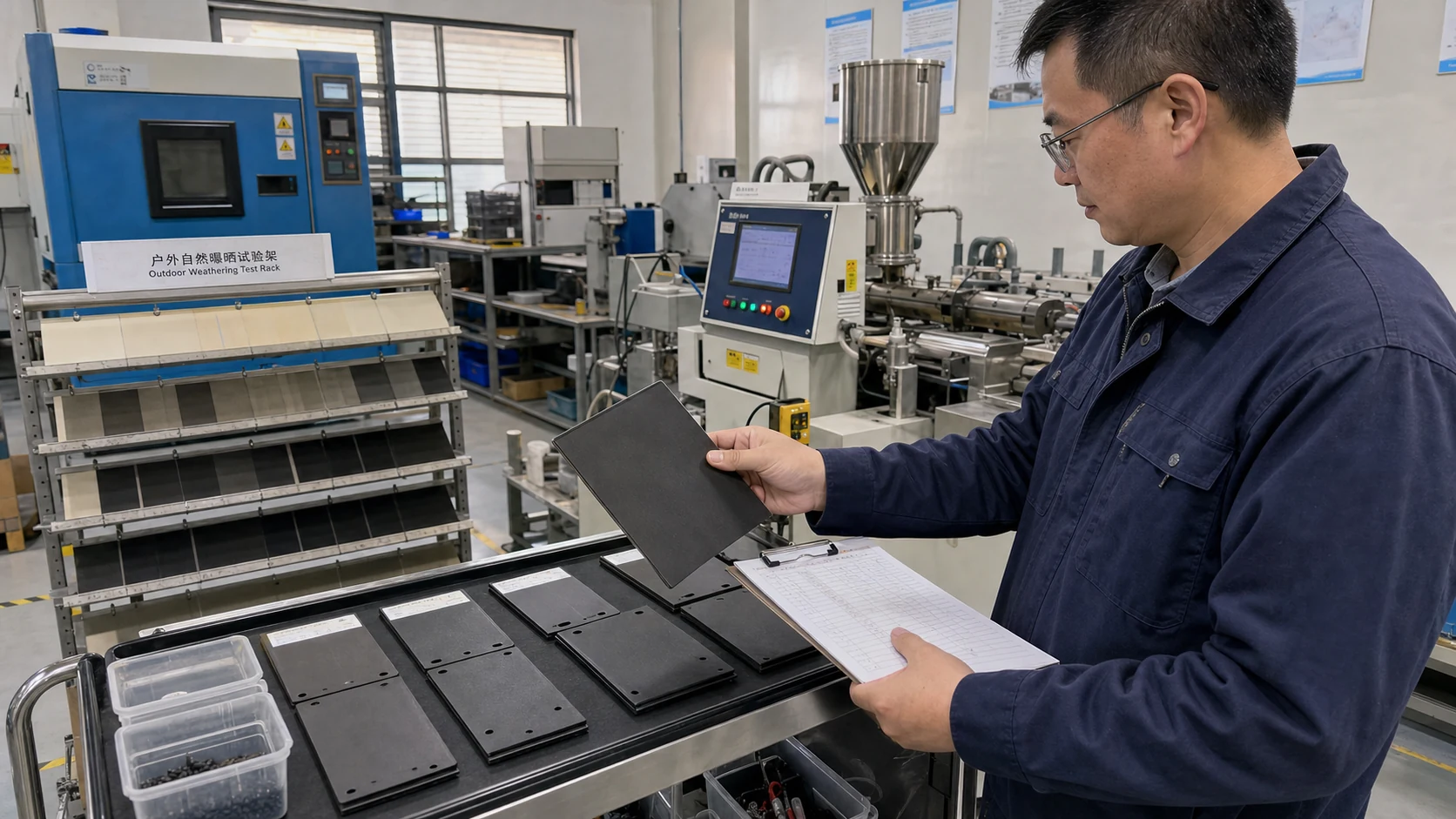
Typical fields include outdoor clips, covers, housings, liners, sheets, equipment shells and exposed appearance parts. For this article, DEYU would first confirm the working environment, wall thickness, expected lifetime and whether DGK-ABS R165UV UV-resistant ABS, DGK-ASA FR801UV weather-resistant ASA matches the part geometry or needs formulation adjustment.
What are the main performance indicators for the "UV-resistant plastic" target on ABS?
Focus on color change, gloss retention, tensile retention, impact retention and weathering hours. Buyers should ask for data on molded parts, not only pellet data, because gate position, filler orientation and thickness can change the final value.
What should engineers watch during injection molding or processing?
For ABS, a practical starting window is 210-245°C melt / 50-80°C mold. Avoid overheating pigments or HALS systems, use stable black or color packages and validate outdoor aging. Final parameters should follow part thickness, gate design and the actual machine.
What details help DEYU recommend DGK-ABS R165UV UV-resistant ABS, DGK-ASA FR801UV weather-resistant ASA more accurately?
Send the current resin or grade, drawing or photo, wall thickness, annual quantity, target standard, failure mode and required color. If a reference grade already passed one test but failed in production, include both data sets.
For a precise recommendation, share the part drawing, base resin, target performance, processing method and test standard with DEYU.
Background / Problem
When a polymer is exposed to sunlight, ultraviolet radiation triggers a cascade of chemical reactions that progressively destroy its molecular structure. The visible consequences—fading, yellowing, chalking, embrittlement, cracking—are familiar to anyone who has seen outdoor plastic parts fail.
Related DEYU plastics material references for this selection topic: DGK-ABS R165UV UV-resistant ABS and DGK-ASA FR801UV weather-resistant ASA.
To prevent this degradation, formulators turn to light stabilizers. Two principal technologies dominate the field: UV absorbers (UVA) and hindered amine light stabilizers (HALS) . While both protect polymers from UV damage, they work through fundamentally different mechanisms. UV absorbers act as a shield, intercepting harmful radiation before it reaches the polymer. HALS act as a repair crew, neutralizing the reactive radicals that form when degradation begins.
Used individually, each provides valuable protection. Used together, they create a synergistic effect—a two-pronged defense that outperforms either component alone. This combination has become the industry standard for demanding outdoor applications across polyolefins, styrenics, engineering plastics, and coatings.
This article explains:
How UV absorbers and HALS work—individually and together
The key differences between the two technologies
The synergistic effect: why combinations outperform single additives
Practical formulation guidelines and loading recommendations
Validation data comparing UVA-only, HALS-only, and combined systems
Technical Difficulty / Why It Happens
The UV Degradation Cascade
Understanding how stabilizers work requires understanding what they are fighting. When high-energy UV photons strike a polymer, they break chemical bonds within the backbone. The resulting fragments react immediately with ambient oxygen, generating free radicals—unstable molecules that propagate a chain reaction of degradation.
This degradation cascade, known as photo-oxidation, manifests in three primary ways:
| Degradation Effect | Mechanism | Visible Result |
|---|---|---|
| Color Change | Chromophore formation (carbonyl groups, conjugated double bonds); pigment destruction | Yellowing, fading, discoloration |
| Mechanical Loss | Chain scission reduces molecular weight; crosslinking increases brittleness | Embrittlement, cracking, loss of impact strength |
| Surface Degradation | Photo-oxidation erodes the surface layer | Chalking, loss of gloss, surface roughness |
UV Absorbers: The First Line of Defense
Mechanism of Action
UV absorbers are additives that protect polymers by absorbing harmful ultraviolet radiation and converting it into harmless heat energy. They act before UV damage can begin—like a sunscreen for plastics.
The mechanism unfolds as follows:
Absorption: The UVA molecule absorbs UV photons in the 290—00 nm range
Excitation: The molecule enters an excited electronic state
Energy dissipation: Through non-radiative transitions, the absorbed energy is released as low-grade heat
Regeneration: The molecule returns to its ground state, ready to absorb again
This process depends on the molecule's ability to undergo non-radiative relaxation, preventing the polymer backbone from undergoing photolysis or oxidation.
Key Chemical Families
| UVA Class | Structure | Absorption Range | Key Characteristics |
|---|---|---|---|
| Benzotriazoles | Phenol-substituted benzotriazole | 270—00 nm | Broad absorption; high photostability; most widely used |
| Benzophenones | Dihydroxybenzophenone derivatives | 260—50 nm | Broad-spectrum absorption; can yellow over time |
| Hydroxyphenyltriazines (HPT) | Triazine-based structures | 280—80 nm | High thermal stability; low volatility; excellent for high-temperature processing |
Benzotriazoles are the most common class. They offer broad UV absorption, high photostability, and compatibility with a wide range of polymers. Commercial examples include Tinuvin P, Tinuvin 326, and Tinuvin 234. UV-234, for example, has a broad absorption spectrum in the 300—80 nm range, covering most damaging UV-B and UV-A wavelengths. Recommended loading levels typically range from 0.1% to 1.0% by weight.
Limitations of UV Absorbers Alone:
They do not scavenge free radicals—once degradation begins, UVAs cannot stop it
They are consumed over time and can migrate or volatilize, especially at elevated temperatures
They provide limited protection for thick sections where UV penetration is restricted
Some types (e.g., benzophenones) can undergo photodegradation themselves
HALS: The Radical Scavenger
Mechanism of Action
HALS do not absorb UV radiation. Instead, they work by radical scavenging—interrupting the chain reactions caused by photo-oxidation.
The mechanism involves a catalytic cycle:
Radical generation: UV exposure creates free radicals (R·, ROO·) in the polymer
Radical capture: The hindered amine group captures these radicals
Nitroxide formation: The amine is oxidized to a stable nitroxyl radical (NOR·)
Regeneration: The nitroxyl radical reacts with additional radicals, regenerating the active species
This regenerative property is HALS' defining advantage—they are non-consumptive catalysts. A single HALS molecule can neutralize thousands of radicals over its lifetime, providing long-lasting protection even at low concentrations.
Key HALS Families
| HALS Type | Structure | Key Characteristics |
|---|---|---|
| Low molecular weight (e.g., Tinuvin 770) | Bis(2,2,6,6-tetramethylpiperidinyl) sebacate | Good for thin sections; higher volatility |
| High molecular weight (e.g., Chimassorb 944) | Polymeric HALS | Low volatility; excellent extraction resistance; suitable for films and fibers |
| N-R vs N-H types | Alkyl-substituted vs H-substituted | N-H types often show better weatherability in PVC |
Limitations of HALS Alone:
They do not absorb UV—they cannot prevent initial photon damage
They can interact with acidic compounds (acidic environments, certain pigments, acidic byproducts), reducing effectiveness
Some HALS types can contribute to initial color (yellowness) in certain formulations
Effectiveness depends on oxygen availability—less effective in anaerobic conditions
The Synergistic Effect: Why UVA + HALS > UVA + HALS
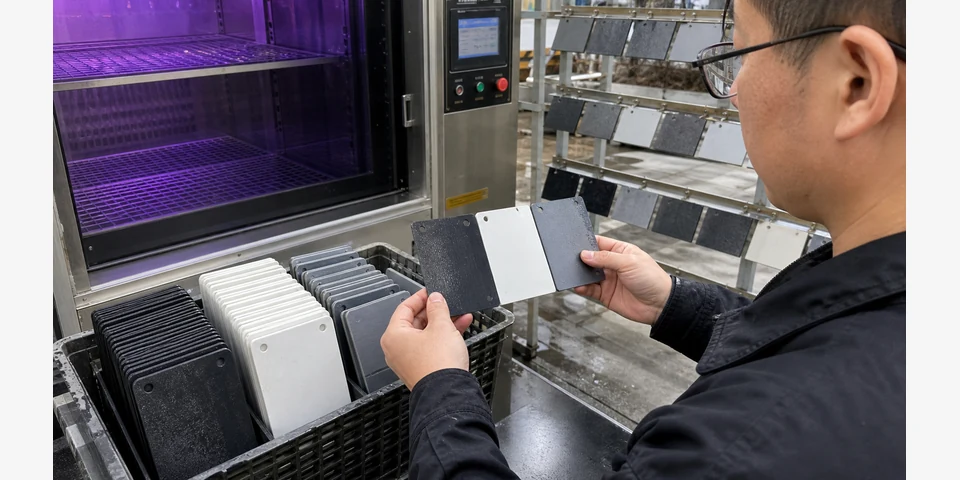
The combination of a UV absorber and a HALS dramatically outperforms either component alone. This is not merely additive—it is synergistic, meaning the combined effect is greater than the sum of the individual effects.
How Synergy Works:
| Defense Layer | Component | Function |
|---|---|---|
| First line | UV Absorber | Intercepts UV photons, reduces initial damage |
| Second line | HALS | Scavenges radicals that escape despite the UVA |
| Result | Combined | No single point of failure; comprehensive protection |
The synergy arises because the two stabilizers operate at different stages of the degradation pathway:
The UV absorber acts first, reducing the UV dose reaching the polymer and preventing the formation of free radicals
The HALS acts second, neutralizing radicals that form despite the UV absorber's efforts
Quantified Synergy:
Research has demonstrated the magnitude of this effect:
In polypropylene and HDPE, high levels of synergism were observed. The optimal UVA:HALS ratio was approximately 25:75 for maximum efficiency.
In ABS resin, synergism was also high, with an optimal ratio of approximately 10:90.
In polystyrene, a moderate synergistic effect was observed, with an optimal ratio of approximately 20:80.
A polypropylene film stabilized with UV-234 alone may last 3 years outdoors; the same film with both UV-234 and HALS could last over 10 years.
In PVC, the addition of a benzotriazole UV absorber to a N-H type HALS produced a significant synergistic effect, with the best weatherability and 100% mechanical property retention.
The Photostabilization Hierarchy
Understanding where each technology fits in the overall stabilization strategy:
| Stabilizer Type | Role | When to Use |
|---|---|---|
| UV Absorber | Prevents photoinitiation | Essential for colored parts; critical for thin sections; protects pigments |
| HALS | Prevents radical propagation | Essential for long-term durability; critical for thick sections; protects mechanical properties |
| Antioxidants | Prevents thermal oxidation | Essential for high-temperature processing and service; complements UV protection |
| Combined system | Full-spectrum protection | Required for demanding outdoor applications >3 years |
DEYU Material Direction
DEYU typically evaluates and recommends UV stabilizer systems based on the specific performance priorities of each application. The approach is not "more is better"—it is balanced optimization of UVA and HALS types and loadings.
DEYU plastics' Stabilizer Selection Framework
| Application Priority | Primary Stabilizer | Secondary Stabilizer | Rationale |
|---|---|---|---|
| Color Stability | UV Absorber (high loading) | Low-color HALS | UVA intercepts UV before it reaches pigments |
| Impact/Mechanical Retention | HALS (high molecular weight) | UV Absorber | HALS prevents chain scission |
| Long-Term Durability (>5 years) | HALS (regenerative type) | UV Absorber + Antioxidant | HALS provides sustained protection |
| High-Temperature Processing | HPT UV Absorber | HALS | HPT UVA resists thermal degradation during processing |
| Balanced Performance | HALS + UVA synergistic blend | Antioxidant | Two-pronged defense maximizes all attributes |
| Acidic Environments | Acid-resistant HALS | UV Absorber + Acid Scavenger | Prevents HALS-acid interaction |
DEYU plastics' Recommended Loading Guidelines by Polymer
| Polymer | UVA Type | UVA Loading | HALS Type | HALS Loading | Total Stabilizer Package |
|---|---|---|---|---|---|
| PP | Benzotriazole | 0.2—.3% | High MW HALS | 0.4—.6% | HALS + UVA + AO |
| PE | Benzotriazole or HPT | 0.15—.25% | High MW HALS | 0.3—.5% | HALS + UVA + AO |
| ABS | Benzotriazole | 0.3—.5% | Low-color HALS | 0.3—.5% | High UVA + HALS + AO |
| PC | Benzotriazole | 0.25—.35% | Low-color HALS | 0.3—.5% | UVA + HALS + Hydrolysis |
| ASA | Optional | 0—.2% | Low-color HALS (optional) | 0—.3% | Inherent UV stability |
| PA6/PA66 | Benzotriazole | 0.2—.3% | HALS + Heat Stabilizer | 0.3—.5% | HALS + UVA + Heat + Hydrolysis |
Formulation Optimization Principles
1. HALS Type Selection
Choose HALS based on:
Molecular weight: High MW for low volatility (films, thin sections); low MW for faster migration (thick sections)
Chemical structure: N-H type for PVC and acidic environments; N-R type for polyolefins
Color sensitivity: Low-color HALS for light-colored or transparent parts
Compatibility: Ensure compatibility with the polymer and other additives
2. UVA Type Selection
Choose UVA based on:
Absorption spectrum: Match to the UV exposure profile of the application
Thermal stability: HPT types for high-temperature processing
Volatility: High MW types for low volatility
Color impact: Some UVAs (e.g., benzophenones) can contribute to yellowing
3. Ratio Optimization
The optimal UVA:HALS ratio varies by polymer:
PP, HDPE: ~25:75 (UVA:HALS) for maximum synergy
ABS: ~10:90 for maximum synergy
PS: ~20:80 for moderate synergy
DEYU can support stabilizer system selection by providing technical datasheets, small-batch validation quantities, processing guidance, and formulation recommendations based on specific application requirements and environmental conditions.
Reference Product Data
Comparison of Stabilizer Approaches in Polypropylene
The table below compares the performance of different stabilizer approaches in a typical polypropylene system.
| Property | Unstabilized PP | UVA Only (0.3%) | HALS Only (0.5%) | UVA + HALS (synergistic) |
|---|---|---|---|---|
| Base Resin | Polypropylene | Polypropylene | Polypropylene | Polypropylene |
| Stabilizer Type | None | Benzotriazole UVA | HALS (high MW) | Benzotriazole + HALS |
| Processing Method | Injection molding | Injection molding | Injection molding | Injection molding |
| Initial Color (Yellowness Index) | 2.5 | 3.5 | 4.0 | 3.8 |
| Color Change (ΔE) after 2000h QUV | 12.5 | 2.8 | 4.5 | 1.8 |
| Impact Retention after 2000h QUV | <30% | 65% | 88% | 94% |
| Tensile Retention after 2000h QUV | <35% | 70% | 85% | 92% |
| Gloss Retention after 2000h QUV | <20% | 75% | 80% | 88% |
| Surface Cracking (2000h QUV) | Severe | Minor | None | None |
| Estimated Service Life (moderate climate) | <1 year | 3— years | 5— years | 7—0 years |
| Cost Index | 1.0x | 1.1x | 1.15x | 1.25x |
Key observations:
The synergistic UVA+HALS system delivers the best overall performance across all metrics
UVA-only provides good color protection but limited mechanical retention
HALS-only provides excellent mechanical retention but moderate color protection
The combined system extends service life by 2—× compared to either additive alone
UV Absorber and HALS Product Reference Data
| Product | Type | Chemical Family | Key Applications | Typical Loading |
|---|---|---|---|---|
| Tinuvin P | UVA | Benzotriazole | General purpose; good for many resins | 0.1—.5% |
| Tinuvin 326 | UVA | Benzotriazole | Polyolefins, polyesters, coatings | 0.2—.5% |
| Tinuvin 234 | UVA | Benzotriazole | Broad spectrum; 300—80 nm absorption | 0.1—.0% |
| Tinuvin 770 | HALS | Low MW piperidine | Polyolefins, polyurethanes | 0.1—.5% |
| Chimassorb 944 | HALS | High MW polymeric | Films, fibers, thick sections | 0.1—.5% |
| UV-P | UVA | Benzotriazole | PVC, PP, PC, PMMA, ABS; 270—80nm | 0.05—.5% |
Data source: Industry-standard product datasheets; values are representative and may vary by specific grade and application.
Customer Debugging / Validation Scenario
Scenario: Outdoor Automotive Trim —Color Fading and Impact Loss
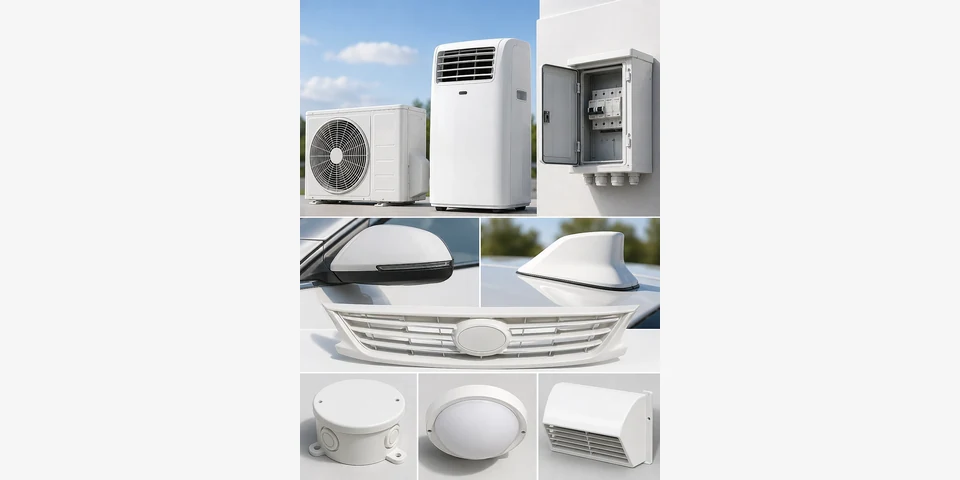
Customer Profile: An automotive tier-1 supplier producing injection-molded exterior trim components (mirror housings, grille surrounds) for a major OEM.
Initial Problem: The customer was using a UV-stabilized ABS compound with a single benzotriazole UV absorber at 0.3% loading, without HALS. After 12—8 months of field exposure, the parts showed:
Color fading: ΔE > 4.5 from the original dark gray, exceeding the OEM's 3.0 limit
Impact loss: Notched impact strength dropped 45% from original values
Surface degradation: Visible chalking and loss of gloss on south-facing surfaces
Root Cause Analysis:
| Performance Issue | Root Cause |
|---|---|
| Color fading | The UV absorber loading was insufficient to protect the organic pigment system. UV photons reached the pigment and destroyed chromophores. |
| Impact loss | No HALS was present. Chain scission occurred unchecked, reducing molecular weight and impact strength. |
| Surface degradation | The UV absorber was consumed at the surface faster than it could be replenished. No secondary protection mechanism existed. |
Trial Approach: DEYU supported evaluation of three stabilizer system options:
| Option | Stabilizer System | Rationale |
|---|---|---|
| Option A | UVA only (0.3%) | Baseline—same as original |
| Option B | HALS only (0.5%) | Test HALS-alone performance |
| Option C | UVA + HALS synergistic (0.3% UVA + 0.5% HALS) | Full synergistic system |
Trial Quantity: 500 kg of each option Monthly Production: 8,000 trim components Trial Duration: 12 months accelerated testing + 18 months field exposure
Validation Protocol:
Accelerated UV/weathering per ASTM G154 (fluorescent UV, 3000 hours)
Color measurement per ASTM D2244 (ΔE, Yellowness Index)
Notched impact testing per ASTM D256 (samples extracted from weathered parts)
Gloss measurement per ASTM D523
Surface inspection for chalking and cracking (10x magnification)
Trial Results:
| Metric | Option A (UVA Only) | Option B (HALS Only) | Option C (UVA+HALS) | Acceptance |
|---|---|---|---|---|
| ΔE after 3000h QUV | 5.8 | 4.5 | 1.9 | <3.0 |
| ΔE field, 18 months | 4.5 | 3.8 | 1.2 | <3.0 |
| Impact Retention (3000h QUV) | 48% | 85% | 91% | >80% |
| Impact Retention (field, 18 months) | 55% | 82% | 93% | >80% |
| Gloss Retention (field, 18 months) | 42% | 68% | 84% | >70% |
| Surface Chalking (field, 18 months) | Rating 3/5 | Rating 2/5 | Rating 0/5 | <2/5 |
| Surface Cracking | Present on 8% | None | None | None |
| OEM Pass Rate | 78% | 92% | 99.5% | >97% |
Direction After Trial:
Option C (UVA+HALS synergistic system) delivered superior performance across all three attributes—color, impact, and surface integrity. The synergistic combination protected the pigment system (UVA) and maintained molecular weight (HALS).
The customer transitioned production to the enhanced formulation. DEYU supported the transition by:
Providing the detailed UVA+HALS stabilizer package specification
Supplying small-batch material for production-scale validation
Assisting with processing optimization (melt temperature 220—50°C, mold temperature 40—0°C) to ensure stabilizer integrity
Recommending a low-color HALS type to minimize initial yellowness contribution
The enhanced material cost approximately 15% more than the UVA-only system, but the OEM pass rate improved from 78% to 99.5%, eliminating rejection costs and improving customer satisfaction. The service life was extended from 2— years to 6+ years.
Note: This is a composite validation scenario based on common industry experiences. Specific results may vary by application, geographic location, and processing conditions.
Validation Data Table
The table below provides a framework for evaluating UVA and HALS systems across different performance attributes.
| Performance Attribute | Test Metric | UVA-Focused System | HALS-Focused System | Synergistic System | Test Method |
|---|---|---|---|---|---|
| Color Stability | ΔE after 2000h QUV | <3.0 | 3.0—.0 | <2.0 | ASTM D2244 |
| Color Stability | Yellowness Index (initial) | Low | Moderate (some HALS types) | Low–Moderate | ASTM D1925 |
| Impact Retention | Notched Impact Retention after 2000h QUV | 60—5% | 80—0% | >90% | ASTM D256 / ISO 180 |
| Mechanical Retention | Tensile Retention after 2000h QUV | 60—5% | 80—0% | >90% | ASTM D638 / ISO 527 |
| Surface Integrity | Gloss Retention after 2000h QUV | 70—5% | 70—0% | 85—5% | ASTM D523 |
| Surface Integrity | Surface Cracking (3000h QUV) | Possible minor | None | None | Visual (10x) |
| Processing | Stabilizer Volatility | Moderate | Low | Low | TGA |
| Cost | Relative Cost Index | 1.0—.1x | 1.1—.2x | 1.15—.3x | —/td> |
Result Interpretation
Interpreting Stabilizer Performance Data
Color Data (ΔE) :
ΔE < 3.0: Not visible to the human eye—acceptable for most applications
ΔE 3.0—.0: Visible color change—may be acceptable for non-aesthetic parts
ΔE > 5.0: Significant discoloration—unacceptable for most outdoor applications
A UV absorber is typically more effective at preventing initial color change than HALS alone. However, certain HALS types can contribute to initial yellowness—using a low-color HALS type minimizes this contribution.
Impact Retention Data:
Impact retention > 85%: Excellent; molecular weight is well-protected
Impact retention 70—5%: Acceptable for many applications; some chain scission occurred
Impact retention < 70%: Inadequate; significant molecular weight loss
HALS are significantly more effective at maintaining impact strength than UV absorbers alone, because HALS prevent chain scission—the primary cause of impact loss.
The Synergy Advantage:
The data consistently shows that UVA+HALS combinations outperform either component alone. The synergistic effect is not merely additive—it is multiplicative in many cases. This is because:
The UVA reduces the initial UV dose reaching the polymer
The HALS scavenges radicals that form despite the UVA
The HALS is regenerated, providing ongoing protection even as the UVA is consumed
The combined system addresses both photoinitiation and radical propagation
When to Use Which System
| Application Requirement | Recommended Stabilizer Approach |
|---|---|
| Short-term outdoor (<3 years), cost-sensitive | UVA only (adequate color protection) |
| Short-term outdoor, mechanical retention critical | HALS only (or low UVA + HALS) |
| Long-term outdoor (>5 years), balanced performance | Synergistic UVA + HALS system |
| Premium appearance (color-critical) | High UVA + low-color HALS |
| High-temperature processing | HPT UVA + high MW HALS |
| Acidic environment (pollution, agrochemicals) | Acid-resistant HALS + UVA + acid scavenger |
Suitable Applications
| Application | Primary Performance Priority | Recommended Stabilizer Direction |
|---|---|---|
| Automotive exterior trim | Color + Impact | UVA + HALS synergistic blend; low-color HALS |
| Agricultural films | Long-term durability | HALS (high MW, agrochemical-resistant) + UVA |
| Outdoor electrical enclosures | Impact + Long-term | HALS + UVA + antioxidant |
| Outdoor furniture | Color + Surface | UVA (high loading) + HALS |
| Signage | Color (critical) | UVA (benzotriazole) + low-color HALS |
| Playground equipment | Impact + Long-term | HALS (high MW) + UVA |
| Construction profiles | Color + Surface | UVA + HALS (weathering grade) |
| Automotive interior | Color (low UV, high heat) | HALS (thermal stability) + antioxidant |
Selection by Performance Priority
| Primary Performance Priority | Recommended Stabilizer System |
|---|---|
| Best color stability | High-loading UVA (benzotriazole) + low-color HALS |
| Best impact retention | High-MW HALS (0.5—.0%) + UVA (0.1—.2%) |
| Best long-term durability | HALS (regenerative, high MW) + UVA + primary/secondary antioxidants |
| Best processing stability | HPT UVA (low volatility) + HALS |
| Best balanced performance | Synergistic UVA+HALS blend (0.2—.4% UVA + 0.3—.5% HALS) |
What Buyers Should Provide
To enable accurate stabilizer system selection, buyers and formulators should provide the following information:
Application Information
Polymer base (PP, PE, ABS, PC, PA, etc.)
Part function (structural, cosmetic, electrical, etc.)
Expected service life (years)
Geographic location and climate zone
Performance Priorities
Primary concern: Color, impact, long-term durability, or balanced?
Color requirements: Target ΔE, acceptable initial yellowness
Mechanical requirements: Minimum impact and tensile retention after aging
Surface requirements: Gloss retention, chalking tolerance
Environmental Conditions
UV exposure (direct sunlight hours per day, orientation)
Temperature range (ambient and surface)
Humidity and precipitation
Chemical exposure (agrochemicals, road salts, acidic environments)
Processing Information
Processing method (injection molding, extrusion, etc.)
Melt temperature and residence time
Annual production volume
Existing tooling and processing constraints
Validation Requirements
Target testing standards (ASTM G154, ISO 4892-2, specific OEM standards)
Acceptance criteria for color, impact, and long-term performance
Timeline for material qualification
DEYU can support stabilizer system selection by providing technical datasheets, small-batch validation quantities, processing guidance, and formulation recommendations based on specific performance priorities and application requirements.
Conclusion
UV absorbers and HALS are the two principal technologies for protecting plastics from UV degradation. They work through fundamentally different mechanisms—UV absorbers intercept UV photons before they can cause damage, while HALS neutralize the reactive radicals that form when degradation begins.
Key takeaways:
| Stabilizer | Mechanism | Primary Strength | Primary Limitation |
|---|---|---|---|
| UV Absorber | Photon absorption -?heat dissipation | Excellent color protection; shields pigments | Does not prevent radical propagation; consumed over time |
| HALS | Radical scavenging; regenerative cycle | Excellent mechanical retention; long-lasting | Does not absorb UV; can interact with acids |
| Synergistic System | UVA + HALS in combination | Comprehensive protection; superior to either alone | Higher cost; requires optimization |
The synergistic effect is the key to modern weather-resistant plastics:
The UVA absorbs UV radiation, reducing the initial damage
The HALS scavenges radicals that escape, preventing propagation
The combination provides a two-pronged defense that no single additive can match
Service life can be extended by 2—× compared to using either additive alone
For formulators and material engineers, the path to optimal UV protection is clear:
Define the primary performance priority (color, impact, or long-term durability)
Select the stabilizer type that aligns with that priority
Consider a synergistic UVA+HALS combination for balanced performance
Optimize the ratio based on the specific polymer (PP: ~25:75; ABS: ~10:90)
Validate with comprehensive testing—not just UV, but color, impact, and long-term retention
Consider environmental factors—acidic environments may require acid-resistant HALS
DEYU can support each step of this process—from stabilizer selection to formulation optimization, from small-batch validation to production-scale transition—ensuring that the chosen UVA/HALS system delivers the required color stability, mechanical retention, and long-term durability.